



Leia a noticia completa
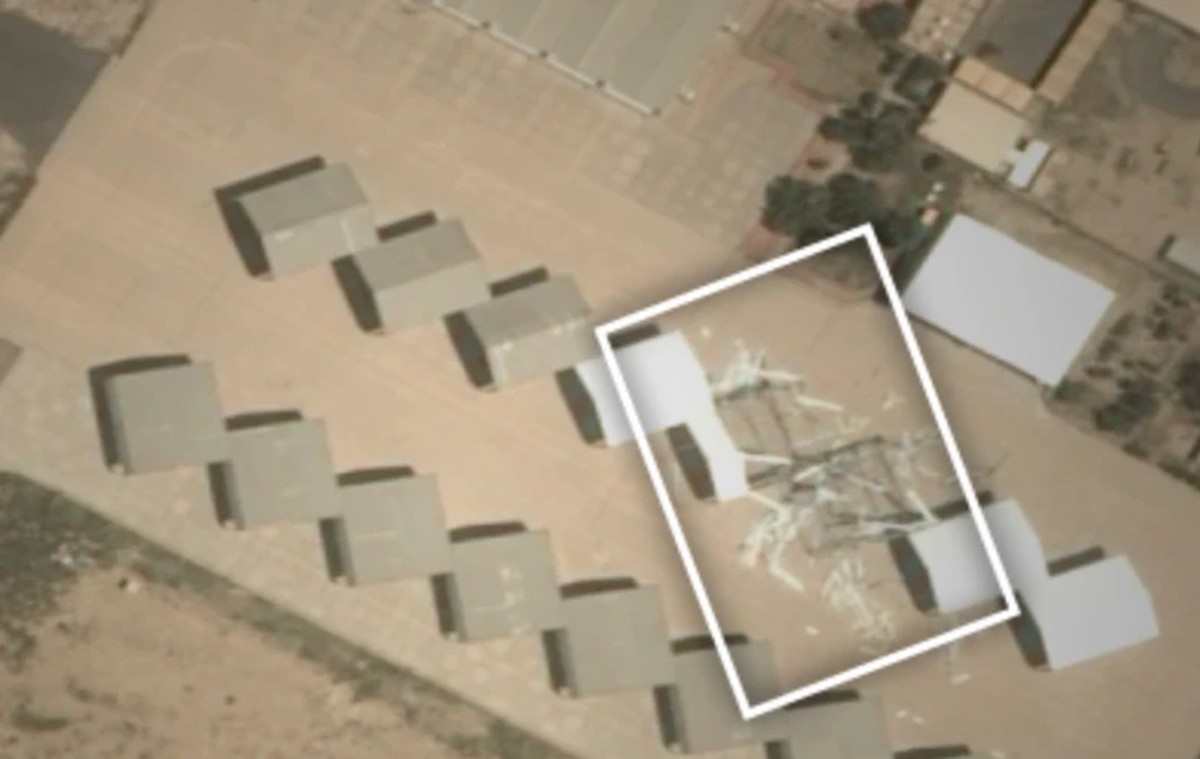
Damaged hangars at Ali Al Salem air base in Kuwait
BBC
Satellite images and videos analyzed by the BBC's verification service, BBC Verify, indicate that Iran has damaged 20 American military installations since the start of the war, suggesting that the attacks were more extensive than the American government publicly admitted.
📱Favorite g1 on Google and follow the main news of the day
Since the end of February, the Iran struck strategic installations in eight Middle Eastern countries, causing millions of dollars in damage to advanced air defense systems, refueling planes and radars.
Iran attacked both American bases and shared military installations in response to bombings conducted by the United States and Israel against Iran and Lebanon over the past three months. The Pentagon claims to have hit more than 13,000 Iranian targets since the start of Operation Epic Fury ("Epic Fury", in free translation).
Mojtaba Khamenei, current supreme leader of Iran, highlighted the success of Iranian attacks against American installations. In a statement released last week, Khamenei said the Middle East is no longer a "safe place" for U.S. bases.
Although the White House has repeatedly stated that Iranian military forces have been virtually destroyed, analysts say the damage seen at American facilities suggests that Iran's counterattacks were more precise and comprehensive than American officials have acknowledged until now.
A U.S. Department of Defense official declined to comment on BBC Verify's findings, citing "reasons of operational security".
Attacks against US installations in the Middle East.
Elaborated by BBC
The US also tried to restrict satellite analysis of the conflict by asking Planet, one of the main companies in the sector, to suspend for an "indefinite period" the release of new images of Iran and much of the Middle East. The company justified the decision by stating that it wanted to prevent the material from being used "by adversary actors to attack military personnel and civilians from NATO [North Atlantic Treaty Organization] allied and partner countries."
BBC Verify used satellite images from other international providers, combined with older records from Planet, to map the damage caused by the Iranian attacks. The affected facilities are in Saudi Arabia, the United Arab Emirates (UAE), Qatar, Kuwait, Iraq, Jordan, Bahrain and Oman. The number could be even higher: some analysts estimate that up to 28 bases were the target of Iranian attacks.
Among the equipment hit were three modern Thaad (Terminal High Altitude Area Defense) anti-missile systems, installed at the Al Ruwais and Al Sader air bases, in the United Arab Emirates, and at the Muwaffaq Salti air base, in Jordan.
The US has only eight known Thaad batteries in operation, distributed in bases around the world. Each unit costs around US$1 billion (approximately R$5.4 billion) to produce.
Each battery requires a team of around 100 soldiers to operate it, while each interceptor missile fired by the system costs around US$12.7 million (around R$68.5 million).
Damaged Thaad battery at Al Ruwais air base, in the United Arab Emirates
O Vice Admiral Mark Mellett, former head of the Irish Defense Forces, told BBC Verify that these batteries are part of the core of a "highly complex" regional defense network and that they cannot be "replaced quickly or simply."
According to expert analysis of these satellite images, Iranian attacks also hit American refueling and surveillance planes at the Prince Sultan air base in Saudi Arabia. In the images, it is possible to see damaged aircraft and craters still with signs of smoke.
One of the planes was identified by an analyst from the intelligence company Maiar as an E-3 Sentry, a surveillance aircraft.
The American press reported that replacing the equipment could cost up to US$700 million (around R$3.8 billion).
In other parts of the region, Iranian attacks also hit the Ali Al Salem air base and Camp Arifjan, in Kuwait. Maiar analysts identified destroyed fuel depots, damaged aircraft hangars and damaged military accommodation in satellite images of the base, the target of several attacks throughout the conflict.
Now in g1
Already at Camp Arifjan, the military intelligence company Janes identified extensive damage to satellite communications equipment.
The extent of the damage caused to American installations is still difficult to measure. But an estimate released by the Pentagon in May calculated the total cost of Operation Epic Fury at US$29 billion (around R$156 billion), a sum that, in large part, should be allocated to "repairing or replacing equipment" destroyed in the conflict. Democratic parliamentarians say the calculation is probably an underestimate.
The report also concluded that at least 42 aircraft, including F-15 and F-35 fighters, 24 MQ-9 Reaper drones and an A-10 attack plane, have been destroyed or damaged since February.
Compared to the sophisticated and expensive equipment used by the American military, Iran would have resorted to cheap and easily replaceable drones in attacks against targets in the Middle East.
Experts heard by BBC Verify stated that Iranian strategy evolved over the course of the war. The country stopped launching large waves of missiles against cities and military bases in the region and started carrying out more precise and targeted attacks.
"The first offensives [by Iran] were designed to gain volume, large waves created to overload the air and anti-missile defense systems due to their quantity", said Kelly Grieco, an analyst at the Stimson Center think tank in the USA.
"A few days later, however, Iran started using smaller and more precise attacks, preserving the missiles and drones remaining on specific strategic targets and concentrating attacks on points where even close hits have already caused significant damage."
A Maiar analyst told BBC Verify that the American military "appears to have demonstrated overconfidence at the start of the war" by not removing aircraft from the range of Iranian drones and missiles as Iran's strategy evolved. that "the people and countries of the region will no longer serve as a shield for American bases" and added: "The US will no longer have a safe place in the region to promote destabilization and install military bases, and will increasingly move away from the position it occupied in the past."
The statements came just days before the ceasefire between the US and Iran began to show signs of deterioration again. On Thursday (28/5), Iran's Islamic Revolutionary Guard Corps said it had attacked an American base in the region following renewed American bombings against southern Iran.
Grieco, of the Stimson Center, warned that if the fragile ceasefire between the US and Iran collapses and clashes resume, the damage already done to American bases indicates that installations across the Gulf region could remain vulnerable.
"The current conflict has consumed defense stocks of the US and its allies at a significant pace", said Grieco.
"There is no quick way to replace this equipment. This means that, in the event of a new Iranian offensive, there will only be a fraction of the interceptor missiles available at the beginning of the war."
Source: G1
World Cup: football gastrobar with drinks from Messi and CR7 earns R$ 1.5 million in SP
World Cup: bar bets on drinks with player names and desserts inspired by flagsWith player graffiti on the walls, big s...
VIDEO: Passengers tie up man who tried to open plane door during flight to the USA
Passengers immobilize man who tried to open plane door during flightPassengers and crew immobilize a man who tried to...
Dominican Republic x Türkiye: time of where to watch the Women's VNL
The Dominican Republic and Turkey face each other this Wednesday (3), at 1 pm (Brasília time), in a game valid for the...
Toque agora.




Historias das musicas em destaque
 Historia da musica
Learn to play Psalm 137 on the guitar
02/06/2026
Psalm 137 is an excellent choice for musicians who wish to develop musical sensitivity, mastery of rhythm and liturgical accompaniment...
 Historia da musica
Learn to play Las Cosas Que Pasan on Guitar
02/06/2026
Some songs win over musicians due to the beauty of the melody and the simplicity of the chords. This is exactly the case with Las Cosas...
 Historia da musica
The emotional music that transforms any moment of prayer on the guitar
02/06/2026
Few songs can convey as much gratitude and trust in God as "Psalm 137", based on the well-known liturgical refrain "O Lord, your goodne...
 Historia da musica
Learn This Classic Song on Guitar and Evolve Your Musical Technique
02/06/2026
Some songs remain relevant over the years because they manage to combine melody, emotion and a musical construction capable of enchanti...
 Historia da musica
Learn to Play Las Cosas Que Pasan on Guitar and Discover the Musical Secrets of Tan Biónica
02/06/2026
The song "Las Cosas Que Pasan", by the Argentine band Tan Biónica, is one of those songs that wins over the public due to the combinati...
 Historia da musica
Learn After So Much Love by Elizeth Cardoso on guitar
02/06/2026
"After De Tanto Amor", performed by Elizeth Cardoso, is a song marked by elegance, emotion and a very rich harmony. The music carries a...
 Historia da musica
Learn Sonhos by Evandro Marinho with chords for guitar
02/06/2026
"Sonhos", by Evandro Marinho, is a perfect song for those who like songs with an emotional atmosphere, good melody and chords that enha...
 Historia da musica
Learn I Don't Want to Know More Dela by Beth Carvalho on guitar
02/06/2026
A classic full of swing, "Não Quero Saber Mais Dela" is a great choice for those who want to study samba on the guitar with a striking...
 Historia da musica
Chameguinho by Murilo Guedes stands out for playing a romantic and engaging song
02/06/2026
Chameguinho, by Murilo Guedes, is a romantic song with direct language, a striking chorus and a popular atmosphere. On CifraNET, the so...
 Historia da musica
Sodade Meu Bem Sodade de Morais do Acordeon values Brazilian tradition in numbers
02/06/2026
Sodade Meu Bem, Sodade, by Morais do Acordeon, carries a Brazilian sound full of feeling, simplicity and affective memory. At CifraNET,...
Mais noticias para voce
 Noticia
03/06/2026
US proposes tariffing Brazil and 59 economies for failure to combat forced labor
The USTR (United States Trade Representative) proposed, in a document released on Tuesday night (2), the imposition of additional tariffs on products from Brazi...
 Noticia
03/06/2026
US shoots down new wave of Iranian drones, says Central Command
CENTCOM (United States Central Command) stated that its air defenses successfully shot down multiple waves of Iranian drones that were targeting American milita...
 Noticia
03/06/2026
Possible new Corinthians sponsorship includes record amounts and social actions with the women's team
By Daniel Keppler on 03 de June 2026 at 01:06 In recent days, Corinthians has advanced in negotiations to sign a new sponsorship, aiming above all to boost the...
 Noticia
03/06/2026
US proposes surtax on 60 countries for failure to combat forced labor; Brazil is on the list
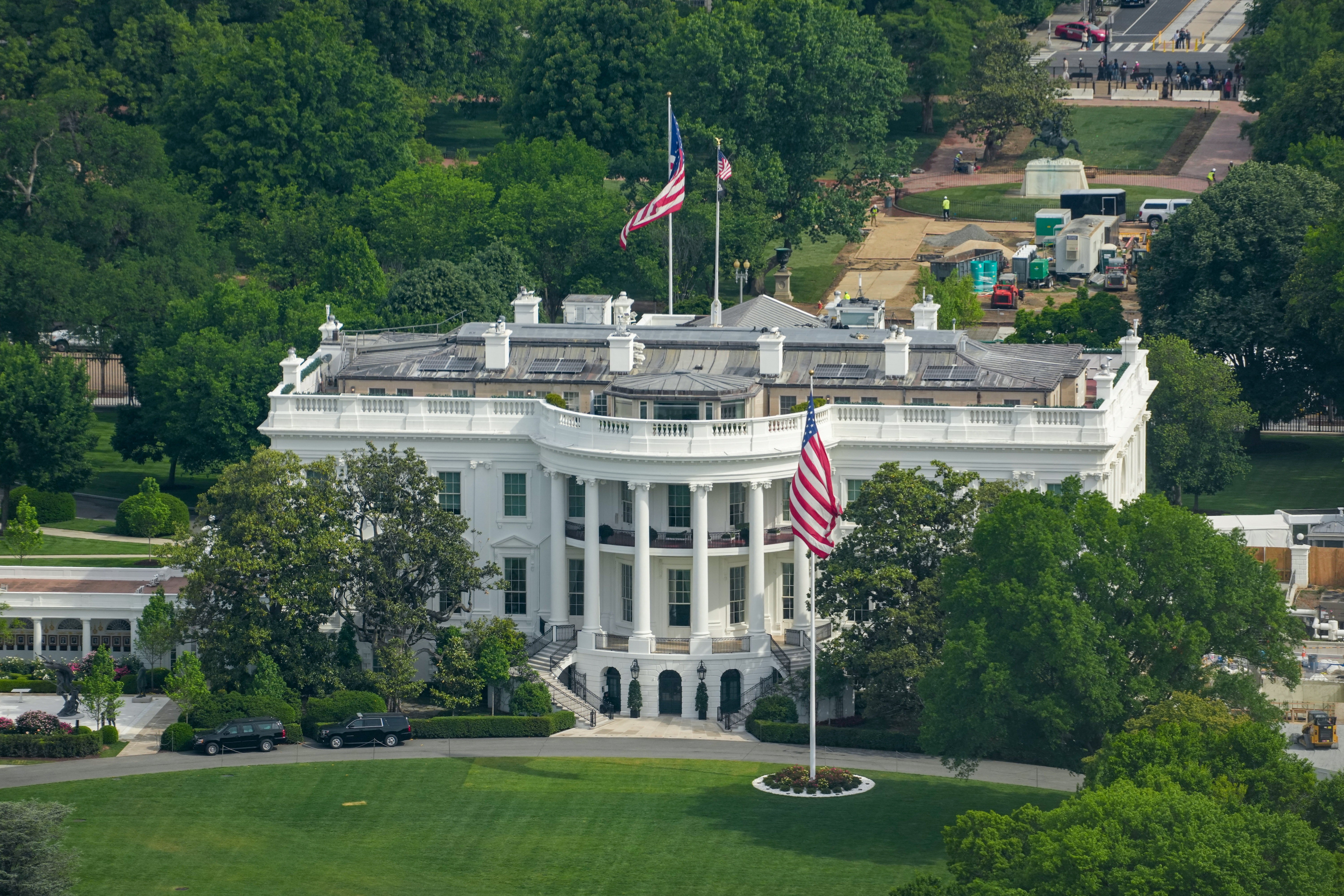
Aerial view of the White House, on May 2, 2026REUTERS/Ken CedenoThe United States Trade Representative (USTR) determined, this Wednesday (3), that 60 countries,...
 Noticia
03/06/2026
Trump's new tariff against Brazil - The Issue #1733
The investigation conducted by the United States Commerce Office concluded that Brazil adopts unfair practices and proposed the application of 25% tariffs on Br...
 Noticia
03/06/2026
"Casa do Patrão": how was the sixth Tá Na Reta formed?
The participants of "Casa do Patrão" sent three more of their players to the sixth Tá Na Reta of the program. Now, Sheila, JP and João Victor compete for the pu...
Participe da conversa
Seu comentario ajuda a manter a discussao viva e ainda convida outros leitores a continuar navegando pelo portal.
Seja o primeiro a comentar esta noticia.