


Leia a noticia completa
The advancement of connectivity in agribusiness has gained ground as a strategic tool to increase the efficiency of field operations. Even in the face of a crisis scenario in the sector in the last two years, technology and telecommunications companies continue to invest in digitalization to improve rural productivity.
According to Alexandre Dal Forno, director of B2B business solutions at TIM, the economic downturn in agriculture reduced investments, but also reinforced the need for solutions that help producers operate more efficiently.
"Each year we have made more progress, but there has been a problem in the last two years, which is the crisis in agriculture, reducing investments. Even so, our proposal is flexible to help producers improve productivity", he stated.
Collision between van and truck leaves 13 dead in China
An overcrowded van collided this Thursday (28) with a truck in central China, killing 13 people and injuring three, au...Fire in female school dormitory kills at least 10 students in Kenya, says local radio
A fire at a dormitory in Kenya's central Nakuru region killed at least 10 students, Capital FM radio reported on Thurs...
US sanctions body created by Iran to collect fees in the Strait of Hormuz
Oil tanker sails near the city of Chita, in Aichi Prefecture, after becoming the first Japan-bound tanker to transit t...
According to the executive, connectivity in the field begins with connectivity. "It's not a cost, it's an investment", he highlighted. He states that, with connected properties, producers can monitor machines in real time, reduce waste and optimize resources.
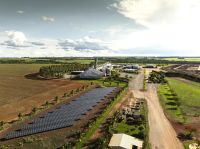
The company maintains a model farm in partnership with agricultural machinery manufacturer CNH to demonstrate the impacts of connectivity on rural operations. According to Dal Forno, the use of technology made it possible to reduce fuel consumption on site by 30%.
"When connectivity is increased, the producer can control in real time what is happening in the field and optimize the operation", he explained.
Toque agora.



This partnership with CNH has existed for around two years and continues to bear fruit. Last Tuesday, the companies announced the investment of R$77 million in the implementation of 97 new telecommunications towers in Minas Gerais, within the scope of the Alô Minas III Program.
According to the companies, expected to be implemented within 18 months, the 97 towers should connect around 1.5 million hectares in Minas Gerais, benefiting more than 200,000 people living in rural areas without connectivity, including around 47 rural schools, eleven basic health units and approximately 11,000 properties.
Slow process
Despite the clear benefits to the producer, Dal Forno recognizes that the process of digital transformation in agriculture is still gradual. According to him, many producers quickly realize the gains when changing an agricultural machine, but they do not always see an immediate return on investments in connectivity.
"When the producer buys a new machine, he already knows that he will have a more efficient operation. As for connectivity, he needs to adapt internal processes and start looking at the operation based on indicators", he stated.
Digitization boosts productivity and reduces costs | CNN AGRO NEWS
The executive highlights that the use of data allows for more accurate decisions in the day-to-day operations of the farm. With this, the producer is able to evaluate the results of each operation and plan the next steps in a more strategic way.
"If there are no indicators, the producer works a lot on feeling. And the Brazilian producer has a very good feeling. But, with data, he can know exactly what is working and what isn't", he said.
In addition to monitoring machines and operators, connectivity helps identify stopped equipment consuming fuel and improves operational control in real time.
"There's no point looking at a flash drive later. Management means monitoring the operation on a day-to-day basis. Every week you need to analyze the data to make everything more efficient, especially at a time of such low margins", he said.
Implementation costs
Regarding implementation costs, Dal Forno explained that values vary depending on the region and the size of the operation. In states such as Minas Gerais, Rio Grande do Sul and Paraná, investments can be between R$10,000 and R$15,000 per hectare.
According to him, the cost is approximately equivalent to between a quarter and a half bag of soybeans per hectare. "It is not an unrealistic investment, but it is the beginning of a transformation in the operation", he concluded.
Low-carbon agriculture gains ground in Brazil
Source: CNN

Historias das musicas em destaque
 Historia da musica
Learn how to play "I Love You" and discover why Billie Eilish moves millions with just a few chords
27/05/2026
There are songs that seem simple at first, but carry an emotional intensity that is difficult to explain. "I Love You", by Billie Eilis...
 Historia da musica
How to play the classic "Careless Whisper" on the guitar and move anyone in the first chords
27/05/2026
Few songs can create such an intense and nostalgic atmosphere as George Michael's "Careless Whisper." From the first few seconds, the f...
 Historia da musica
Learn to play Chega, the country music that turns pain into a new beginning
27/05/2026
Chega, by Zezé Di Camargo & Luciano, is one of those songs that speak directly to those who are tired of suffering for love. The lyrics...
 Historia da musica
Learn how to play Total Eclipse Of The Heart, Bonnie Tyler's classic that chills the guitar
26/05/2026
Total Eclipse Of The Heart is one of those songs that seems to be born ready to move people. In Bonnie Tyler's striking voice, the song...
 Historia da musica
Learn to play Memonça Boa on the guitar and feel the strength of this passionate fashion
26/05/2026
Membrança Boa, by Traia Véia, is one of those songs that seem simple, but reach straight to the heart. The song talks about the end of...
 Historia da musica
Learn to play Bete Balanço: the Frejat classic that has energy, attitude and an unforgettable chorus
25/05/2026
Bete Balanço is one of those songs that carries movement from the first chord. With lyrics full of image, dreams, risk and youth, the s...
 Historia da musica
Learn to play Star, by Simply Red, the chord that transforms feelings into guitar
24/05/2026
Star, by Simply Red, is one of those songs that mix romanticism, regret and a striking melody, perfect for those who like to play somet...
 Historia da musica
Learn to play Die With a Smile: the emotional ballad by Lady Gaga and Bruno Mars that conquered the world on guitar
24/05/2026
"Die With a Smile" is one of those songs that already looks like a classic. In the meeting of two giant voices of pop music, Lady Gaga...
 Historia da musica
Learn to play Rasgando a Madrugada, Eduardo Costa's perfect song for guitar
24/05/2026
Rasgando a Madrugada, by Eduardo Costa, is one of those songs that seem to be born in the silence of the night. The song carries the we...
 Historia da musica
Learn to play Autor Da Vida, the Oficina G3 classic that speaks straight to the heart
23/05/2026
Learn to play Autor Da Vida, the Oficina G3 classic that speaks straight to the heart Autor Da Vida, by Oficina G3, is one of those son...
Mais noticias para voce
 Noticia
28/05/2026
The meeting between Flávio and Trump and American interests in the Brazilian election - The Issue #1729
On Tuesday afternoon (26), Flávio Bolsonaro was received by the American president at the White House and achieved some goals in this meeting: a photo next to D...
 Noticia
28/05/2026
Understand the complaints that FIFA faces because of the high ticket prices for the World Cup
FIFA is investigated in the US for high World Cup ticket pricesThe attorneys general of New York and New Jersey have opened an investigation into FIFA's ticket...
 Noticia
28/05/2026
Mega-Sena can pay R$6 million this Thursday; g1 broadcasts live
How does the Mega-Sena work?The Mega-Sena contest 3,011 can pay out a prize of R$6 million for those who guess the six numbers correctly. The draw takes place a...
 Noticia
28/05/2026
Cave in Laos: divers involved in the search participated in the rescue of the boys from Thailand
Norrased Palasing and Mikko PaasiReproduction/Social MediaDivers working to rescue five survivors who were trapped in a flooded cave in Laos also participated i...
Noticia
27/05/2026
Learn how to play "I Love You" and discover why Billie Eilish moves millions with just a few chords
There are songs that seem simple at first, but carry an emotional intensity that is difficult to explain. "I Love You", by Billie Eilish, is exactly like that....
Noticia
27/05/2026
How to play the classic "Careless Whisper" on the guitar and move anyone in the first chords
Few songs can create such an intense and nostalgic atmosphere as George Michael's "Careless Whisper." From the first few seconds, the famous solo transports any...
Participe da conversa
Seu comentario ajuda a manter a discussao viva e ainda convida outros leitores a continuar navegando pelo portal.
Seja o primeiro a comentar esta noticia.