


Leia a noticia completa
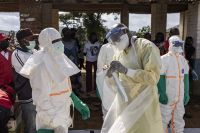
The rapidly expanding Ebola outbreak in the Democratic Republic of Congo caught the world's attention just over a week ago as the third largest in recorded history. This is the 17th outbreak the country has dealt with since the virus was discovered in 1976.
Ebola can be fatal in up to 25% to 90% of infected people. Scientists are now racing to develop potential new vaccines and treatments that could help contain this outbreak, but authorities emphasize that there are currently none approved. Why?
A less common virus
The current outbreak is caused by the Bundibugyo strain, which has also been linked to two previous outbreaks. One in 2012 in the DRC, which had 38 laboratory-confirmed cases and 13 deaths, and another in 2007 on the DRC-Uganda border, which had 131 reported cases and 42 deaths.
/i.s3.glbimg.com/v1/AUTH_59edd422c0c84a879bd37670ae4f538a/internal_photos/bs/2021/p/U/NQo77ZQaOKcQ5j2QFVeQ/img-facebook.jpg)
Income Tax 2026: deadline ends this week and live program answered questions
Income Tax 2026: deadline ends this week and live program answered questions By next Friday, the Federal Revenue expec...
River Plate x Blooming: time and where to watch the South American game
River Plate and Blooming face each other this Wednesday (27), at 9:30 pm (Brasília time), in a game valid for the sixt...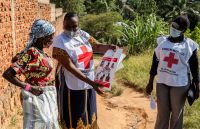
Group urges US diplomats to leave countries amid Ebola outbreak
AFSA (American Foreign Service Association), which represents US diplomats, asked this Wednesday (27) that American fo...
Ebola infections are much more commonly caused by the Zaire strain, which has driven the largest outbreaks in history: one from 2014 to 2016 in West Africa and another in the Democratic Republic of Congo from 2018 to 2020. These outbreaks killed about 11,000 and more than 3,000 people, respectively.
A vaccine was developed during the outbreak in West Africa and successfully tested there in 2015. Called Ervebo, it was approved by the US Food and Drug Administration in 2019 and authorized in several European and African countries. But this work has not extended to other types of Ebola.
Could the existing vaccine be used in this outbreak?
This has been considered, according to Dr. Anne Ancia, the World Health Organization representative in the DRC. But there is limited information about the effectiveness of targeted immunization against the Bundibugyo strain, as well as uncertainty about its safety.
Toque agora.


"I'm glad I'm not the clinician who has to make this decision," said Dr. Thomas Geisbert, professor in the Department of Microbiology and Immunology at the University of Texas Medical Branch, who researches interventions for Ebola and similar viruses.
He and other researchers demonstrated in 2011 that a vaccine similar to Ervebo offered protection against Bundibugyo in monkeys, but it was a small trial, using just four animals, for ethical and financial reasons, he told CNN.
Experts administered the Zaire-targeted dose to the animals and, 28 days later, exposed them to the second virus. Three of the four were protected. "It's encouraging," Geisbert said. But models suggest that Bundibugyo may be less lethal than Zaire, and in monkeys, 25% may survive without vaccination.
Therefore, he estimates that the limited data available indicates that immunization could offer perhaps 50% protection against the new strain, but further analysis is needed. And the challenge of using this vaccine in the current outbreak is "the issue of US$64,000 (about R$320,000). You're in trouble if you act and in trouble if you don't, right?", said Geisbert.
One of the concerns is that a vaccine that diverts the immune system's attention to a different type of Ebola could interfere with the body's response if it had already been exposed to Bundibugyo, says the doctor. "You don't want to make things worse," he said.
WHO chief scientist Sylvie Briand declared on Friday (22) that, as there is "very little evidence of cross-protection for Bundibugyo", Ervebo is not considered the main option for a vaccine approach.
Merck, maker of the treatment, said it had supplied more than 500,000 doses over the past five years to a global stockpile of Ebola vaccines, and that it would work with Unicef and the International Coordinating Group on Vaccine Provision to continue to maintain it. The company also said it could produce more doses if it is decided that Ervebo should be used in the current outbreak.
What about new vaccines?
Both the Covid-19 pandemic and the 2014 Ebola epidemic in West Africa have proven that the world is capable of developing vaccines in accelerated timeframes in emergency situations.
That work is also ongoing now.
The most promising approach is an experimental vaccine similar to Ervebo but targeted at Bundibugyo, said Dr. Vasee Moorthy, a senior WHO adviser responsible for overseeing a research and development plan. The vaccine delivers a disease protein using another virus - vesicular stomatitis - to teach the immune system to recognize it.
Geisbert said he has also seen encouraging results with this approach for Bundibugyo in non-human primates, finding that a single dose of the experimental vaccine, with exposure to the virus 28 days later, provided "complete protection; the animals don't even get sick."
The expert also said that the vaccine worked in animals as a post-exposure treatment, similar to the use of the rabies vaccine. The problem is that clinical-grade material for human testing is not yet available and is expected to take six to nine months to be ready, Moorthy added at a briefing on Wednesday. "This needs to be prioritized as the most promising vaccine candidate against Bundibugyo," he added.
Nonprofit biomedical research group IAVI, which has worked to develop vaccines using the same recombinant VSV technology for similar viruses, said the same day that it is "prioritizing an investigational rVSV Bundibugyo candidate in the context of the current outbreak" and working to gather funding.
Merck also said it is "exploring how we can support response efforts... including potential collaborations with global health and research organizations on vaccine research and/or development."
Another vaccine is under development, using the same Oxford University/AstraZeneca technology for Covid-19. It could be expanded more quickly, but there is less evidence to support it.
When used during the Covid-19 pandemic, the vaccine was associated with a rare risk of blood clots; Oxford notes that for a disease like Ebola, "where up to nine in 10 infected people may die, the very small risk of blood clots is outweighed by the protection that a vaccine can offer."
Oxford also said Covid immunization was estimated to have saved 6 million lives in 2021 alone. The new variant uses a different virus, an adenovirus, to deliver genetic instructions that train the immune system to recognize the Ebola virus protein. Doses could be ready for human clinical trials in just two to three months through a collaboration between Oxford and the Serum Institute of India, Moorthy said.
"They are manufacturing it as we speak," but the animal data supporting the vaccine is not yet available, he said. These results will influence "whether this is considered a promising investigational vaccine candidate for Bundibugyo."
Are there medications that help?
Therapeutic trials could start sooner, Moorthy said, because some existing medications can help against Bundibugyo. "There's certainly hope along the way," he said last week.
Currently, "broad-spectrum approaches that may work on multiple Ebola virus species" are being considered, as there are fewer options specifically targeting Bundibugyo, said Dr.
Amanda Rojek, associate professor of health emergencies in the Epidemic Diseases Research Group at the Pandemic Sciences Institute, Oxford.
These include the antiviral remdesivir, made by Gilead Sciences and approved for Covid-19 as Veklury, and a monoclonal antibody cocktail from Mapp Biopharmaceutical called MBP134, she mentioned.
A tricky aspect of these medications is that they are often administered by intravenous infusion, which can be logistically more difficult in a hard-to-reach area such as Ituri province in the DRC, where the current outbreak is concentrated.
Geisbert agreed that MBP134 "is probably the one that has the best preclinical data at the moment", shown in one of his studies to protect monkeys even when administered at an advanced stage of the disease.
The treatment demonstrated protection against Bundibugyo, as well as the Zaire and Sudan strains of Ebola. Antibodies are generated as part of the body's immune response to invaders like viruses, and MBP134 is a combination of two antibodies that came from a survivor of the 2014 Ebola outbreak, according to Mapp.
Drug maker Regeneron also has an antibody cocktail approved for Ebola called Inmazeb. One of the three antibodies in the combination demonstrated activity against Bundibugyo, but has not been tested in animals or people, a company spokesperson told CNN.
WHO scientists said on Friday that Regeneron's antibody and MBP134 are being prioritized for clinical trials. They are also looking at the use of an antiviral similar to remdesivir, called obeldesivir, for post-exposure prophylaxis in people considered high-risk contacts of Ebola patients.
This medicine has the additional advantage of being administered orally rather than intravenously. "This would prevent these contacts, if they have been infected with the virus, from [developing] the disease," the WHO's Briand said on Friday.
Is the US government supporting drug and vaccine development?
Historically, the United States has been a leading funder of trials during health emergencies, but the Trump administration has reduced support for global aid programs. The Biomedical Advanced Research and Development Authority, or Barda, supported the development of Ervebo, as well as antibody drugs targeting the Zaire strain.
The National Institute of Allergy and Infectious Diseases has also been a key contributor to the studies. Mapp received a $14.8 million contract from BARDA in 2018 to initiate a human clinical trial of MBP134, after animal investigations showed that a single dose "demonstrated unprecedented therapeutic efficacy" in non-human primates against the Sudan strain of Ebola.
Last week, BARDA coordinated the shipment of an experimental antibody treatment for possible use in high-risk Americans exposed to Ebola, an HHS (U.S. Department of Health and Human Services) spokesperson told CNN. HHS did not respond to questions about whether the U.S. government would also support clinical drug trials in the DRC or the development of vaccines targeting Bundibugyo.
Mapp also did not respond to the report's questions about the supply of its antibody or plans for a clinical trial, but its president, Larry Zeitlin, told Nature that the company has enough doses for an experiment and that the drugs are owned by Barda.
Regeneron has made its FDA-approved treatment available for free in outbreak zones in the past, the company's co-founder, president and chief scientific officer Dr. George Yancopoulos shared with CNN.
He said the company has also supplied tens of thousands of doses to the US government's stockpile and is coordinating with HHS to make its triple combination - which contains the antibody with activity against Bundibugyo, called maftovimab - available in this outbreak.
"We are also actively scaling up production of the single antibody maftovimab should further treatment be needed," Yancopoulos added.
Why aren't we better prepared?
Funding for research into viruses like Ebola has fallen victim to a cycle of "panic and neglect." Rojek concluded by stating that: "rapid investment during outbreaks followed by loss of momentum afterwards". The situation is incredibly frustrating for countries that are constantly fighting Ebola.
"If this outbreak were in Europe or the US, I can guarantee that medicines and vaccines would be available, but we are not here to cry," said Dr. Jean Kaseya, head of the Africa Centers for Disease Control and Prevention, on Saturday (23). "We need to accelerate with R&D."
"It was a similar situation in 2014. At that time, everyone was also running around," Geisbert reported. Work from the early 2000s had shown that the VSV Zaire Ebola approach "is incredible... but we don't have a clinical-grade vaccine." Merck adopted it "and did the right thing, but it's still a long process," he added.
Still, Rojek argued that in some ways the world is in a better place than it was a decade ago, with surveillance systems in place, faster diagnostics, established ways of conducting clinical trials, and stronger international coordination.
There are major challenges surrounding this outbreak, including its epicenter in the conflict-ridden Ituri province and the less common Bundibugyo form of the virus. But "this is not the same situation as in 2014." And the researcher highlighted that there are outbreak control methods that do not depend on vaccines and medicines: "rapid diagnosis, isolation, infection prevention, contact tracing, safe clinical care and community trust."
"Vaccines and therapeutics are extremely valuable additional tools. But they are not the only reason outbreaks can be controlled," she concluded.
Ebola: what it is, symptoms and treatment
Source: CNN

Historias das musicas em destaque
 Historia da musica
Learn to play Chega, the country music that turns pain into a new beginning
27/05/2026
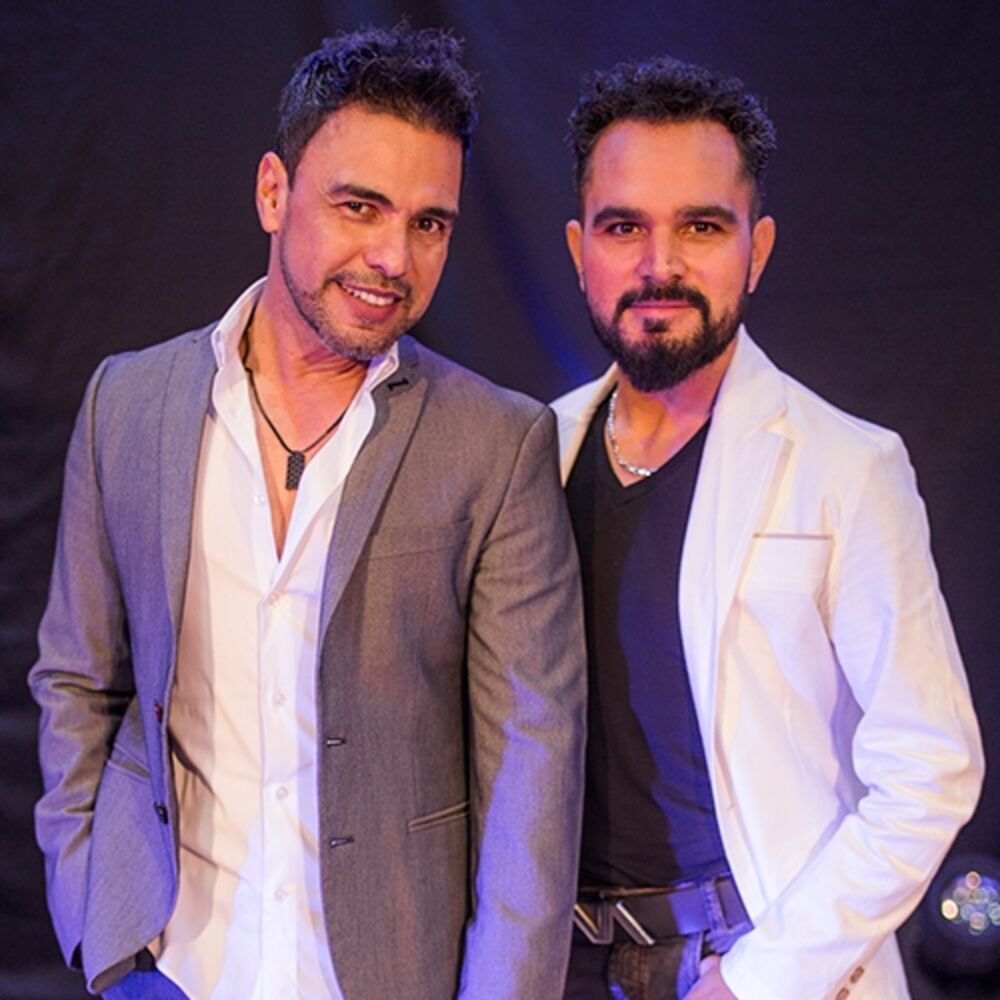
Chega, by Zezé Di Camargo & Luciano, is one of those songs that speak directly to those who are tired of suffering for love. The lyrics...
 Historia da musica
Learn how to play Total Eclipse Of The Heart, Bonnie Tyler's classic that chills the guitar
26/05/2026
Total Eclipse Of The Heart is one of those songs that seems to be born ready to move people. In Bonnie Tyler's striking voice, the song...
 Historia da musica
Learn to play Memonça Boa on the guitar and feel the strength of this passionate fashion
26/05/2026
Membrança Boa, by Traia Véia, is one of those songs that seem simple, but reach straight to the heart. The song talks about the end of...
 Historia da musica
Learn to play Bete Balanço: the Frejat classic that has energy, attitude and an unforgettable chorus
25/05/2026
Bete Balanço is one of those songs that carries movement from the first chord. With lyrics full of image, dreams, risk and youth, the s...
 Historia da musica
Learn to play Star, by Simply Red, the chord that transforms feelings into guitar
24/05/2026
Star, by Simply Red, is one of those songs that mix romanticism, regret and a striking melody, perfect for those who like to play somet...
 Historia da musica
Learn to play Die With a Smile: the emotional ballad by Lady Gaga and Bruno Mars that conquered the world on guitar
24/05/2026
"Die With a Smile" is one of those songs that already looks like a classic. In the meeting of two giant voices of pop music, Lady Gaga...
 Historia da musica
Learn to play Rasgando a Madrugada, Eduardo Costa's perfect song for guitar
24/05/2026
Rasgando a Madrugada, by Eduardo Costa, is one of those songs that seem to be born in the silence of the night. The song carries the we...
 Historia da musica
Learn to play Autor Da Vida, the Oficina G3 classic that speaks straight to the heart
23/05/2026
Learn to play Autor Da Vida, the Oficina G3 classic that speaks straight to the heart Autor Da Vida, by Oficina G3, is one of those son...
 Historia da musica
Learn to play Te Esperando: the exciting country music by Luan Santana that made Brazil sing on the guitar
23/05/2026
Te Esperando, by Luan Santana, is one of those country songs that sticks in your memory because it mixes romanticism, longing and the p...
 Historia da musica
Learn to play Hey Joe: the Jimi Hendrix classic that every guitarist dreams of mastering
23/05/2026
Few songs carry as much attitude and history as Hey Joe, immortalized in the voice and guitar of Jimi Hendrix. With an unmistakable int...
Mais noticias para voce
 Noticia
27/05/2026
Government celebrates approval of 6×1 in the commission and aims for 450 votes in the plenary
The government celebrated the approval of the report by deputy Leo Prates (Republicanos-BA) on the end of the 6×1 scale. In a press conference after the vote in...
 Noticia
27/05/2026
Revenue seizes 120,000 fake football shirts in the Port of Santos
The Federal Revenue Service seized around 120,000 fake football shirts in the Port of Santos, on the coast of São Paulo. The shirts found inside a container bel...
 Noticia
27/05/2026
Wagner Moura appears with new look for film with Kristen Stewart
Actor Wagner Moura, 49, appeared this Wednesday (27) with a new look during the recording of "Flesh Of The Gods", a thriller starring the Brazilian and Kristen...
 Noticia
27/05/2026
Agricultural machinery sales drop more than 22% in revenue
The agricultural machinery and equipment industry continues to shrink, according to Abimaq (Brazilian Association of Machinery and Equipment Industry), with the...
Noticia
27/05/2026
Learn to play Chega, the country music that turns pain into a new beginning
Chega, by Zezé Di Camargo & Luciano, is one of those songs that speak directly to those who are tired of suffering for love. The lyrics bring a strong feeling o...
Noticia
26/05/2026
Learn how to play Total Eclipse Of The Heart, Bonnie Tyler's classic that chills the guitar
Total Eclipse Of The Heart is one of those songs that seems to be born ready to move people. In Bonnie Tyler's striking voice, the song mixes drama, intensity a...
Participe da conversa
Seu comentario ajuda a manter a discussao viva e ainda convida outros leitores a continuar navegando pelo portal.
Seja o primeiro a comentar esta noticia.