



Leia a noticia completa
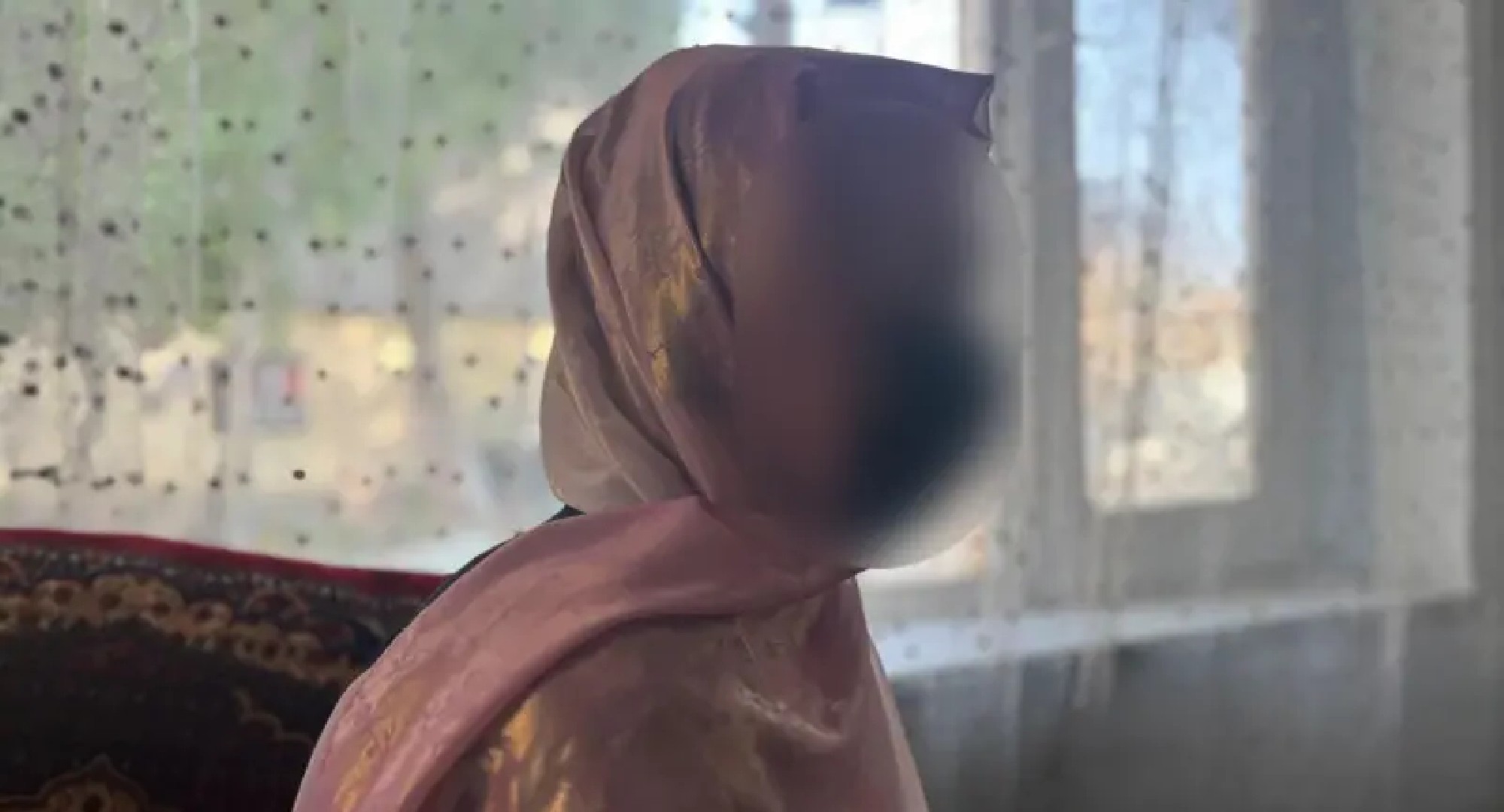
Alia - whose name has been changed to protect her safety - traveled hundreds of miles from her village to Kabul
BBC
Alia - whose name has been changed to protect her safety - traveled hundreds of miles from her village to Kabul to escape a wedding.
Last year's taxi ride with her cousin - covered from head to toe, only her eyes visible, as the rules decree - was an exceptional and risky affair in Afghanistan, where at any moment they could be caught by security inspectors. Taliban enforcing rules prohibiting women from traveling long distances without a male relative accompanying them.
But Alia, who is 19, and her cousin were not stopped at any Taliban checkpoint and reached the capital.
"I made up an excuse for my family that I was coming here to meet my friends and former classmates. But that is not true. They are not here. The real reason is that if I stayed in Daykundi, it would be forced to get married."
Instead, she arrived in Kabul with a plan: she enrolled in an English course.
These short-term, narrowly focused private courses - available only to those who can afford them - are, along with madrasas that focus on religious education, the only options for girls to learn after primary school in Afghanistan. But none of them are close to replacing formal education.
Women's lives after the Taliban regained power
It has been almost five years since the Taliban prevented girls over the age of 12 from attending school, with several reasons given as to why the ban is still in place.
Years in which girls like Alia grew up without the education they wanted and needed. Years in which the path to a career was effectively blocked, narrowing her options until millions of girls in Afghanistan were left with just one choice: marriage.
Alia's story is an unusual one. Not only for her courage, but she also comes from a family that has the funds to take advantage of the few opportunities available to young women - a rarity in a country where three in four people cannot meet their basic needs, according to the United Nations.
Alia's family is not against her studies - they have accepted that she wants to stay in Kabul and are funding her English course - but even they are limited by the realities of life in Afghanistan.
"Before the ban, my parents encouraged me enthusiastically to go to school. They said I could definitely achieve my dream of becoming a pilot. But now they say I'd better get married, because I can't go to school, I can't go to university, I can't even work."
Alia has been receiving marriage proposals. She fears she might be forced to accept one. "Some families can be very restrictive. They might tell me to forget my dreams. I don't feel good about that at all."
But her resolve is firm. "If my family doesn't force me to get married, I will wait. I will resist until my last breath."
But resisting is difficult.
In a small, simple house in western Kabul, we meet Shama.
"If the Taliban hadn't taken over, I would have almost finished school by now. I would be close to my dream of being a doctor. That's what I wanted," says Shama.
Instead, four years ago, at age 18, she was pressured by her mother to get married. She is now the mother of a baby and a toddler - both girls.
We have changed her and her family's names to protect their safety.
Her mother, Kamila, who worked as a cleaner to put her daughters through school after her husband died six years ago, felt she had no choice.
She was afraid that her daughter - a young woman of marriageable age - would attract attention and face difficulties if she remained single.
"I was afraid that they [the Taliban] would question why I wasn't marrying my daughter off," says Kamila.
"I wanted her to be educated, work and contribute to society.
I'm illiterate, so I'm like a blind person. But I wanted my girls to learn. She [Shama] had so many dreams. But that didn't happen for her."
The Taliban government's ban on education has already had an irreversible impact on the lives of countless women and girls.
According to the United Nations, if the ban continues until 2030, "more than two million girls will have been deprived of education beyond primary school in a country that already has one of the lowest female literacy rates in the world."
"Having a husband is not a woman's only dream. She needs to support herself first, become independent and then she can get married and start a family. But I entered this new life without any of that. My dreams remain unfulfilled", says Shama.
Afghan girl attends school for the first time in Brazil: 'Because they (Taliban) won't let her go'
Before the Taliban took power, Shama turned down many marriage proposals.
"I turned them down because my education was more important to me than anything else. What I wanted for myself was not what they [future husbands] wanted for me," she says.
Now, she says she is constantly stressed, and gets upset when she watches films in which female characters are portrayed working or studying.
She is treated well by her husband, but the pain of not having had the opportunity to reach her potential never leaves her. "It's very difficult for me. I feel like I'm stuck at home. I live only for my children," he says.
His 18-year-old sister Nora now fears facing the same fate.
"I'm too young to get married. I want to continue my studies. It's like being in prison. I'm afraid to go out because of the government, and at home my mother tells me I need to get married," says Nora, who always dreams of going back to school.
But she doesn't believe she will ever go back to school under the Taliban government.
"The government has said that schools are closed to girls until further notice. But it's been four and a half years. We are waiting for that message every day."
Distant Promise
Since 2021, the Taliban government's response to the question of when schools will reopen for girls has wavered between different justifications, currently amounting to evasion and silence.
In September 2021, in our first interview with a Taliban spokesperson after taking power, the spokesperson said that girls' schools would open, adding that they were "working to improve the security situation."
A year later, the response was that "religious scholars have problems with the safety of girls on the way to and from school," but they were working on the problem.
In 2024, Taliban government deputy spokesman Hamdullah Fitrat told the BBC: "We are waiting for the leadership's decision."
This month, I once again met Fitrat, who did not want to be photographed with a woman or sit in front of me. I asked how they can continue justifying the ban on high school and university education for women.
He responded by pointing out "that about seven million boys and five million girls are currently studying." supervision of the Taliban government, their response once again was to ask the Ministry of Education.
We asked the same question to the Ministry of Education. They did not respond.
There are divisions within the government on the issue of female education that are evident to us, but the supreme leader has been hardening his stance over the years.
Women and girls remember as if it were yesterday the day the schools closed to them.
"All I did was cry and sob all day and at night", remembers Alia.
"I couldn't sleep for a week. I felt like I was walking around like a corpse."
"When I see men my age who have graduated and are going to university, I feel really bad, I feel like I'm burning in hell," he adds.
Women face a series of other restrictions imposed by the Taliban's supreme leader, vigorously enforced in some places but with a little more freedom in others.
But the decrees strike fear among people. The collective impact of the government's enforcement of the rules, and in some cases self-imposed restrictions, is that women are largely absent from public life.
Defending his government, Fitrat says: "We have issued thousands of licenses for women to run businesses, which is a positive step."
He also claimed that the ministry for the Promotion of Virtue and Prevention of Vice - the Taliban's moral police - has resolved more than "2,000 cases in which women were denied their rightful share in inheritance" and "2,500 women who were being forced into marriage or were underage were assisted."
But last week, the Taliban government signed into law rules that imply legal approval of child marriage and in which the silence of an underage girl can be interpreted as consent to marriage.
And the day-to-day evidence suggests otherwise: that the prevalence of forced and underage marriages is increasing because girls are prevented from studying.
Among the women and girls we spoke to, there are the feeling that one of the most severe forms of institutionalized discrimination no longer causes so much shock or indignation. They feel abandoned by the world.
"If we hadn't been forgotten, something would certainly have been done by now," says Alia.
The BBC is protecting the identities of all the women who contributed to this report
BBC
"I often think: why were we born in Afghanistan?" says Nora.
Her mother, Kamila, has a message for mothers around the world.
"In a world where your daughters can study and work, let them do that. Let them become independent. Here in Afghanistan, it's over for us."
Additional reporting by Imogen Anderson, Mahfouz Zubaide and Sanjay Ganguly
Source: G1

One of the most violent thieves in the city of São Paulo is arrested; see video
A 23-year-old man, considered by the police to be one of the most violent thieves in the city of São Paulo, was arrest...
Djokovic advances at Roland Garros after scare against Frenchman
Serbian Novak Djokovic advanced this Wednesday to the third round of the French Open by beating Frenchman Valentin Roy...
Federal Government signs service order for "middle section" on BR-319
The federal government signed today the first of four service orders for asphalting and recovery of the so-called "mid...
Toque agora.




Historias das musicas em destaque
 Historia da musica
Learn to play Chega, the country music that turns pain into a new beginning
27/05/2026
Chega, by Zezé Di Camargo & Luciano, is one of those songs that speak directly to those who are tired of suffering for love. The lyrics...
 Historia da musica
Learn how to play Total Eclipse Of The Heart, Bonnie Tyler's classic that chills the guitar
26/05/2026
Total Eclipse Of The Heart is one of those songs that seems to be born ready to move people. In Bonnie Tyler's striking voice, the song...
 Historia da musica
Learn to play Memonça Boa on the guitar and feel the strength of this passionate fashion
26/05/2026
Membrança Boa, by Traia Véia, is one of those songs that seem simple, but reach straight to the heart. The song talks about the end of...
 Historia da musica
Learn to play Bete Balanço: the Frejat classic that has energy, attitude and an unforgettable chorus
25/05/2026
Bete Balanço is one of those songs that carries movement from the first chord. With lyrics full of image, dreams, risk and youth, the s...
 Historia da musica
Learn to play Star, by Simply Red, the chord that transforms feelings into guitar
24/05/2026
Star, by Simply Red, is one of those songs that mix romanticism, regret and a striking melody, perfect for those who like to play somet...
 Historia da musica
Learn to play Die With a Smile: the emotional ballad by Lady Gaga and Bruno Mars that conquered the world on guitar
24/05/2026
"Die With a Smile" is one of those songs that already looks like a classic. In the meeting of two giant voices of pop music, Lady Gaga...
 Historia da musica
Learn to play Rasgando a Madrugada, Eduardo Costa's perfect song for guitar
24/05/2026
Rasgando a Madrugada, by Eduardo Costa, is one of those songs that seem to be born in the silence of the night. The song carries the we...
 Historia da musica
Learn to play Autor Da Vida, the Oficina G3 classic that speaks straight to the heart
23/05/2026
Learn to play Autor Da Vida, the Oficina G3 classic that speaks straight to the heart Autor Da Vida, by Oficina G3, is one of those son...
 Historia da musica
Learn to play Te Esperando: the exciting country music by Luan Santana that made Brazil sing on the guitar
23/05/2026
Te Esperando, by Luan Santana, is one of those country songs that sticks in your memory because it mixes romanticism, longing and the p...
 Historia da musica
Learn to play Hey Joe: the Jimi Hendrix classic that every guitarist dreams of mastering
23/05/2026
Few songs carry as much attitude and history as Hey Joe, immortalized in the voice and guitar of Jimi Hendrix. With an unmistakable int...
Mais noticias para voce
 Noticia
27/05/2026
Analysis: Why ending war with Iran might be very difficult for Trump?
US President Donald Trump's war with Iran hasn't exactly been a resounding success so far. And a large part of the American public hopes that the end of the con...
 Noticia
27/05/2026
Google opens AI engineering center in SP; g1 met space
Google's new engineering center in São Paulo.Darlan HelderGoogle opened this Wednesday (27) its second AI engineering center in Brazil. The space is located at...
 Noticia
27/05/2026
Bricklayers killed by police officers in Rio were reportedly mistaken for drug traffickers
The two bricklayers who died after being shot by military police officers this Wednesday morning (27) in São Gonçalo, in the Metropolitan region of Rio de Janei...
 Noticia
27/05/2026
Leaving Fluminense, Ganso is offered to Serie A rivals; see details
After leaving Fluminense, Paulo Henrique Ganso was offered to a rival in Series A of the Brazilian Championship. This is Athletico-PR, coached by Odair Hellmann...
Noticia
27/05/2026
Learn to play Chega, the country music that turns pain into a new beginning
Chega, by Zezé Di Camargo & Luciano, is one of those songs that speak directly to those who are tired of suffering for love. The lyrics bring a strong feeling o...
Noticia
26/05/2026
Learn how to play Total Eclipse Of The Heart, Bonnie Tyler's classic that chills the guitar
Total Eclipse Of The Heart is one of those songs that seems to be born ready to move people. In Bonnie Tyler's striking voice, the song mixes drama, intensity a...
Participe da conversa
Seu comentario ajuda a manter a discussao viva e ainda convida outros leitores a continuar navegando pelo portal.
Seja o primeiro a comentar esta noticia.