



Leia a noticia completa
Technological advances have transformed modern automobiles into true smartphones on wheels. Equipped with GPS, internal and external cameras, voice commands and real-time telemetry systems, smart vehicles collect a massive volume of personal data daily. However, most Brazilian drivers still do not realize that their routine is being monitored every kilometer driven.
The theme raises a red alert about privacy and digital security. To understand the legal limits of this collection and the impact of the General Data Protection Law (LGPD) on the automotive sector, we spoke with criminal and digital lawyer, Lourival Tenório de Albuquerque.

One of the most violent thieves in the city of São Paulo is arrested; see video
A 23-year-old man, considered by the police to be one of the most violent thieves in the city of São Paulo, was arrest...
Djokovic advances at Roland Garros after scare against Frenchman
Serbian Novak Djokovic advanced this Wednesday to the third round of the French Open by beating Frenchman Valentin Roy...
Federal Government signs service order for "middle section" on BR-319
The federal government signed today the first of four service orders for asphalting and recovery of the so-called "mid...
The illusion of consent on the dashboard
When starting a connected car for the first time or pairing systems like Android Auto and Apple CarPlay, the user is bombarded with complex privacy terms. In practice, however, consumer freedom of choice is almost nil.
"What we see in practice is a sequence of screens with long texts, in reduced font, written in technical-legal language, which the driver needs to accept to have access to the vehicle's basic functionalities. There is no real option to refuse without significant loss of functions. There is an acceptance click, but materially there is no free or specific consent. Brazilian law considers consent obtained through generic forms to be null and void", explains Albuquerque.
Invisible monetization and the risk of commercial profiling
Unlike the North American market, in which automakers were caught selling driving data to secretly inflate insurance policies, the risk in Brazil emerges in a more subtle way, through voluntarily accepted telemetry insurance programs (such as Toyota Conecta) or through opaque sharing between companies in the same economic group as the automaker.
Toque agora.



The big legal problem arises when the vehicle uses this data for advertising purposes without express authorization, configuring a clear misuse of purpose.
According to the expert, the use of GPS or voice assistant to suggest advertisements from commercial partners on the panel violates article 6 of the LGPD.
In addition, continuous monitoring exposes extremely sensitive driver habits. "Continuous geolocation reveals life patterns: where a person sleeps, where they work, where their children study, whether they attend churches or specific medical clinics. This crossed data can indirectly reveal health or religious information", points out the lawyer.
Undue monetization of this information can result in lawsuits based on the Consumer Protection Code (CDC) and ANPD fines of up to R$50 million per infraction.
Who is to blame in the event of a hacker attack?
With vehicles increasingly integrated into the cloud, often with servers located abroad, in China, the USA or Europe, cyber vulnerability becomes a frequent concern for consumers. If an automaker's system is hacked and customers' route history becomes public, Brazilian legislation provides for a consumer protection mechanism.
Albuquerque clarifies that the LGPD adopts joint and several liability (article 42) between the automaker and the developers of embedded software, such as Google or Apple.
"For the injured driver, the most effective strategy would be to sue the automaker and the technology company jointly. The automaker will hardly be able to exempt itself, as it is the one who chose the technological partner and who is responsible for the safety of the system as a whole", he states. The dealership that sold the physical product, as a rule, remains outside this digital chain of responsibility.
The sale of a pre-owned vehicle
One of the biggest safety bottlenecks in the current market occurs when a used vehicle is resold.
If the previous owner does not formally revoke digital access and unlink their account from the chassis, they maintain virtual access to the new buyer's data.
On specific models, such as Tesla ecosystems, the cell phone app allows:
-
Track the exact location of the car in real time;
-
Lock and unlock doors remotely;
-
View complete travel history;
-
Access the internal camera feed and listen to cabin audio from a distance.
The expert warns that failure to disconnect can constitute serious crimes. "This constitutes unauthorized access to personal data, unauthorized monitoring (which could be classified as digital stalking under the Penal Code) and improper access to a computer system."
The "limbo" of data deletion channels
Although article 18 of the LGPD guarantees citizens the right to demand the definitive deletion of their data, facial biometrics and voice history from corporate databases within 15 days, the Brazilian automotive market is still struggling in the practical implementation of this right.
Most brands operating in the country do not have dedicated channels for this purpose. The consumer is often pushed towards generic SACs or instructed to go in person to a dealership, whose employees do not have any access or management over the automaker's central servers.
The absence of a clear and accessible channel with the Data Officer (DPO) remains the main challenge for consumers who want to regain control of their privacy on four wheels.
Cars with autopilot: what is the technology and how to use it?
Source: CNN

Historias das musicas em destaque
 Historia da musica
Learn to play Chega, the country music that turns pain into a new beginning
27/05/2026
Chega, by Zezé Di Camargo & Luciano, is one of those songs that speak directly to those who are tired of suffering for love. The lyrics...
 Historia da musica
Learn how to play Total Eclipse Of The Heart, Bonnie Tyler's classic that chills the guitar
26/05/2026
Total Eclipse Of The Heart is one of those songs that seems to be born ready to move people. In Bonnie Tyler's striking voice, the song...
 Historia da musica
Learn to play Memonça Boa on the guitar and feel the strength of this passionate fashion
26/05/2026
Membrança Boa, by Traia Véia, is one of those songs that seem simple, but reach straight to the heart. The song talks about the end of...
 Historia da musica
Learn to play Bete Balanço: the Frejat classic that has energy, attitude and an unforgettable chorus
25/05/2026
Bete Balanço is one of those songs that carries movement from the first chord. With lyrics full of image, dreams, risk and youth, the s...
 Historia da musica
Learn to play Star, by Simply Red, the chord that transforms feelings into guitar
24/05/2026
Star, by Simply Red, is one of those songs that mix romanticism, regret and a striking melody, perfect for those who like to play somet...
 Historia da musica
Learn to play Die With a Smile: the emotional ballad by Lady Gaga and Bruno Mars that conquered the world on guitar
24/05/2026
"Die With a Smile" is one of those songs that already looks like a classic. In the meeting of two giant voices of pop music, Lady Gaga...
 Historia da musica
Learn to play Rasgando a Madrugada, Eduardo Costa's perfect song for guitar
24/05/2026
Rasgando a Madrugada, by Eduardo Costa, is one of those songs that seem to be born in the silence of the night. The song carries the we...
 Historia da musica
Learn to play Autor Da Vida, the Oficina G3 classic that speaks straight to the heart
23/05/2026
Learn to play Autor Da Vida, the Oficina G3 classic that speaks straight to the heart Autor Da Vida, by Oficina G3, is one of those son...
 Historia da musica
Learn to play Te Esperando: the exciting country music by Luan Santana that made Brazil sing on the guitar
23/05/2026
Te Esperando, by Luan Santana, is one of those country songs that sticks in your memory because it mixes romanticism, longing and the p...
 Historia da musica
Learn to play Hey Joe: the Jimi Hendrix classic that every guitarist dreams of mastering
23/05/2026
Few songs carry as much attitude and history as Hey Joe, immortalized in the voice and guitar of Jimi Hendrix. With an unmistakable int...
Mais noticias para voce
 Noticia
27/05/2026
Analysis: Why ending war with Iran might be very difficult for Trump?
US President Donald Trump's war with Iran hasn't exactly been a resounding success so far. And a large part of the American public hopes that the end of the con...
 Noticia
27/05/2026
Google opens AI engineering center in SP; g1 met space
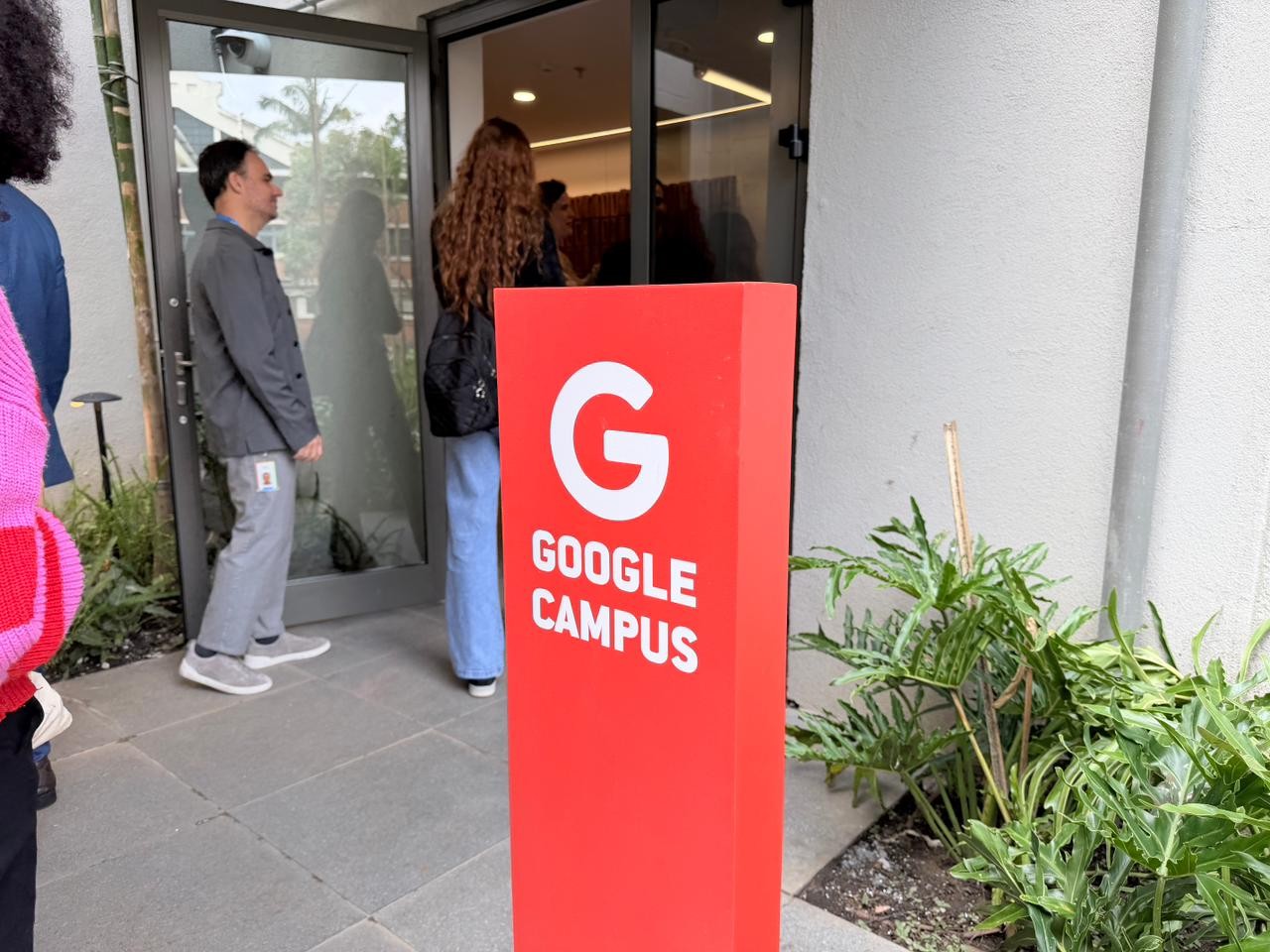
Google's new engineering center in São Paulo.Darlan HelderGoogle opened this Wednesday (27) its second AI engineering center in Brazil. The space is located at...
 Noticia
27/05/2026
Bricklayers killed by police officers in Rio were reportedly mistaken for drug traffickers
The two bricklayers who died after being shot by military police officers this Wednesday morning (27) in São Gonçalo, in the Metropolitan region of Rio de Janei...
 Noticia
27/05/2026
Leaving Fluminense, Ganso is offered to Serie A rivals; see details
After leaving Fluminense, Paulo Henrique Ganso was offered to a rival in Series A of the Brazilian Championship. This is Athletico-PR, coached by Odair Hellmann...
Noticia
27/05/2026
Learn to play Chega, the country music that turns pain into a new beginning
Chega, by Zezé Di Camargo & Luciano, is one of those songs that speak directly to those who are tired of suffering for love. The lyrics bring a strong feeling o...
Noticia
26/05/2026
Learn how to play Total Eclipse Of The Heart, Bonnie Tyler's classic that chills the guitar
Total Eclipse Of The Heart is one of those songs that seems to be born ready to move people. In Bonnie Tyler's striking voice, the song mixes drama, intensity a...
Participe da conversa
Seu comentario ajuda a manter a discussao viva e ainda convida outros leitores a continuar navegando pelo portal.
Seja o primeiro a comentar esta noticia.