




Leia a noticia completa
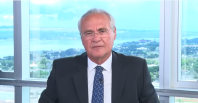
The delay in purchasing fertilizers for the next harvest is beginning to worry the Brazilian agricultural sector. In an interview with CNN, Felipe Pecci, commercial vice president at Mosaic, stated that the pace of sales is between 10 and 15 percentage points below the historical average, pressured by geopolitical volatility, rising costs and credit restrictions.
Currently, around 65% of the market has been traded, while 35% still needs to be closed - a delay considered relevant for a country that imports more than 80% of the fertilizers it consumes.
"We have already started to observe logistical stress. There is sea time, port line-up, and a large part of these operations ends up being concentrated in the second and third quarter. It is a worrying delay", stated Pecci.

Chinese company says it has a device capable of "translating" pet sounds
Chinese technology company Hangzhou Meng Xiaoyi Technology claims to have developed a device capable of "translating"...
Anahí and Poncho: project reveals reason for reunion between the two
Singer Anahí, 43, and actor Alfonso Herrera, 42, caught the attention of fans when they reunited in January after year...
With Bernard decisive, Atlético-MG qualifies in the Copa Sudamericana
Atlético-MG is in the round of 16 of the Copa Sudamericana. This Wednesday (27), at Arena MRV, Bernard scored the goal...
According to the executive, the international scenario has been changing the behavior of rural producers, who have started to postpone purchasing decisions in the face of price instability and uncertainty about global supply.
Geopolitics puts pressure on the global chain
In recent years, conflicts involving Russia and Ukraine and the Middle East have directly impacted the international fertilizer market. Regions represent between 30% and 40% of NPK
(nitrogen, phosphorus and potassium) traded globally.
Toque agora.




For Brazil, highly dependent on imports, the effect is immediate: increased costs, logistical difficulties and pressure on rural producer margins.
"In five or six years, geopolitical tensions have escalated. It started with Russia and Ukraine and now in the Middle East," said Pecci.
The executive highlights that the delay in purchases creates a chain effect on ports, transport and storage, especially in the Center-West, the country's main producing region.
Producers seek efficiency and reduce applications
Faced with rising costs, producers have intensified more detailed soil analyzes to understand exactly which nutrients they need to apply and where they can reduce expenses.
The movement has mainly driven interest in phosphorus (P2O5) and in biological solutions complementary to traditional fertilizers.
"Producers are seeking deeper soil analyzes to know exactly what they need to apply and how much they can save", he explained.
According to Pecci, this movement does not reduce Brazil's dependence on imports, but can increase the competitiveness of agriculture by increasing the efficiency of the use of inputs.
"To keep up with this moment, we started investing in precision agriculture, digital platforms and biological solutions capable of increasing the efficiency of nutrient use in the field", he stated.
Among Mosaic's recent moves is the launch of the BioBlend line, which combines fertilizers with biological additives aimed at activating the soil's microbiota. The company also intensified supply chain monitoring and pre-positioning of stocks, seeking to reduce supply risks in the face of global geopolitical and logistical uncertainties.
Explosion in the price of sulfur worsens the scenario
Another factor of concern for the sector is the spike in the price of sulfur, a fundamental raw material for the production of phosphate fertilizers.
The product, which historically cost around a third of the value of MAP (monoammonium phosphate), exceeded the price of the fertilizer itself.
"Sulfur went from around US$150 per ton at the end of last year to more than US$1,000 per ton," he said.
In addition to geopolitical conflicts and logistical difficulties in the Middle East, the input also began to be competed for by the energy transition industry, used in the production of nickel, batteries and electric cars.
The MAP has increased from approximately US$ 650 to around US$ 900 per ton.
More expensive credit limits purchases
Restricted access to rural credit has also contributed to the delay in negotiations.
According to Mosaic, high interest rates and fluctuations in commodity prices have been reducing the purchasing power of some producers.
Argentina guarantees honey and egg quotas for the European Union | CNN AGRO NEWS
"There are pockets of demand that will not be able to purchase products. The market is already seeing an increase in the number of judicial recoveries", said Pecci.
To face the scenario, Mosaic states that it intends to expand partnerships with financial institutions and invest in precision agriculture and biological solutions, seeking to reduce dependence on the most volatile cycles in the global market.
Why does Brazil need to import fertilizers?
Source: CNN

Historias das musicas em destaque
 Historia da musica
Learn how to play "I Love You" and discover why Billie Eilish moves millions with just a few chords
27/05/2026
There are songs that seem simple at first, but carry an emotional intensity that is difficult to explain. "I Love You", by Billie Eilis...
 Historia da musica
How to play the classic "Careless Whisper" on the guitar and move anyone in the first chords
27/05/2026
Few songs can create such an intense and nostalgic atmosphere as George Michael's "Careless Whisper." From the first few seconds, the f...
 Historia da musica
Learn to play Chega, the country music that turns pain into a new beginning
27/05/2026
Chega, by Zezé Di Camargo & Luciano, is one of those songs that speak directly to those who are tired of suffering for love. The lyrics...
 Historia da musica
Learn how to play Total Eclipse Of The Heart, Bonnie Tyler's classic that chills the guitar
26/05/2026
Total Eclipse Of The Heart is one of those songs that seems to be born ready to move people. In Bonnie Tyler's striking voice, the song...
 Historia da musica
Learn to play Memonça Boa on the guitar and feel the strength of this passionate fashion
26/05/2026
Membrança Boa, by Traia Véia, is one of those songs that seem simple, but reach straight to the heart. The song talks about the end of...
 Historia da musica
Learn to play Bete Balanço: the Frejat classic that has energy, attitude and an unforgettable chorus
25/05/2026
Bete Balanço is one of those songs that carries movement from the first chord. With lyrics full of image, dreams, risk and youth, the s...
 Historia da musica
Learn to play Star, by Simply Red, the chord that transforms feelings into guitar
24/05/2026
Star, by Simply Red, is one of those songs that mix romanticism, regret and a striking melody, perfect for those who like to play somet...
 Historia da musica
Learn to play Die With a Smile: the emotional ballad by Lady Gaga and Bruno Mars that conquered the world on guitar
24/05/2026
"Die With a Smile" is one of those songs that already looks like a classic. In the meeting of two giant voices of pop music, Lady Gaga...
 Historia da musica
Learn to play Rasgando a Madrugada, Eduardo Costa's perfect song for guitar
24/05/2026
Rasgando a Madrugada, by Eduardo Costa, is one of those songs that seem to be born in the silence of the night. The song carries the we...
 Historia da musica
Learn to play Autor Da Vida, the Oficina G3 classic that speaks straight to the heart
23/05/2026
Learn to play Autor Da Vida, the Oficina G3 classic that speaks straight to the heart Autor Da Vida, by Oficina G3, is one of those son...
Mais noticias para voce
 Noticia
27/05/2026
Federal Lottery today: results of competition 6069 and numbers drawn
Federal Lottery FlyersG1See below the tickets drawn from contest 6069 of the Federal Lottery held this Wednesday (27):1st - Ticket 074090: R$500,0002nd - Ticket...
 Noticia
27/05/2026
Botafogo suffers another transfer ban and remains banned from signing players
Botafogo increased its number of problems with the fourth transfer ban applied by FIFA. With the sanction this Wednesday (27), Glorioso is prohibited from signi...
 Noticia
27/05/2026
ChatGPT creator launches plan against electoral misinformation in Brazil
OpenAI, creator of the artificial intelligence platform ChatGPT, launched this Wednesday (27) a plan against electoral disinformation in Brazil and the United S...
 Noticia
27/05/2026
Alcolumbre defends dialogue and rural debt PL should be until June
The president of the Senate, Davi Alcolumbre (União-AP), defended dialogue before voting on the bill on the renegotiation of rural debts (PL 5122/23) with resou...
Noticia
27/05/2026
Learn how to play "I Love You" and discover why Billie Eilish moves millions with just a few chords
There are songs that seem simple at first, but carry an emotional intensity that is difficult to explain. "I Love You", by Billie Eilish, is exactly like that....
Noticia
27/05/2026
How to play the classic "Careless Whisper" on the guitar and move anyone in the first chords
Few songs can create such an intense and nostalgic atmosphere as George Michael's "Careless Whisper." From the first few seconds, the famous solo transports any...
Participe da conversa
Seu comentario ajuda a manter a discussao viva e ainda convida outros leitores a continuar navegando pelo portal.
Seja o primeiro a comentar esta noticia.