




Leia a noticia completa
Iran and the United States have signaled that they are close to an agreement to transform the current ceasefire, which ended weeks of conflict, into a more lasting solution.
Both sides speak of a "memorandum of understanding" that will establish a roadmap for resolving all outstanding issues, although the agreement is still "under development", according to US Secretary of State Macron Rubio.
"Either we will have a good agreement or we will have to deal with this differently," Rubio said during a visit to India this Monday (25).

'The Murder of Roger Ackroyd', 100 years old: why was Agatha Christie's novel voted the best whodunit of all time?
The crime writer Agatha ChristieAlamyIn 2013, the British Crime Writers Association (CWA) met to choose, as part of it...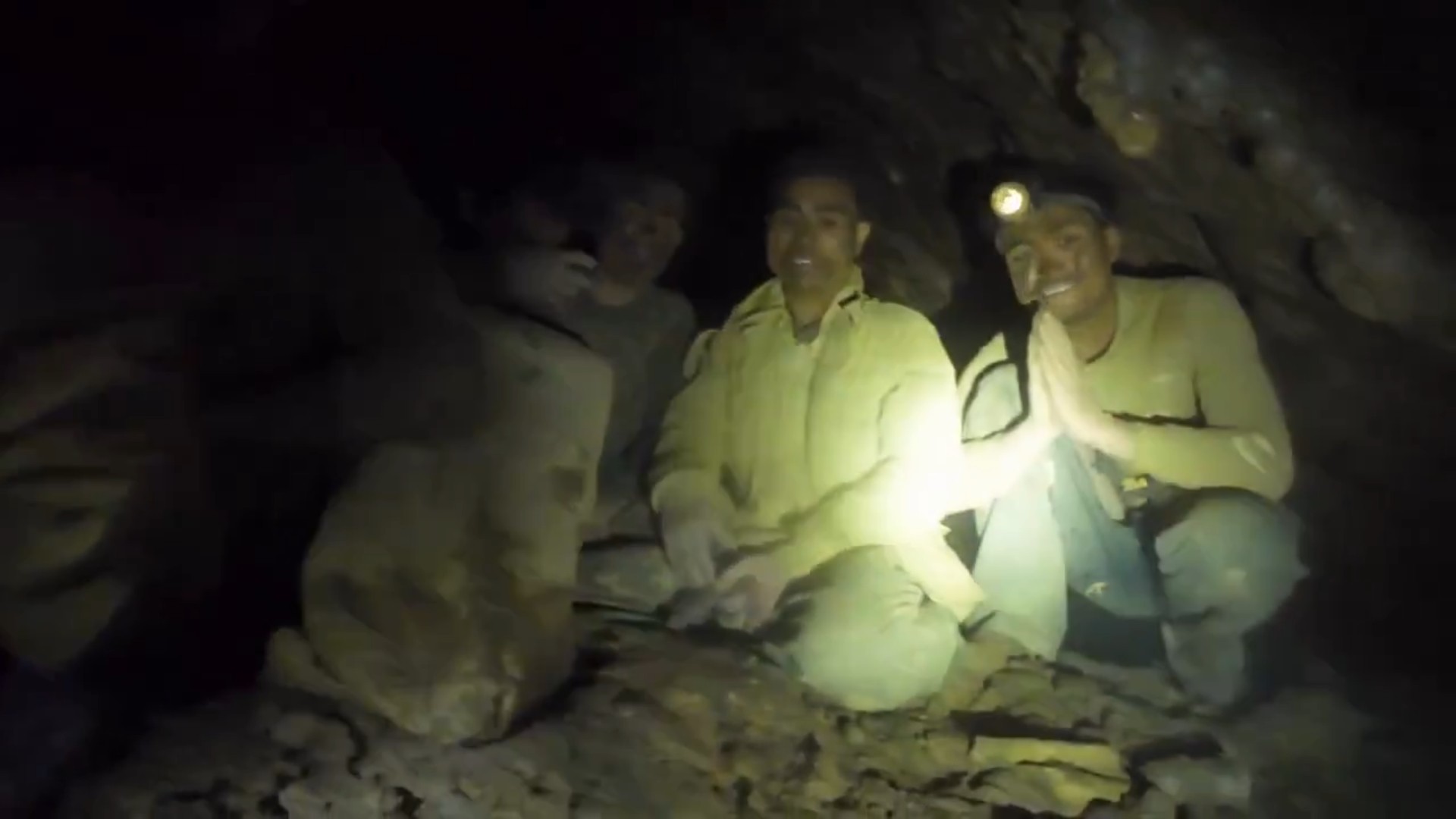
Divers try to bring food to survivors trapped in cave in Laos: 'Getting them out won't be easy'
Watch the moment rescue team finds 5 of the missing in cave in LaosDivers taking part in the rescue of five survivors...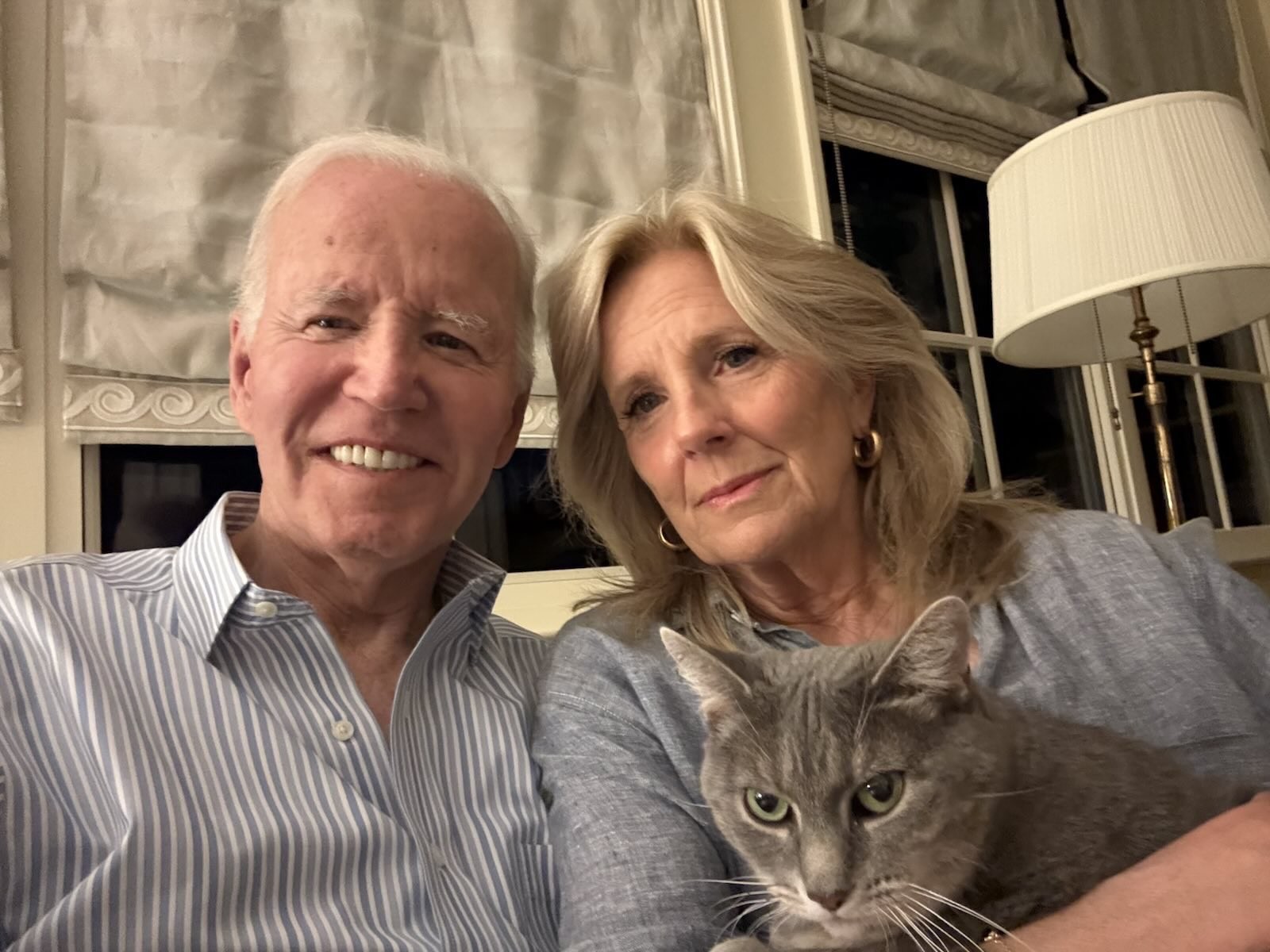
'I thought he was having a stroke', says Joe Biden's wife, about her husband's performance in the debate with Trump in 2024
Former US President, Joe Biden, in a photo with his wife, Jill Biden, and the couple's cat, in an image released on Ma...
But the contents of the document remain unclear.
The central premise of this approach is that the memorandum, once signed, would halt the fighting, which would be welcome news for both sides as US President Donald Trump faces midterm elections later this year amid rising gasoline prices and Iran's economic crisis.
The agreement called for the gradual reopening of the Strait of Hormuz and would begin a 60-day process to address other issues, mainly Iran's nuclear program.
Toque agora.



Rubio said there was "something pretty solid on the table" in terms of opening the strait and Iran entering "a meaningful, time-bound negotiation on nuclear issues."
A senior administration official told CNN on Sunday that the framework agreement gives the parties "60 days to reach a final agreement."
According to the official, the possible agreement would guarantee that Iran could never possess a nuclear weapon and would commit it to giving up highly enriched uranium, which the president often calls "nuclear dust."
How the stock will be disposed of would be part of the next phase of negotiations.
"The bottom line of the framework is that if Iran doesn't comply with the deal, it will get nothing. No dust? No money. As the Strait opens, the blockade is loosened proportionately," the official said.
"This is 'trust but verify' in the extreme," he added.
However, Iranian officials and state media have offered different interpretations.
"We have reached an understanding on most of the issues under discussion. But to say that this means that an agreement is about to be signed - no one can say that," Foreign Ministry spokesman Esmail Baghaei said on Monday.
And, after saying the deal was "largely negotiated", Trump said on Sunday that the US would not rush into a deal.
"If I make a deal with Iran, it will be a good and proper one, not like the one Obama made," Trump said in a post on Truth Social on Sunday, asserting that that deal gave Iran "a clear and open path to a nuclear weapon."
Analysis: Any agreement reached between the US and Iran must be fragile | CNN 360º
Strait of Hormuz
Trump wrote in a social media post late Saturday that the crucial waterway, the Strait of Hormuz, would reopen under the memorandum.
But several Iranian media outlets, some of them close to the hard-line IRGC (Islamic Revolutionary Guard Corps), reported on Sunday that the strait would remain under Iranian supervision.
Over the course of 30 days, Iran would allow shipping to return to pre-war levels.
Tehran has slightly changed its tone regarding charging tolls for ships crossing the strait.
"We are not seeking to charge a toll - services are provided; navigation services, in addition to the measures necessary to protect the environment of the Strait of Hormuz," Baghaei said on Monday.
In practice, Iran appears to be signaling that, although it may allow commercial traffic to return to pre-war volumes, it still intends to maintain greater control over passage through the strait than existed before the conflict.
"The strait is already open, but coordination with the competent Iranian authorities must take place to ensure the safety of the crossing," an Iranian source told CNN on Sunday.
Iran demands that the US blockade of its ports be lifted simultaneously, but in a social media post on Sunday, Trump said "the blockade will remain in full force until an agreement is reached, certified and signed," apparently referring to a final agreement rather than the memorandum.
Iran insists that the management of the strait has nothing to do with the United States, but will be coordinated with Oman, to develop "a mechanism to guarantee the safe passage of ships", as Baghaei stated on Monday.
Iran's uranium stockpiles and enrichment
A possible deal between the US and Iran includes a commitment from Iran not to pursue nuclear weapons, CNN reported on Sunday. Iran would also pledge to begin negotiations to give up its stockpile of highly enriched uranium and suspend any new enrichment, according to a person familiar with the matter.
Iranian officials insist that uranium talks can only begin after a memorandum ending the war is agreed. Uranium is an essential nuclear fuel that can be used to build a nuclear bomb if enriched to high levels.
Iran's semi-official Fars news agency said on Sunday that "Iran has not made any commitments in this deal regarding the handover of nuclear stockpiles, removal of equipment, closure of facilities or even a promise not to build a nuclear bomb."
Trump has repeatedly insisted that, one way or another, Iran will have to give up the more than 400 kilograms of highly enriched uranium it possesses.
Much of this material is believed to have been buried after the US attacks last year.
The initial memorandum is not expected to address enrichment in detail, and finding a way to overcome differences between the two sides will be one of the main challenges to a comprehensive agreement.
Trump cited Iran's nuclear program as a key reason for the attack and has previously stated that a 20-year suspension of uranium enrichment would be acceptable.
Iran's frozen assets
With its economy in serious trouble, Iran demands the immediate unlocking of billions of dollars in assets held in banks abroad.
"Right at the beginning of this process, the status of the release of blocked assets needs to be clarified," Baghaei said on Saturday (23).
Quoting an "informed source", the Tasnim agency said on Sunday that "without the release of a specific portion of blocked Iranian assets in this first step - along with a clear mechanism for the continued and guaranteed release of all blocked assets - there will be no deal."
But a senior US government official told CNN on Sunday that the unlocking of Iranian assets will only occur after the Strait of Hormuz reopens.
The US has not committed to how these assets, which are deposited in several foreign banks, will be returned to Iran.
Sanctions
Iran's economy also suffers from a series of international sanctions, most imposed by the US and Europe.
"The lifting of sanctions will not be discussed in this short term," Baghaei said on Saturday, although "Iran's demand to lift all sanctions is explicitly in the text."
"Details should be negotiated after the memorandum is finalized," he added, suggesting that the suspension of sanctions will be linked to the nuclear issue.
Iran estimates that removing sanctions on oil sales alone could generate nearly $10 billion in revenue for the government over a 60-day period, Fars news agency reported.
As with Iran's frozen assets, sanctions imposed on the country will only be lifted when the Strait of Hormuz is open and fully functioning again, an American official told CNN.
Ballistic missiles
During the conflict, American officials asserted that Iran's long-range ballistic missiles should be destroyed. Trump said his "conventional ballistic missile program was growing rapidly and dramatically."
The inclusion of the missile arsenal in broader negotiations has been mentioned less recently, although Israel and the Gulf Arab states consider it an urgent risk.
Lebanon
It is also unclear how or if the conflict between Israel and Iran-backed Hezbollah in Lebanon will be addressed in any memorandum.
The Tasnim agency reported on Sunday that the wording of the declaration refers to "declaring the end of the war on all fronts, including Lebanon".
Baghai said something similar on Monday: "The end of the war on all fronts, including Lebanon, will be one of the elements of a possible understanding."
But Trump told Israeli Prime Minister Benjamin Netanyahu that he supports the country's desire to "maintain freedom of action against threats on all fronts, including Lebanon," an Israeli official told CNN.
In a call with Trump on Saturday night, Netanyahu "emphasized that Israel will maintain freedom of action against threats on all fronts, including Lebanon, and President Trump reiterated his support for this principle," the official said on Sunday.
Ultimately, Iran insists it is ready for a "fair and balanced deal," the Iranian source told CNN on Sunday.
"The most important thing for us is that the war ends once and for all in the entire Middle East", he concluded.
Why is the Strait of Hormuz so important to the world economy?
Source: CNN
Historias das musicas em destaque
 Historia da musica
How to play the classic "Careless Whisper" on the guitar and move anyone in the first chords
27/05/2026
Few songs can create such an intense and nostalgic atmosphere as George Michael's "Careless Whisper." From the first few seconds, the f...
 Historia da musica
Learn to play Chega, the country music that turns pain into a new beginning
27/05/2026
Chega, by Zezé Di Camargo & Luciano, is one of those songs that speak directly to those who are tired of suffering for love. The lyrics...
 Historia da musica
Learn how to play Total Eclipse Of The Heart, Bonnie Tyler's classic that chills the guitar
26/05/2026
Total Eclipse Of The Heart is one of those songs that seems to be born ready to move people. In Bonnie Tyler's striking voice, the song...
 Historia da musica
Learn to play Memonça Boa on the guitar and feel the strength of this passionate fashion
26/05/2026
Membrança Boa, by Traia Véia, is one of those songs that seem simple, but reach straight to the heart. The song talks about the end of...
 Historia da musica
Learn to play Bete Balanço: the Frejat classic that has energy, attitude and an unforgettable chorus
25/05/2026
Bete Balanço is one of those songs that carries movement from the first chord. With lyrics full of image, dreams, risk and youth, the s...
 Historia da musica
Learn to play Star, by Simply Red, the chord that transforms feelings into guitar
24/05/2026
Star, by Simply Red, is one of those songs that mix romanticism, regret and a striking melody, perfect for those who like to play somet...
 Historia da musica
Learn to play Die With a Smile: the emotional ballad by Lady Gaga and Bruno Mars that conquered the world on guitar
24/05/2026
"Die With a Smile" is one of those songs that already looks like a classic. In the meeting of two giant voices of pop music, Lady Gaga...
 Historia da musica
Learn to play Rasgando a Madrugada, Eduardo Costa's perfect song for guitar
24/05/2026
Rasgando a Madrugada, by Eduardo Costa, is one of those songs that seem to be born in the silence of the night. The song carries the we...
 Historia da musica
Learn to play Autor Da Vida, the Oficina G3 classic that speaks straight to the heart
23/05/2026
Learn to play Autor Da Vida, the Oficina G3 classic that speaks straight to the heart Autor Da Vida, by Oficina G3, is one of those son...
 Historia da musica
Learn to play Te Esperando: the exciting country music by Luan Santana that made Brazil sing on the guitar
23/05/2026
Te Esperando, by Luan Santana, is one of those country songs that sticks in your memory because it mixes romanticism, longing and the p...
Mais noticias para voce
 Noticia
27/05/2026
Smuggling and piracy generated record losses of R$514 billion in 2025
Brazil faced losses exceeding R$514 billion due to counterfeiting, smuggling and piracy in 2025, according to the ABCF (Brazilian Association to Combat Counterf...
 Noticia
27/05/2026
Cynthia Erivo hits back at critics who doubt her friendship with Ariana Grande
Actress Cynthia Erivo, 39, spoke in an interview with Variety magazine about her friendship with artist Ariana Grande, during the recording of the box office hi...
 Noticia
27/05/2026
Pará approves law that forces aggressors to pay for electronic ankle bracelets
The Legislative Assembly of Pará (Alepa) approved, this Tuesday (26), a Bill that obliges aggressors of women to pay for the electronic ankle bracelets used as...
 Noticia
27/05/2026
Brazilian dinosaur 'cried' to survive; understand why
A new study suggests that some semi-aquatic dinosaurs, such as Spinosaurus, could "cry salty tears" to eliminate excess salt from their bodies. The research, pu...
Noticia
27/05/2026
How to play the classic "Careless Whisper" on the guitar and move anyone in the first chords
Few songs can create such an intense and nostalgic atmosphere as George Michael's "Careless Whisper." From the first few seconds, the famous solo transports any...
Noticia
27/05/2026
Learn to play Chega, the country music that turns pain into a new beginning
Chega, by Zezé Di Camargo & Luciano, is one of those songs that speak directly to those who are tired of suffering for love. The lyrics bring a strong feeling o...
Participe da conversa
Seu comentario ajuda a manter a discussao viva e ainda convida outros leitores a continuar navegando pelo portal.
Seja o primeiro a comentar esta noticia.