




Leia a noticia completa
The President of the United States, Donald Trump, stated on Saturday (23) that peace with Iran is close and that the Strait of Hormuz will be reopened.
Iran has, in turn, adopted an inflexible stance regarding the full reopening of the Strait - its main weapon of pressure during the war.
But if this really is the end of the war and the Strait of Hormuz is about to reopen, what will happen next? When will prices return to pre-war levels?
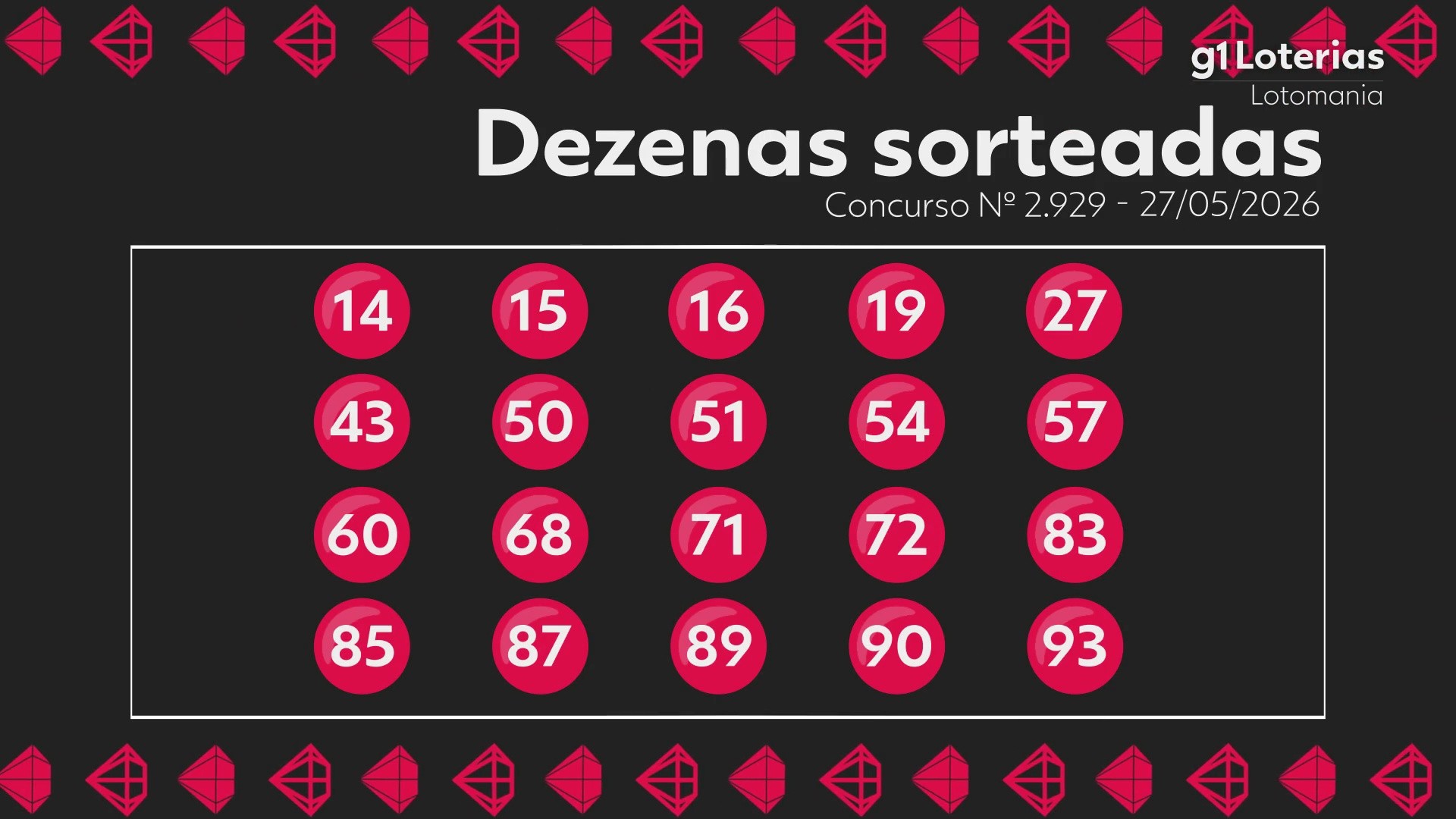
Lotomania today: results of contest 2929 and numbers drawn
Lotomania Resultg1See below the draw numbers for Lotomania contest 2929 held this Wednesday (27):14 - 15 - 16 - 19 - 2...
Dupla Sena today: results of contest 2962 and numbers drawn
Dupla Sena resultg1See below the draw numbers for Dupla Sena contest 2962 held this Wednesday (27):1st draw: 17 - 24 -...
Super Sete today: results of contest 852 and numbers drawn
Super Sete steering wheelsG1See below the numbers drawn from the columns in contest 852 of Super Sete held this Wednes...
The truth is that there is no exact answer.
First, the roughly 166 oil tankers stuck in the Persian Gulf need to leave, carrying about 170 million barrels of oil, according to Matt Smith, chief oil analyst at Kpler. This will open the way for empty tankers to enter the Strait, load up and leave.
Toque agora.



According to Victoria Grabenwöger, senior oil analyst at Kpler, the return to full tanker transport capacity could take up to three months.
Second, reduce inventories.
The good news: Refineries were pragmatic about storage and never completely filled stocks. This should reduce some of the time it would take to restart the pumps. However, fuller than normal inventories will still delay the resumption of oil production to full capacity.
Third: Restart production. Middle Eastern oil wells were largely shut down during the war. Turning on production is not like flipping a switch. It's a complex engineering challenge involving physics and work that can take several weeks.
Production will need to restart - slowly - to ensure that crude oil reservoirs do not collapse, requiring additional drilling and substantial repairs. The water and gas injected into the wells need to be rebalanced, which is a delicate task.
Because the wells in the region are large and close together, restarting production will require significant coordination between companies and countries to ensure that the pressure of injected water and gas remains consistent across multiple wells.
Four: Repairs. Several refineries, natural gas producers and some oil producers were damaged during the war in the Middle East. Some oil companies have said repairs to damaged critical infrastructure could take years to complete.
Complex issues
All of this assumes that the war is over and there are no further disruptions across the Strait.
The last few months have been marked, however, by several vague peace promises, leading negotiators to keep oil prices high. In fact, on April 18, Iran agreed to reopen the Strait, but hours later determined that the United States and Israel had violated part of the agreement and, once again, began firing at ships trying to pass.
In addition, shipping companies will need to feel safe sending ships through the Strait.
Insurers have increased marine insurance prices by thousands of percentage points and may be unwilling to offer affordable coverage while the situation remains precarious.
What will happen to oil and gasoline prices?
Brent oil futures contracts closed at just over US$100 per barrel on Friday (22).
Analysts at JPMorgan, who expect the Strait to open in early June, predict oil will average $97 per barrel for the rest of the year. Historically, Brent needs to be in the $60 range for gasoline to cost $3 per gallon, pointed out Michael Green, chief strategist at Simplify Asset Management.
The futures market currently does not predict this to happen before 2032.
In addition, Iran has already questioned Trump's statement that ships will be able to transit freely through the Strait again.
"Although Iran has agreed to allow the number of passing vessels to return to pre-war levels, this in no way means 'free passage' as it existed before the war," Iranian state news agency Fars reported.
War in the Middle East: Iranian delegation goes to Qatar to discuss agreement with the USA | LIVE CNN
Why is the Strait of Hormuz so important to the world economy?
Source: CNN

Historias das musicas em destaque
 Historia da musica
Learn how to play "I Love You" and discover why Billie Eilish moves millions with just a few chords
27/05/2026
There are songs that seem simple at first, but carry an emotional intensity that is difficult to explain. "I Love You", by Billie Eilis...
 Historia da musica
How to play the classic "Careless Whisper" on the guitar and move anyone in the first chords
27/05/2026
Few songs can create such an intense and nostalgic atmosphere as George Michael's "Careless Whisper." From the first few seconds, the f...
 Historia da musica
Learn to play Chega, the country music that turns pain into a new beginning
27/05/2026
Chega, by Zezé Di Camargo & Luciano, is one of those songs that speak directly to those who are tired of suffering for love. The lyrics...
 Historia da musica
Learn how to play Total Eclipse Of The Heart, Bonnie Tyler's classic that chills the guitar
26/05/2026
Total Eclipse Of The Heart is one of those songs that seems to be born ready to move people. In Bonnie Tyler's striking voice, the song...
 Historia da musica
Learn to play Memonça Boa on the guitar and feel the strength of this passionate fashion
26/05/2026
Membrança Boa, by Traia Véia, is one of those songs that seem simple, but reach straight to the heart. The song talks about the end of...
 Historia da musica
Learn to play Bete Balanço: the Frejat classic that has energy, attitude and an unforgettable chorus
25/05/2026
Bete Balanço is one of those songs that carries movement from the first chord. With lyrics full of image, dreams, risk and youth, the s...
 Historia da musica
Learn to play Star, by Simply Red, the chord that transforms feelings into guitar
24/05/2026
Star, by Simply Red, is one of those songs that mix romanticism, regret and a striking melody, perfect for those who like to play somet...
 Historia da musica
Learn to play Die With a Smile: the emotional ballad by Lady Gaga and Bruno Mars that conquered the world on guitar
24/05/2026
"Die With a Smile" is one of those songs that already looks like a classic. In the meeting of two giant voices of pop music, Lady Gaga...
 Historia da musica
Learn to play Rasgando a Madrugada, Eduardo Costa's perfect song for guitar
24/05/2026
Rasgando a Madrugada, by Eduardo Costa, is one of those songs that seem to be born in the silence of the night. The song carries the we...
 Historia da musica
Learn to play Autor Da Vida, the Oficina G3 classic that speaks straight to the heart
23/05/2026
Learn to play Autor Da Vida, the Oficina G3 classic that speaks straight to the heart Autor Da Vida, by Oficina G3, is one of those son...
Mais noticias para voce
 Noticia
28/05/2026
At 43, João Vicente de Castro says he is ready for fatherhood
Actor João Vicente de Castro, 43, made another statement about his desire to be a father. In the podcast "No Importance", which he presents alongside his collea...
 Noticia
28/05/2026
Melody, Pepita and Diego Martins give up LGBT+ Parade fee
The 30th edition of the São Paulo LGBT+ Pride Parade arrives on Avenida Paulista on June 7th. The event marks one of the biggest celebrations of the LGBT+ commu...
 Noticia
28/05/2026
Waack: Electoral interest halts serious debate on work
The reasons for discussing reduction in working hours and changes in work schedule are worthy. This is, without a doubt, a matter of enormous, profound and long...
 Noticia
28/05/2026
Film created and starring Anitta begins recording in June
Singer Anitta, 33, will star in a new romance film produced by Estúdios Globo. The production - which was created by the artist herself - marks the first time t...
Noticia
27/05/2026
Learn how to play "I Love You" and discover why Billie Eilish moves millions with just a few chords
There are songs that seem simple at first, but carry an emotional intensity that is difficult to explain. "I Love You", by Billie Eilish, is exactly like that....
Noticia
27/05/2026
How to play the classic "Careless Whisper" on the guitar and move anyone in the first chords
Few songs can create such an intense and nostalgic atmosphere as George Michael's "Careless Whisper." From the first few seconds, the famous solo transports any...
Participe da conversa
Seu comentario ajuda a manter a discussao viva e ainda convida outros leitores a continuar navegando pelo portal.
Seja o primeiro a comentar esta noticia.