



Leia a noticia completa
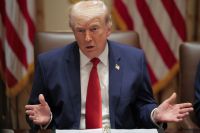
US President Donald Trump has "compulsorily" called on Middle Eastern countries and others to sign the Abraham Accords after a deal to end the war with Iran is reached - while threatening "bigger and stronger than ever" military action if the two sides fail to reach an agreement to end the conflict.
"I am requesting that all countries immediately sign the Abraham Accords and that, if Iran signs the agreement with me, as President of the United States of America, it would be an honor to have them also part of this unprecedented global coalition", said Trump in a long post on the Truth Social network this Monday (25).
The president reported having discussed the matter during phone calls with the leaders of Saudi Arabia, the United Arab Emirates, Qatar, Pakistan, Turkey, Egypt and Bahrain.
Collision between van and truck leaves 13 dead in China
An overcrowded van collided this Thursday (28) with a truck in central China, killing 13 people and injuring three, au...Fire in female school dormitory kills at least 10 students in Kenya, says local radio
A fire at a dormitory in Kenya's central Nakuru region killed at least 10 students, Capital FM radio reported on Thurs...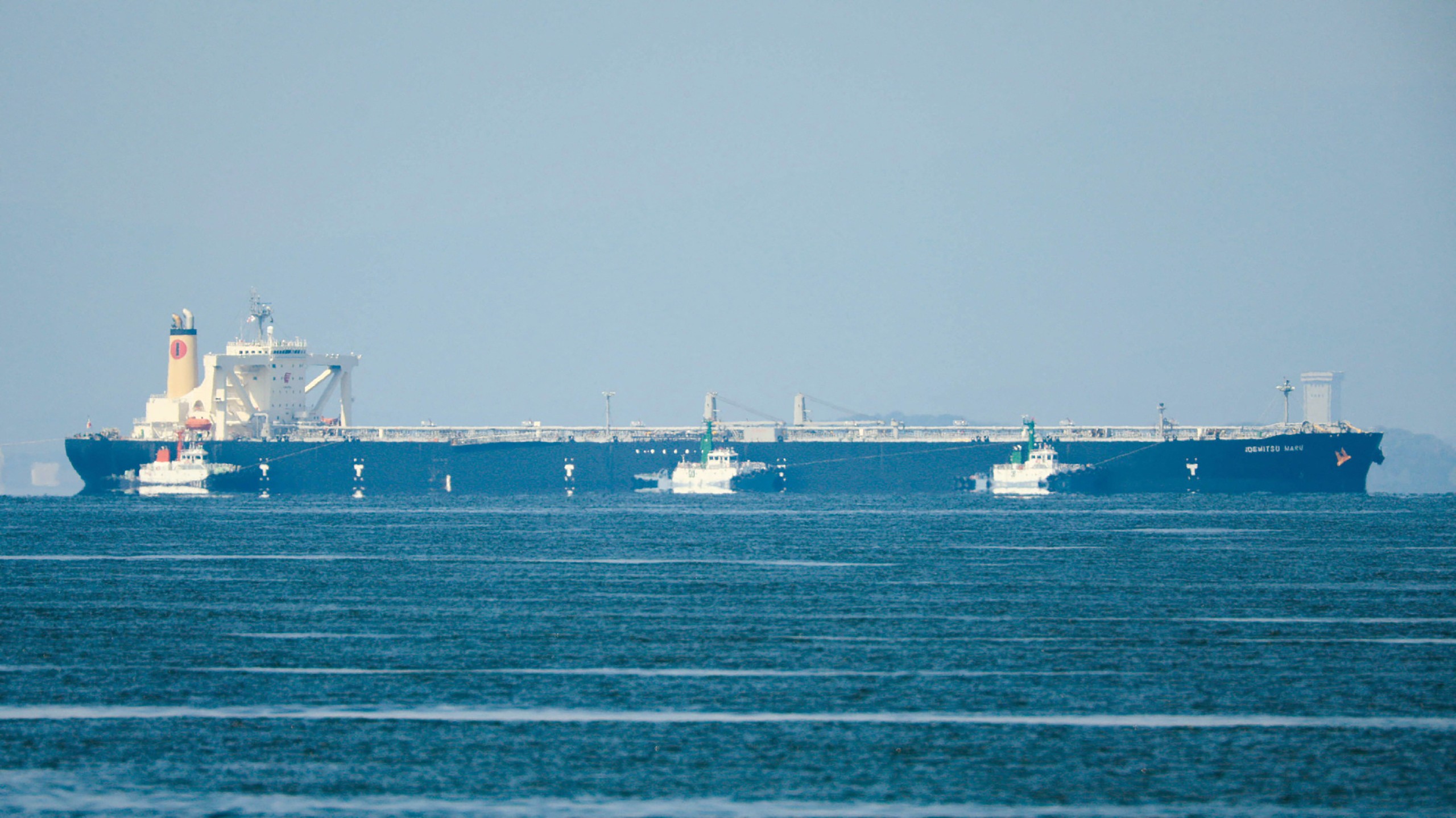
US sanctions body created by Iran to collect fees in the Strait of Hormuz
Oil tanker sails near the city of Chita, in Aichi Prefecture, after becoming the first Japan-bound tanker to transit t...
He said that with "all the work" the US had done to reach a peace agreement, adherence to the Abraham Accords - a series of agreements that normalized relations between Israel and some of its Arab neighbors, including Bahrain and the United Arab Emirates - should be mandatory.
Although he stated that negotiations with Iran were progressing "well", he again warned that military operations would resume if an agreement was not reached.
"Negotiations with the Islamic Republic of Iran are progressing well! It will either be a Grand Deal for all, or no deal at all - back to the frontline and back to the fighting, but bigger and stronger than ever," he declared.
Toque agora.

Key points of the agreement
Trump raised expectations of an imminent agreement on Saturday (23), when he said that Washington and Tehran had "largely negotiated" a memorandum of understanding on a peace deal that would reopen the Strait of Hormuz.
Iran's Foreign Ministry spokesman said on Monday that Iran would not charge a toll for passage through the vital strait, but added that it was "normal for the services provided to have a price."
Before the conflict, the strait was responsible for a fifth of global oil and liquefied natural gas shipments.
The two sides remain at odds over several complex issues, including Iran's nuclear ambitions, Israel's war in Lebanon against the Iran-backed group Hezbollah, and Tehran's demands for the lifting of sanctions and the release of tens of billions of dollars in Iranian oil revenues frozen in foreign banks.
A senior Trump administration official outlined what he considered the latest contours of the issues under negotiation.
Speaking on condition of anonymity, the official said Iran had agreed "in principle" to open the Strait of Hormuz in exchange for the lifting of the US naval blockade and to dispose of Tehran's highly enriched uranium.
The US understood that Iran's supreme leader, Ayatollah Mojtaba Khamenei, endorsed the general outline of the agreement, he added.
The official refuted suggestions that Iran would not have agreed to part with its stockpile of enriched uranium. "The question is how," said the official.
A second senior government official said on Sunday that the proposed framework would give negotiators 60 days to reach a final agreement.
Iranian sources told Reuters that in future steps, "workable formulas" could be found to resolve the dispute over its stockpile of highly enriched uranium, including dilution of the material under the supervision of the UN nuclear agency.
Understand what the Abraham Accords are
The Abraham Accords are a set of agreements to normalize relations with Israel. The UAE and Bahrain signed during US President Donald Trump's first term in 2020, and were the first Arab states to recognize Israel in 25 years.
Morocco and Sudan followed suit.
Jared Kushner, Trump's son-in-law, helped broker the deals.
Palestinian officials said they felt betrayed by their Arab brethren for reaching agreements with Israel without first demanding progress on the creation of a Palestinian state.
The biggest victory for Israel was the agreement with the United Arab Emirates, a major global oil producer and trading hub with diplomatic influence throughout the Middle East.
Since then, Israel and the UAE have developed close economic and security ties, including defense cooperation and a free trade pact. But the relationship has been going through a moment of tension lately.
The UAE warned Israel that annexation in the occupied West Bank would be a violation that threatens the agreement.
Understand the negotiating points between the US and Iran to end the war | NOW CNN
Source: CNN

Historias das musicas em destaque
 Historia da musica
Learn how to play "I Love You" and discover why Billie Eilish moves millions with just a few chords
27/05/2026
There are songs that seem simple at first, but carry an emotional intensity that is difficult to explain. "I Love You", by Billie Eilis...
 Historia da musica
How to play the classic "Careless Whisper" on the guitar and move anyone in the first chords
27/05/2026
Few songs can create such an intense and nostalgic atmosphere as George Michael's "Careless Whisper." From the first few seconds, the f...
 Historia da musica
Learn to play Chega, the country music that turns pain into a new beginning
27/05/2026
Chega, by Zezé Di Camargo & Luciano, is one of those songs that speak directly to those who are tired of suffering for love. The lyrics...
 Historia da musica
Learn how to play Total Eclipse Of The Heart, Bonnie Tyler's classic that chills the guitar
26/05/2026
Total Eclipse Of The Heart is one of those songs that seems to be born ready to move people. In Bonnie Tyler's striking voice, the song...
 Historia da musica
Learn to play Memonça Boa on the guitar and feel the strength of this passionate fashion
26/05/2026
Membrança Boa, by Traia Véia, is one of those songs that seem simple, but reach straight to the heart. The song talks about the end of...
 Historia da musica
Learn to play Bete Balanço: the Frejat classic that has energy, attitude and an unforgettable chorus
25/05/2026
Bete Balanço is one of those songs that carries movement from the first chord. With lyrics full of image, dreams, risk and youth, the s...
 Historia da musica
Learn to play Star, by Simply Red, the chord that transforms feelings into guitar
24/05/2026
Star, by Simply Red, is one of those songs that mix romanticism, regret and a striking melody, perfect for those who like to play somet...
 Historia da musica
Learn to play Die With a Smile: the emotional ballad by Lady Gaga and Bruno Mars that conquered the world on guitar
24/05/2026
"Die With a Smile" is one of those songs that already looks like a classic. In the meeting of two giant voices of pop music, Lady Gaga...
 Historia da musica
Learn to play Rasgando a Madrugada, Eduardo Costa's perfect song for guitar
24/05/2026
Rasgando a Madrugada, by Eduardo Costa, is one of those songs that seem to be born in the silence of the night. The song carries the we...
 Historia da musica
Learn to play Autor Da Vida, the Oficina G3 classic that speaks straight to the heart
23/05/2026
Learn to play Autor Da Vida, the Oficina G3 classic that speaks straight to the heart Autor Da Vida, by Oficina G3, is one of those son...
Mais noticias para voce
 Noticia
28/05/2026
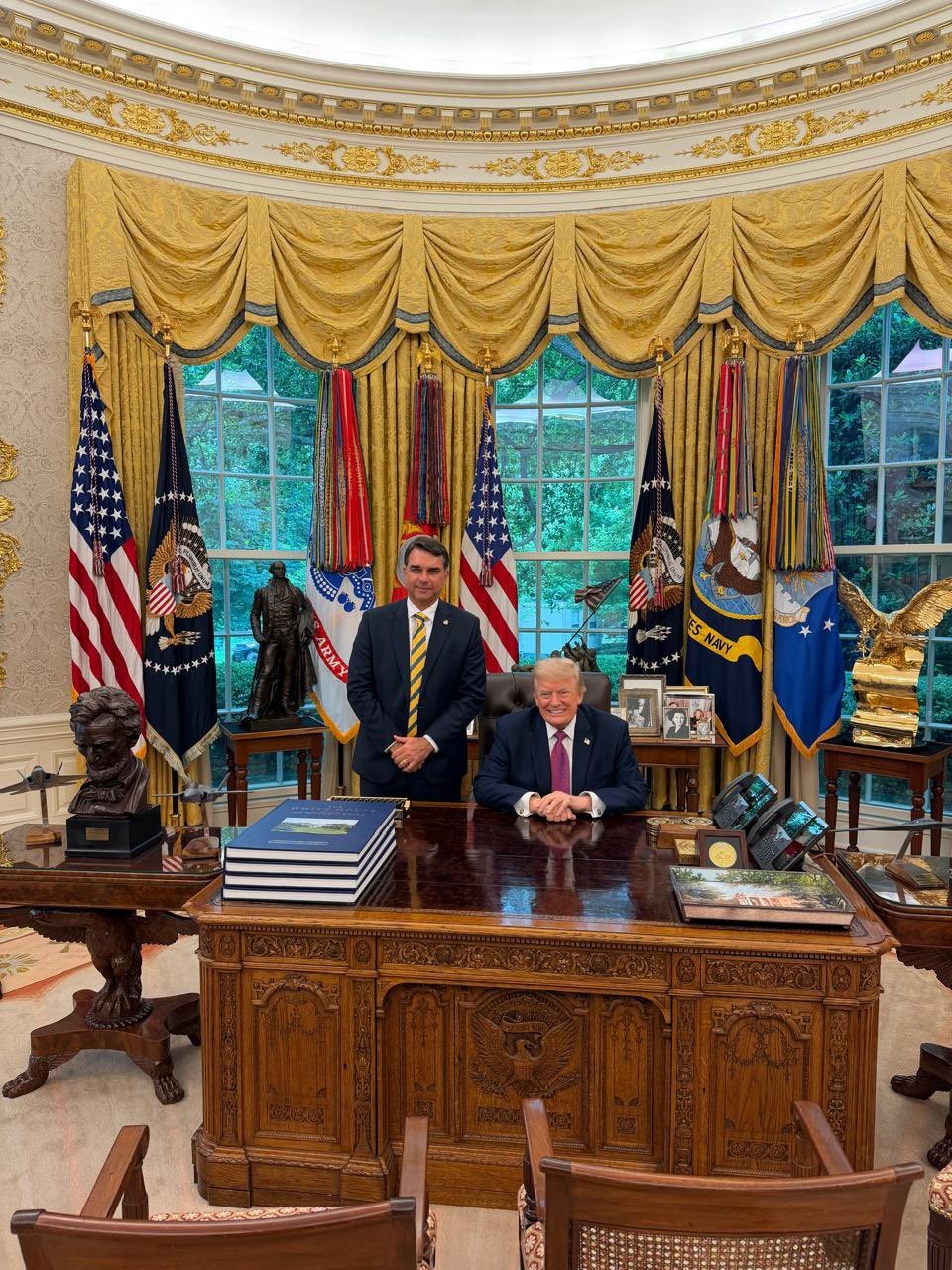
The meeting between Flávio and Trump and American interests in the Brazilian election - The Issue #1729
On Tuesday afternoon (26), Flávio Bolsonaro was received by the American president at the White House and achieved some goals in this meeting: a photo next to D...
 Noticia
28/05/2026
Understand the complaints that FIFA faces because of the high ticket prices for the World Cup
FIFA is investigated in the US for high World Cup ticket pricesThe attorneys general of New York and New Jersey have opened an investigation into FIFA's ticket...
 Noticia
28/05/2026
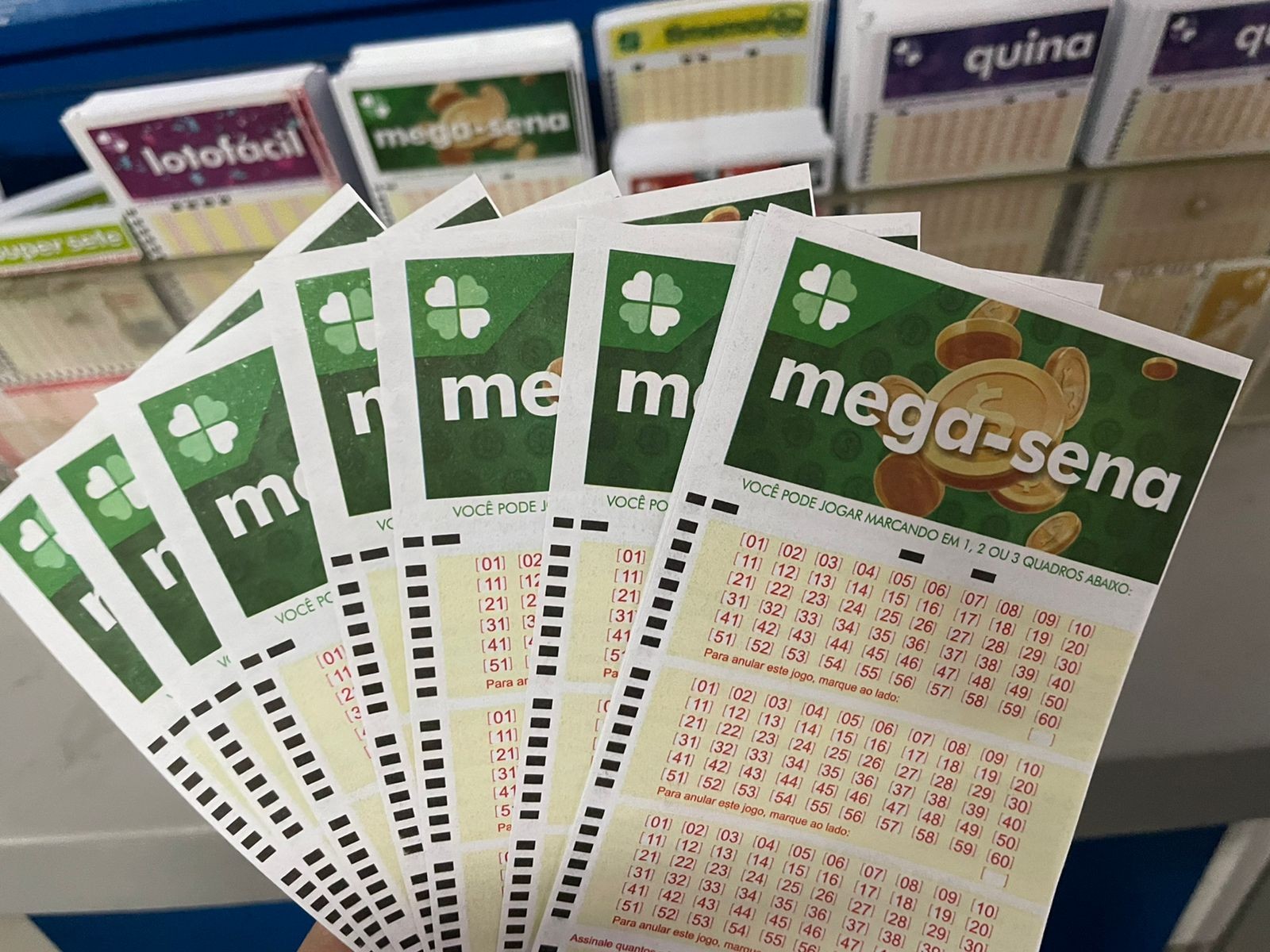
Mega-Sena can pay R$6 million this Thursday; g1 broadcasts live
How does the Mega-Sena work?The Mega-Sena contest 3,011 can pay out a prize of R$6 million for those who guess the six numbers correctly. The draw takes place a...
 Noticia
28/05/2026
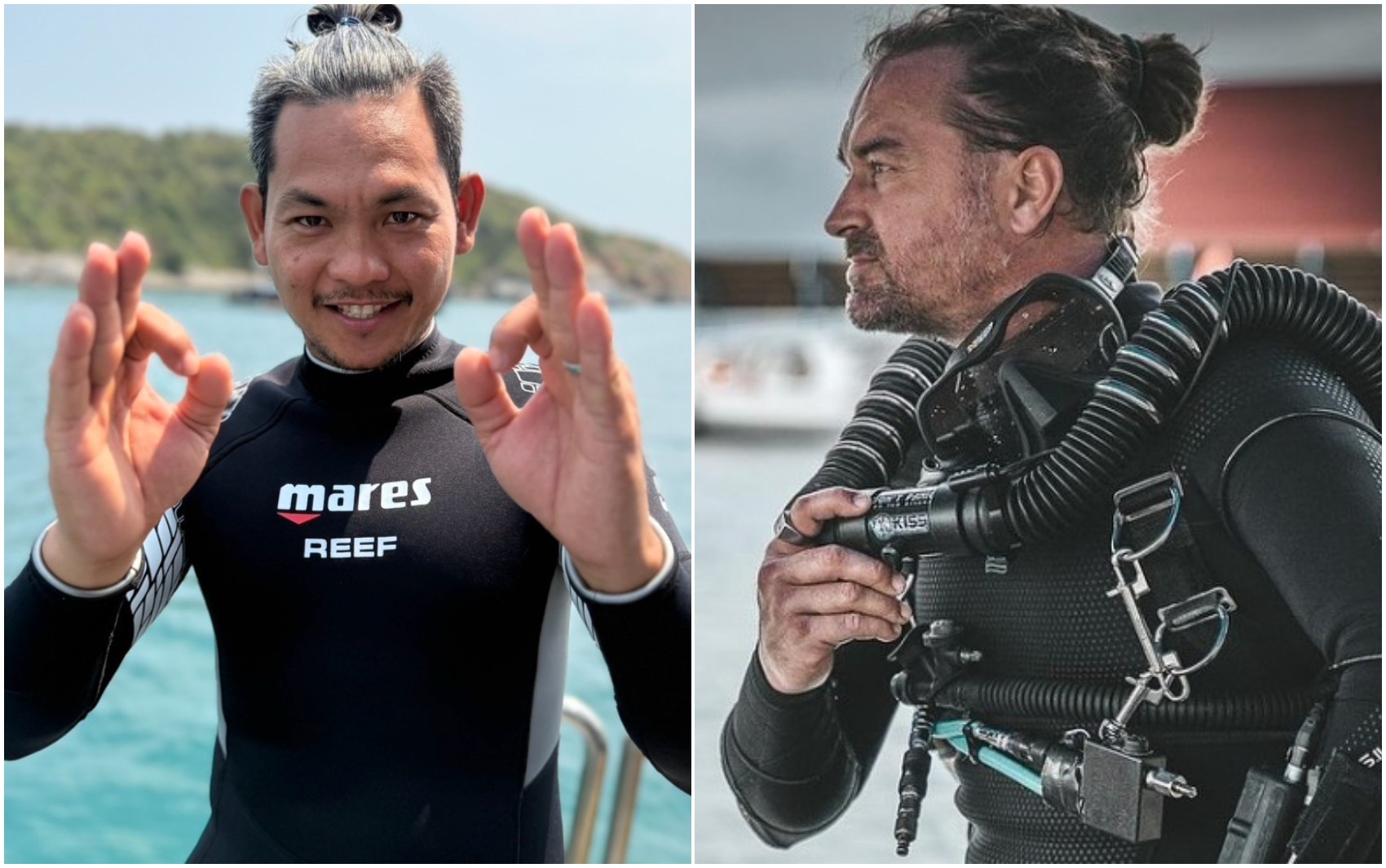
Cave in Laos: divers involved in the search participated in the rescue of the boys from Thailand
Norrased Palasing and Mikko PaasiReproduction/Social MediaDivers working to rescue five survivors who were trapped in a flooded cave in Laos also participated i...
Noticia
27/05/2026
Learn how to play "I Love You" and discover why Billie Eilish moves millions with just a few chords
There are songs that seem simple at first, but carry an emotional intensity that is difficult to explain. "I Love You", by Billie Eilish, is exactly like that....
Noticia
27/05/2026
How to play the classic "Careless Whisper" on the guitar and move anyone in the first chords
Few songs can create such an intense and nostalgic atmosphere as George Michael's "Careless Whisper." From the first few seconds, the famous solo transports any...
Participe da conversa
Seu comentario ajuda a manter a discussao viva e ainda convida outros leitores a continuar navegando pelo portal.
Seja o primeiro a comentar esta noticia.