


Leia a noticia completa
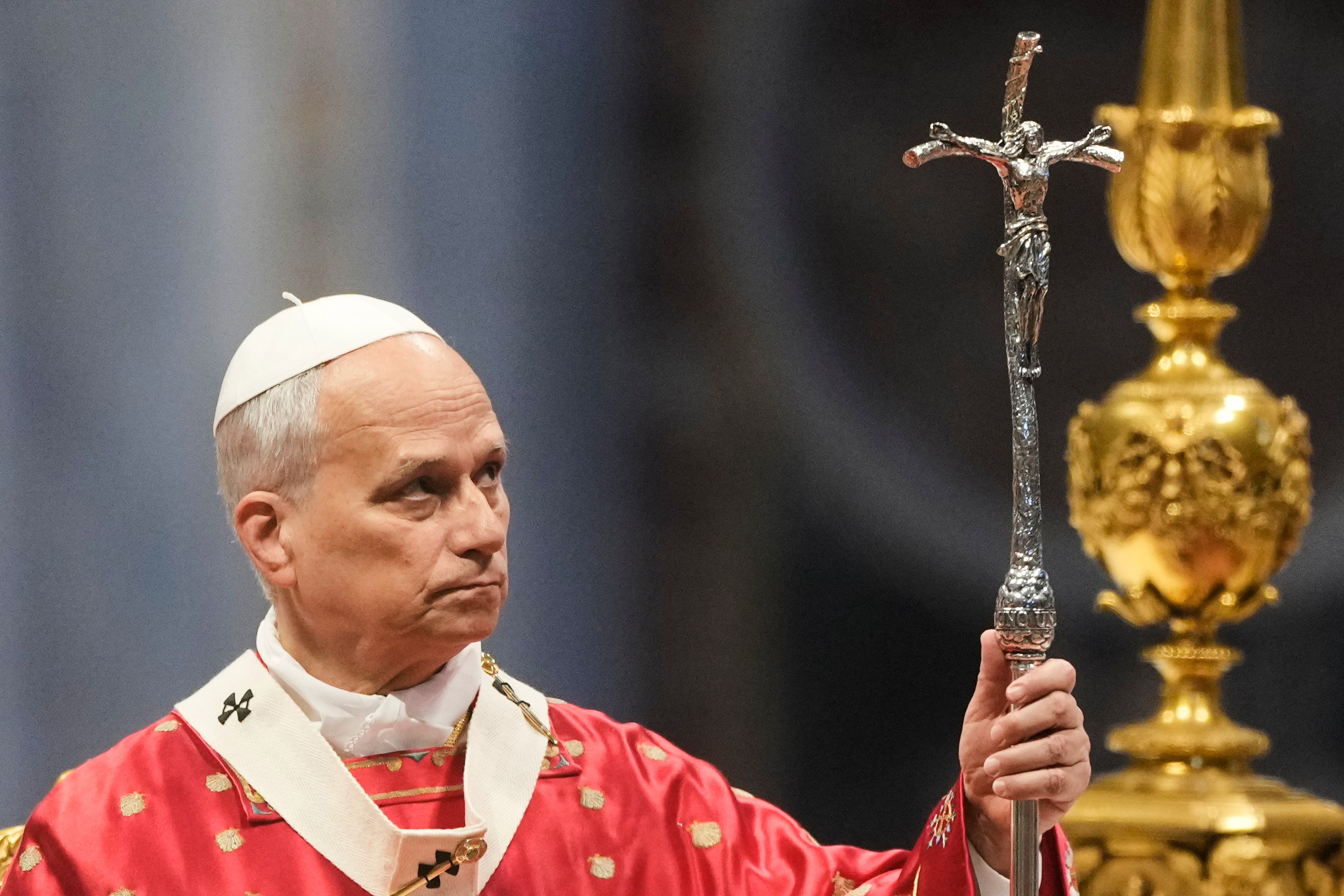
Pope Leo XIV at the Mass of Pentecost in St. Peter's Basilica, in the Vatican.
Gregorio Borgia/AP
Pope Leo He called the Vatican's past a "wound in Christian memory."
Previous papacies had already apologized for the involvement of Christians in the transatlantic slave trade. But no pope has publicly acknowledged - nor apologized for - the role of former pontiffs in explicitly authorizing European sovereigns to subjugate and enslave "infidels."
The first pope born in the United States, Leo humanity in an era of increasing dependence on artificial intelligence. In addressing the topic, the pope linked the transatlantic slave trade to new forms of slavery and colonialism driven by the digital revolution, such as the unregulated labor used in extracting rare minerals needed for AI chips.
With this, Leo the immense suffering and humiliation endured by so many, in contrast to their immeasurable dignity as people infinitely loved by the Lord," the pope wrote. "Therefore, in the name of the Church, I sincerely ask for forgiveness."
Now in g1
Centuries of legitimizing slavery
The Vatican maintains that it has always defended the dignity of all human beings as children of God. However, a series of 15th-century decrees authorized Portuguese sovereigns to conquer territories in Africa and the Americas and enslave non-Christians.
In 1452, for example, Pope Nicholas V published the papal bull "Dum Diversas", which granted the king of Portugal and his successors the right to "invade, conquer, combat and subjugate" "Saracens, pagans and other infidels".
The text also authorized the Portuguese to reduce these people to "perpetual slavery".
This bull and another document issued three years later, the "Romanus Pontifex", served as the basis for the so-called Doctrine of Discovery, a theory used to legitimize the colonial seizure of land in Africa and the Americas.
The permissions given by Nicholas V were later confirmed or renewed by Popes Callistus III, Sixtus IV and Leo X.
In 2023, The Vatican formally repudiated the Doctrine of Discovery, but never officially annulled the papal bulls themselves.
The Holy See states that a later document, Sublimis Deus, from 1537, reaffirmed that indigenous peoples should not be deprived of freedom, property or enslaved.
Church was slow to condemn slavery
In the encyclical, Leo In addition, according to the pontiff, even institutions of the Church owned slaves.
Recognizing the role of the Holy See itself and the papal bulls of the 15th century, Leo It is possible to judge decisions of the past only by current standards, but he said that this does not reduce the delay of society and the Church in denouncing slavery.
"This constitutes a wound in Christian memory, from which we cannot consider ourselves disconnected", he wrote.
Leo by the slave trade carried out by Christians.
g1/Archive
Family history and previous requests
During a visit to Cameroon in 1985, Pope John Paul II asked forgiveness from Africans for the slave trade carried out by Christians, but without mentioning the direct role of the popes.
In 1992, during a visit to Gorée Island, in Senegal - one of the largest centers of slave trafficking in West Africa - John Paul II called slavery "tragedy of a civilization that called itself Christian."
According to genealogical research published by Henry Louis Gates Jr., 17 American ancestors of Leo XIV were black and appear in official records as mulattoes, blacks, creoles or free people of color. The pope's family tree includes both enslaved people and slave owners.
Last month, during a visit to Angola, Leo XIV prayed at a Catholic sanctuary located in an area that was an important center for the trafficking of enslaved Africans during Portuguese colonial rule. On the occasion, he mentioned the "suffering and great pain" experienced by Angolans over the centuries, but without directly mentioning slavery.
Source: G1

One of the most violent thieves in the city of São Paulo is arrested; see video
A 23-year-old man, considered by the police to be one of the most violent thieves in the city of São Paulo, was arrest...
Djokovic advances at Roland Garros after scare against Frenchman
Serbian Novak Djokovic advanced this Wednesday to the third round of the French Open by beating Frenchman Valentin Roy...
Federal Government signs service order for "middle section" on BR-319
The federal government signed today the first of four service orders for asphalting and recovery of the so-called "mid...
Toque agora.



Historias das musicas em destaque
 Historia da musica
Learn to play Chega, the country music that turns pain into a new beginning
27/05/2026
Chega, by Zezé Di Camargo & Luciano, is one of those songs that speak directly to those who are tired of suffering for love. The lyrics...
 Historia da musica
Learn how to play Total Eclipse Of The Heart, Bonnie Tyler's classic that chills the guitar
26/05/2026
Total Eclipse Of The Heart is one of those songs that seems to be born ready to move people. In Bonnie Tyler's striking voice, the song...
 Historia da musica
Learn to play Memonça Boa on the guitar and feel the strength of this passionate fashion
26/05/2026
Membrança Boa, by Traia Véia, is one of those songs that seem simple, but reach straight to the heart. The song talks about the end of...
 Historia da musica
Learn to play Bete Balanço: the Frejat classic that has energy, attitude and an unforgettable chorus
25/05/2026
Bete Balanço is one of those songs that carries movement from the first chord. With lyrics full of image, dreams, risk and youth, the s...
 Historia da musica
Learn to play Star, by Simply Red, the chord that transforms feelings into guitar
24/05/2026
Star, by Simply Red, is one of those songs that mix romanticism, regret and a striking melody, perfect for those who like to play somet...
 Historia da musica
Learn to play Die With a Smile: the emotional ballad by Lady Gaga and Bruno Mars that conquered the world on guitar
24/05/2026
"Die With a Smile" is one of those songs that already looks like a classic. In the meeting of two giant voices of pop music, Lady Gaga...
 Historia da musica
Learn to play Rasgando a Madrugada, Eduardo Costa's perfect song for guitar
24/05/2026
Rasgando a Madrugada, by Eduardo Costa, is one of those songs that seem to be born in the silence of the night. The song carries the we...
 Historia da musica
Learn to play Autor Da Vida, the Oficina G3 classic that speaks straight to the heart
23/05/2026
Learn to play Autor Da Vida, the Oficina G3 classic that speaks straight to the heart Autor Da Vida, by Oficina G3, is one of those son...
 Historia da musica
Learn to play Te Esperando: the exciting country music by Luan Santana that made Brazil sing on the guitar
23/05/2026
Te Esperando, by Luan Santana, is one of those country songs that sticks in your memory because it mixes romanticism, longing and the p...
 Historia da musica
Learn to play Hey Joe: the Jimi Hendrix classic that every guitarist dreams of mastering
23/05/2026
Few songs carry as much attitude and history as Hey Joe, immortalized in the voice and guitar of Jimi Hendrix. With an unmistakable int...
Mais noticias para voce
 Noticia
27/05/2026
Analysis: Why ending war with Iran might be very difficult for Trump?
US President Donald Trump's war with Iran hasn't exactly been a resounding success so far. And a large part of the American public hopes that the end of the con...
 Noticia
27/05/2026
Google opens AI engineering center in SP; g1 met space
Google's new engineering center in São Paulo.Darlan HelderGoogle opened this Wednesday (27) its second AI engineering center in Brazil. The space is located at...
 Noticia
27/05/2026
Bricklayers killed by police officers in Rio were reportedly mistaken for drug traffickers
The two bricklayers who died after being shot by military police officers this Wednesday morning (27) in São Gonçalo, in the Metropolitan region of Rio de Janei...
 Noticia
27/05/2026
Leaving Fluminense, Ganso is offered to Serie A rivals; see details
After leaving Fluminense, Paulo Henrique Ganso was offered to a rival in Series A of the Brazilian Championship. This is Athletico-PR, coached by Odair Hellmann...
Noticia
27/05/2026
Learn to play Chega, the country music that turns pain into a new beginning
Chega, by Zezé Di Camargo & Luciano, is one of those songs that speak directly to those who are tired of suffering for love. The lyrics bring a strong feeling o...
Noticia
26/05/2026
Learn how to play Total Eclipse Of The Heart, Bonnie Tyler's classic that chills the guitar
Total Eclipse Of The Heart is one of those songs that seems to be born ready to move people. In Bonnie Tyler's striking voice, the song mixes drama, intensity a...
Participe da conversa
Seu comentario ajuda a manter a discussao viva e ainda convida outros leitores a continuar navegando pelo portal.
Seja o primeiro a comentar esta noticia.