



Leia a noticia completa
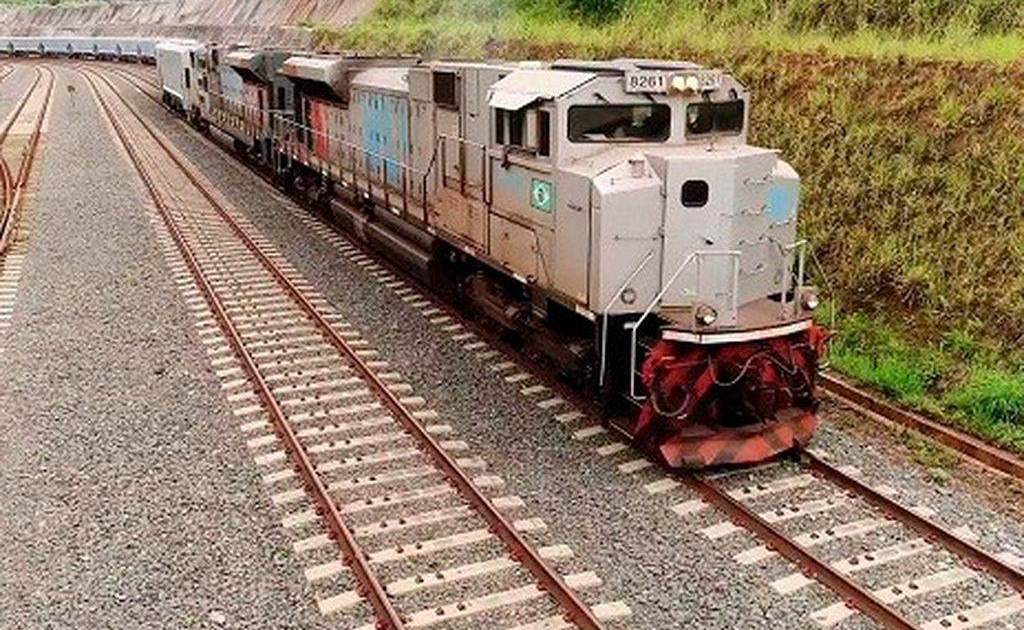
Brazil has been living for decades with a paradox in the railway sector: it has a territorial dimension, potential demand and natural advantages for transporting cargo by rail, but maintains a system that is poorly integrated, fragmented and excessively dependent on export flows. The expansion of the domestic rail freight market inevitably involves two structuring pillars that are still underdeveloped in the country: interoperability and intermodality.
The Brazilian railway, today, does not function as a network. It operates, in practice, as a set of isolated, vertical corridors with little interaction between them. Each concessionaire manages its network focusing on its own flows, often linked to specific loads, such as ore and grains. This model may be efficient for export, but it is clearly insufficient to meet the logic of general cargo, which requires flexibility, capillarity and logistics integration.
Interoperability - understood as the possibility of circulating trains between different networks - should be a central element of this system. However, in Brazil, it remains restricted to a few cases and with low representation in the total volume transported. The right of passage and mutual traffic, fundamental instruments to enable this integration, are still little explored, whether due to regulatory limitations, economic disincentives or even the natural resistance of established operators.
Collision between van and truck leaves 13 dead in China
An overcrowded van collided this Thursday (28) with a truck in central China, killing 13 people and injuring three, au...Fire in female school dormitory kills at least 10 students in Kenya, says local radio
A fire at a dormitory in Kenya's central Nakuru region killed at least 10 students, Capital FM radio reported on Thurs...
US sanctions body created by Iran to collect fees in the Strait of Hormuz
Oil tanker sails near the city of Chita, in Aichi Prefecture, after becoming the first Japan-bound tanker to transit t...
This situation contrasts sharply with that observed in countries like the United States, where the railway operates in an integrated manner, with a high degree of infrastructure sharing. The uniformity of gauges, the standardization of operating systems and the consolidation of the sector over the last few decades have created a favorable environment for the continuous circulation of cargo over long distances, guaranteeing scale and efficiency. In Brazil, on the contrary, we still live with basic obstacles, such as the plurality of gauges and the lack of technological standardization.
The fragmentation of the Brazilian railway system is not just a technical problem - it is, above all, an institutional one. There is a lack of coordination between agents, there is a lack of regulatory clarity in some aspects and, most importantly, there is a lack of a strategic decision to treat the railway as an integrated national system, and not as isolated assets granted to the private sector.
Another critical aspect is the high idleness of the railway network. A significant portion of the country's existing trails are underused or without relevant traffic. This is one of the biggest contradictions in the sector: while the need to expand infrastructure is discussed, much of what has already been built remains economically inert. The reactivation of these sections, associated with more flexible third-party access models, may represent a more efficient and less costly path to expanding the system's capacity.
Toque agora.




In this context, the North-South Railway stands out as a strategic asset. More than a railway line, it can fulfill the role of a structuring axis of national integration, connecting different regions and allowing greater operational fluidity between networks. However, for this potential to be realized, its operation must be part of a network logic, with effective connections and clear incentives for interoperability.
The creation of the Railway Cargo Transport Agent (ATF-C) also represents an important conceptual advance, by allowing the entry of independent operators into the system. In theory, it is an instrument capable of increasing competition, increasing efficiency and boosting the market. In practice, however, its implementation is still in its infancy. Barriers such as lack of scale, the absence of a structured rail services market and resistance from concessionaires make it difficult for this model to advance.
In the field of intermodality, the challenges are equally relevant.
The integration between railway and highway - essential for the transport of general cargo - is still limited by logistical bottlenecks, a lack of intermodal terminals and high documentation bureaucracy. Cargo transport in Brazil continues to be thought of in a segmented way, by modal, when it should be structured based on integrated logistics chains.
The implementation of the Electronic Transport Document (DT-e) appears as a promising initiative to simplify processes and reduce transactional costs. However, its effectiveness will depend on the capacity for integration between different bodies and agents in the sector, something that has historically represented a challenge in the country.
In addition, there is room for more pragmatic solutions adapted to the Brazilian reality. Piggyback transport, for example, although it has lost relevance in other markets, may find viable niches in Brazil, especially given the limitations of road infrastructure, high rates of cargo theft and the specific characteristics of the national railway network.
The central point, however, remains the same: Brazil does not lack diagnoses. The problems are known, as are the solutions. What is missing is scaled implementation, coordination between agents and, above all, a clear political decision to transform the railway into an integrated and competitive system.
Without interoperability, there is no network. Without intermodality, there is no logistical efficiency. And without these two pillars, the railway will continue to play a secondary role in the transport matrix, restricted to a few flows and far from the potential it could achieve.
The future of rail freight transport in Brazil will depend less on new projects and more on the ability to integrate, modernize and make better use of the railroads that already exist. The question that arises, therefore, is simple: is the country willing to make this transformation or will it continue to manage a fragmented and underutilized system.
* Marcus Quintella has a doctorate in production engineering from Coppe/UFRJ, a master's degree in transport from IME and a postgraduate degree in financial administration from FGV. He is currently director of FGV Transportes and editor-in-chief of the Revista Brasileira de Transportes - RBT.
The articles published by CNN Infra seek to stimulate debate, reflection and shed light on views on the main challenges, problems and solutions faced by Brazil and other countries in the world. The texts published in this space do not necessarily reflect the opinion of CNN Brasil.
Source: CNN

Historias das musicas em destaque
 Historia da musica
Learn how to play "I Love You" and discover why Billie Eilish moves millions with just a few chords
27/05/2026
There are songs that seem simple at first, but carry an emotional intensity that is difficult to explain. "I Love You", by Billie Eilis...
 Historia da musica
How to play the classic "Careless Whisper" on the guitar and move anyone in the first chords
27/05/2026
Few songs can create such an intense and nostalgic atmosphere as George Michael's "Careless Whisper." From the first few seconds, the f...
 Historia da musica
Learn to play Chega, the country music that turns pain into a new beginning
27/05/2026
Chega, by Zezé Di Camargo & Luciano, is one of those songs that speak directly to those who are tired of suffering for love. The lyrics...
 Historia da musica
Learn how to play Total Eclipse Of The Heart, Bonnie Tyler's classic that chills the guitar
26/05/2026
Total Eclipse Of The Heart is one of those songs that seems to be born ready to move people. In Bonnie Tyler's striking voice, the song...
 Historia da musica
Learn to play Memonça Boa on the guitar and feel the strength of this passionate fashion
26/05/2026
Membrança Boa, by Traia Véia, is one of those songs that seem simple, but reach straight to the heart. The song talks about the end of...
 Historia da musica
Learn to play Bete Balanço: the Frejat classic that has energy, attitude and an unforgettable chorus
25/05/2026
Bete Balanço is one of those songs that carries movement from the first chord. With lyrics full of image, dreams, risk and youth, the s...
 Historia da musica
Learn to play Star, by Simply Red, the chord that transforms feelings into guitar
24/05/2026
Star, by Simply Red, is one of those songs that mix romanticism, regret and a striking melody, perfect for those who like to play somet...
 Historia da musica
Learn to play Die With a Smile: the emotional ballad by Lady Gaga and Bruno Mars that conquered the world on guitar
24/05/2026
"Die With a Smile" is one of those songs that already looks like a classic. In the meeting of two giant voices of pop music, Lady Gaga...
 Historia da musica
Learn to play Rasgando a Madrugada, Eduardo Costa's perfect song for guitar
24/05/2026
Rasgando a Madrugada, by Eduardo Costa, is one of those songs that seem to be born in the silence of the night. The song carries the we...
 Historia da musica
Learn to play Autor Da Vida, the Oficina G3 classic that speaks straight to the heart
23/05/2026
Learn to play Autor Da Vida, the Oficina G3 classic that speaks straight to the heart Autor Da Vida, by Oficina G3, is one of those son...
Mais noticias para voce
 Noticia
28/05/2026
The meeting between Flávio and Trump and American interests in the Brazilian election - The Issue #1729
On Tuesday afternoon (26), Flávio Bolsonaro was received by the American president at the White House and achieved some goals in this meeting: a photo next to D...
 Noticia
28/05/2026
Understand the complaints that FIFA faces because of the high ticket prices for the World Cup
FIFA is investigated in the US for high World Cup ticket pricesThe attorneys general of New York and New Jersey have opened an investigation into FIFA's ticket...
 Noticia
28/05/2026
Mega-Sena can pay R$6 million this Thursday; g1 broadcasts live
How does the Mega-Sena work?The Mega-Sena contest 3,011 can pay out a prize of R$6 million for those who guess the six numbers correctly. The draw takes place a...
 Noticia
28/05/2026
Cave in Laos: divers involved in the search participated in the rescue of the boys from Thailand
Norrased Palasing and Mikko PaasiReproduction/Social MediaDivers working to rescue five survivors who were trapped in a flooded cave in Laos also participated i...
Noticia
27/05/2026
Learn how to play "I Love You" and discover why Billie Eilish moves millions with just a few chords
There are songs that seem simple at first, but carry an emotional intensity that is difficult to explain. "I Love You", by Billie Eilish, is exactly like that....
Noticia
27/05/2026
How to play the classic "Careless Whisper" on the guitar and move anyone in the first chords
Few songs can create such an intense and nostalgic atmosphere as George Michael's "Careless Whisper." From the first few seconds, the famous solo transports any...
Participe da conversa
Seu comentario ajuda a manter a discussao viva e ainda convida outros leitores a continuar navegando pelo portal.
Seja o primeiro a comentar esta noticia.