




Leia a noticia completa
When Harrison Browne was on the ice, there was only speed, instinct and the familiar rhythm of skates cutting across the frozen ground.
Long before he became the first openly transgender professional hockey player, and before he wrote a book, created a short film or had a supporting role on the Canadian series "Heated Rivalry," Browne was simply "Brownie" in the locker room. It was a nickname that, for a while, served as a shield for him.
"Hockey was the only place where I could turn my head off. The only space where my body wasn't the enemy. What mattered was the speed of my feet. I could just say, 'Hey, I'm the same Brownie - can you use he/him pronouns?'. And my teammates would say, 'Yeah, sure,'" he recalled.

Federal Lottery today: results of competition 6069 and numbers drawn
Federal Lottery FlyersG1See below the tickets drawn from contest 6069 of the Federal Lottery held this Wednesday (27):...
Botafogo suffers another transfer ban and remains banned from signing players
Botafogo increased its number of problems with the fourth transfer ban applied by FIFA. With the sanction this Wednesd...
ChatGPT creator launches plan against electoral misinformation in Brazil
OpenAI, creator of the artificial intelligence platform ChatGPT, launched this Wednesday (27) a plan against electoral...
On the University of Maine women's hockey team, that acceptance came years before Harrison came out publicly. "I lived a double life. I was Harrison in the locker room. But when I went out in public - my name on the player list wasn't Harrison. I was announced with she/her pronouns. That became a bigger and bigger contradiction," he said.
The tension became difficult to ignore. Having experienced what it was like to be recognized - even in a limited space - he eventually realized that he could no longer return to his closet every time he played.
"I got that taste of being myself in the locker room," Browne said. "And I just knew: This is what I need."
Toque agora.

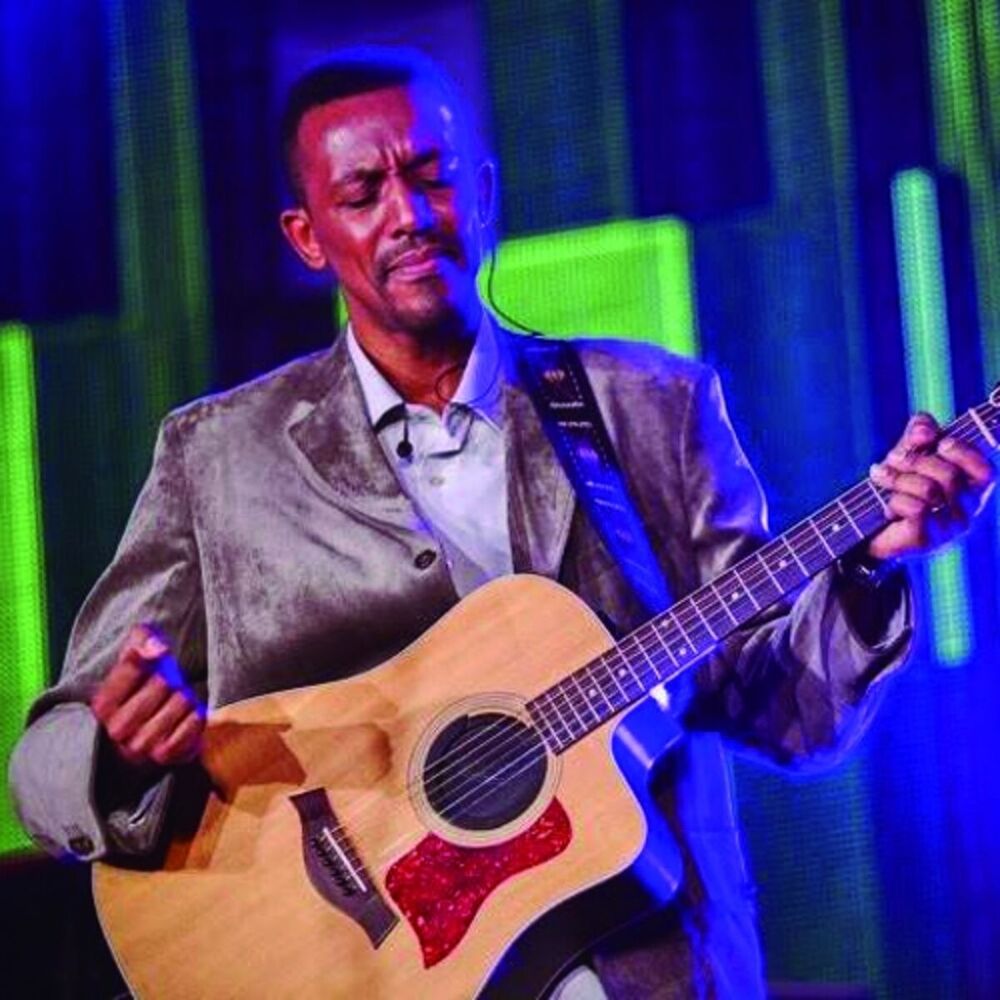

When Harrison publicly came out as a man in 2016, while playing for the Buffalo Beauts - a now-defunct women's professional hockey team - he became the first openly transgender athlete in professional team sports.
In the following decade, transgender athletes became the focus of a growing global debate about equity, biology and the meaning of sport itself. The politics surrounding athletics for children, adults and professional leagues changed - and then changed again. But at the center of all this intensity are a small number of athletes who simply want to play the sports they love.
Researchers and athletes say the public conversation has overtaken - and often distorted - science, leaving athletes like Browne to bear the weight of an issue far more complex than an impulsive opinion.
When Browne began writing the book "Let Us Play: Winning the Battle for Gender Diverse Athletes" with her sister, journalist Rachel Browne, public debates about trans athletes were intensifying. "We were seeing this wave of anti-trans legislation really take off," he said.
Such a fierce reaction to a small group of people doing something perceived as negative has all the signs of a moral panic, he added. After the first wave of separate bathroom bills failed (more have since been passed), politicians and others used such rhetoric to "get people agitated about trans citizens - which distracts from broader, more complicated issues to deal with - health, poverty, human rights," he said.
The issue of hormones
Antipathy towards trans people in sport has centered on a single idea: that hormones - particularly testosterone - determine athletic performance.
From a player's perspective, Browne sees this focus as reductionist and misleading. "When we focus so exclusively on one hormone, we are ignoring the real barriers to equity in sport," he said.
Training, access to coaches, nutrition, socioeconomic status - these factors shape athletic results far more consistently than any single biological variable. "Sport has never been fair," Harrison said. "If it were, everyone would be the same height and have the same access to resources, but that's simply not the reality."
More than that, he fears that reducing athletes to physiology "dehumanizes people", he added.
"You're only talking about their bodies - not their lives." A growing body of research shows, as the actor said, that the relationship between biology and performance is much more complex than a single hormone creating a performance advantage or disadvantage.
"The biggest misconception is that testosterone is some kind of permanent performance-enhancing drug and that once exposed to it, the benefits are fixed forever," wrote Ada Cheung, an endocrinologist and trans health expert at the University of Melbourne in Australia, in an email.
"People hear 'male puberty' and assume it creates an irreversible athletic superpower," Cheung said. "But that's not what science shows."
Gender-affirming hormone therapy, she explained, reshapes the body in measurable ways. In trans women, testosterone suppression and estrogen therapy lead to increased fat mass and decreased lean muscle mass.
In trans men like Browne, testosterone produces the opposite effect - increased lean muscle mass and decreased fat mass - although not to the same extent seen in cisgender men, they end up somewhere in between. The effects on performance are unclear and vary by individual.
"Reality is much more nuanced than the 'once a man, always an advantage' narrative that dominates public debate," declared Cheung.
What the science says about trans athletes
A meta-analysis published in February in the British Journal of Sports Medicine - encompassing 52 studies and more than 6,400 participants - found that after one to three years of hormone therapy, trans women showed no significant differences from cisgender women in upper or lower body strength or aerobic fitness.
Although some differences in absolute lean mass remained, they did not translate into measurable performance advantages. The most recent analyzes reflect the nuance described by Cheung.
Previous work, including Cheung's review in The Journal of Clinical Endocrinology & Metabolism, has reached similar conclusions: Over time, key performance indicators for trans women approach those of cisgender women after hormone therapy.
Even at the molecular level, the body appears to respond dynamically to hormonal changes. A 2025 study published in Nature Medicine found that feminizing hormone therapy altered hundreds of circulating proteins in transgender women, reshaping their biological profile toward that of cisgender women in systems linked to metabolism, immunity and cardiovascular health. Similar results have been demonstrated in trans men.
This research repeatedly suggests that the physiological effects of hormone therapy are continuous and affect a variety of body systems. Over time, both trans men like Harrison and trans women who are athletes perform more similarly to cisgender men and women.
So it wasn't a huge surprise to researchers that a team made up of a non-binary person and a trans man came third in the men's category at a recent Ironman competition in Oceanside, California.
Important questions remain open. Much of the existing research is observational, with relatively small samples, few longitudinal studies, and limited data on elite athletes or sport-specific outcomes.
"The direction of the evidence is consistent. But we need better-designed studies, particularly in athlete populations," said the expert. It is important to highlight that Cheung wrote that body composition alone does not determine performance.
"People see that trans women can retain slightly more lean body mass and jump straight to 'unfair advantage,'" she said. "But absolute lean mass alone doesn't dictate what your body is capable of.
Just like a bigger woman doesn't necessarily surpass a smaller one."
Fat mass, endurance, hemoglobin levels, cardiovascular fitness, training, skill and access to resources all play roles in determining athletic performance and possible advantages or disadvantages, Cheung said.
"The relationship between muscle and performance is much more complex than a simple equation of more muscle equals more power," he said.
Transgender athletes are underrepresented in elite sports - a fact that challenges ideas of easy, widespread dominance. While more research is conducted and topics are debated, non-binary, intersex and trans athletes will continue to exist and play the sports they love.
See yourself in your idols
Protagonists of the series "Heated Rivalry" - Disclosure/HBO Max
Representation matters: for younger athletes coming up behind him, Browne's visibility offered something many had never seen before: a path.
Carly "CJ" Jackson, a non-binary professional hockey player for Seattle Torrent who appears in the film "Pink Light", had her first contact with her story from a distance. "Seeing him come out - it gave me space to accept myself for who I am," Jackson said.
Years later, their lives would intersect in unexpected ways. Browne and Jackson had played for the same teams at the University of Maine and later professionally - just a few years apart and with careers that ran parallel before they finally met on set.
"I think about the impact Harrison had on my life," CJ shared. "And I'm just one person. There are so many people he will never meet." For many transgender athletes, the justice debate is inseparable from a more basic question: Who has the right to belong in sport?
"Sports is where people build friendships, learn teamwork and become healthier," said Alex Schmider, senior director of entertainment at GLAAD, an LGBTQ media advocacy and monitoring organization.
"Trans people play sports for the same reasons as everyone else - and denying these benefits is unnecessary and cruel."
Schmider argues that the current wave of restrictions goes beyond limiting participation. "Politically motivated bans against trans athletes not only harm them, but also send inaccurate and harmful messages about who belongs in this space."
Changing hearts and minds
In recent years, Browne has turned to storytelling - appearing in the landmark series "Heated Rivalry" and writing and producing her short film, "Pink Light" - as a way to reshape understandings of transgender lives.
"Most people say they don't know anyone who is transgender in their personal life," Schmider said. "Often, the first introduction is through characters on television or in the movies."
Ice hockey has its own "dialect" - Instagram/usahockey
Stories like "Heated Rivalry" are successful in part because they portray athletes not as symbols, but as teammates - united by a shared love of the sport.
"When every player and every fan can be themselves, everyone wins," added Schmider. Policies seem to move in the opposite direction to this vision.
The 2021 International Olympic Committee's landmark move towards a more evidence-based, sport-specific approach to the inclusion of transgender people.
But the most recent guidelines, from March 2026, introduced a widespread testing regime - but only for women's sport.
Over the more than two decades in which trans women have been eligible to compete at the Olympic level, only one has participated: New Zealand weightlifter Laurel Hubbard, who did not complete her race.
"How does this justify a blanket ban? There is absolutely no evidence - and yet we are seeing policy moving in this direction," Browne continued.
Harrison's sister Rachel said she worries about the side effects. "So many sports try to align themselves with Olympic policies. And this reverberates at the amateur and youth levels - spaces where people should have more freedom to simply play."
What are sports for?
Many athletes say the thrill of victory is not as important to them as camaraderie and relationships with teammates. Sport is a human experience and expression.
"It's where you build friendships. It's where you discover who you are," Harrison said. "Everyone deserves this escape."
Perhaps, instead of being rigid and binary, athletics could be something broader and more human, as both Browne and Jackson mentioned when thinking about the future. "Sport is art. It's self-expression. And to deny that is to diminish what's possible," concluded Jackson.
Get to know "Heated Rivalry", a gay series that is booming
Source: CNN

Historias das musicas em destaque
 Historia da musica
How to play the classic "Careless Whisper" on the guitar and move anyone in the first chords
27/05/2026
Few songs can create such an intense and nostalgic atmosphere as George Michael's "Careless Whisper." From the first few seconds, the f...
 Historia da musica
Learn to play Chega, the country music that turns pain into a new beginning
27/05/2026
Chega, by Zezé Di Camargo & Luciano, is one of those songs that speak directly to those who are tired of suffering for love. The lyrics...
 Historia da musica
Learn how to play Total Eclipse Of The Heart, Bonnie Tyler's classic that chills the guitar
26/05/2026
Total Eclipse Of The Heart is one of those songs that seems to be born ready to move people. In Bonnie Tyler's striking voice, the song...
 Historia da musica
Learn to play Memonça Boa on the guitar and feel the strength of this passionate fashion
26/05/2026
Membrança Boa, by Traia Véia, is one of those songs that seem simple, but reach straight to the heart. The song talks about the end of...
 Historia da musica
Learn to play Bete Balanço: the Frejat classic that has energy, attitude and an unforgettable chorus
25/05/2026
Bete Balanço is one of those songs that carries movement from the first chord. With lyrics full of image, dreams, risk and youth, the s...
 Historia da musica
Learn to play Star, by Simply Red, the chord that transforms feelings into guitar
24/05/2026
Star, by Simply Red, is one of those songs that mix romanticism, regret and a striking melody, perfect for those who like to play somet...
 Historia da musica
Learn to play Die With a Smile: the emotional ballad by Lady Gaga and Bruno Mars that conquered the world on guitar
24/05/2026
"Die With a Smile" is one of those songs that already looks like a classic. In the meeting of two giant voices of pop music, Lady Gaga...
 Historia da musica
Learn to play Rasgando a Madrugada, Eduardo Costa's perfect song for guitar
24/05/2026
Rasgando a Madrugada, by Eduardo Costa, is one of those songs that seem to be born in the silence of the night. The song carries the we...
 Historia da musica
Learn to play Autor Da Vida, the Oficina G3 classic that speaks straight to the heart
23/05/2026
Learn to play Autor Da Vida, the Oficina G3 classic that speaks straight to the heart Autor Da Vida, by Oficina G3, is one of those son...
 Historia da musica
Learn to play Te Esperando: the exciting country music by Luan Santana that made Brazil sing on the guitar
23/05/2026
Te Esperando, by Luan Santana, is one of those country songs that sticks in your memory because it mixes romanticism, longing and the p...
Mais noticias para voce
Noticia
27/05/2026
Corinthians x Platense: lineups and where to watch the Libertadores game
Corinthians and Platense enter the field this Wednesday (27), at 9:30 pm (Brasília time), in a game valid for the sixth round of the Copa Libertadores. The conf...
 Noticia
27/05/2026
Minister of Labor says Lula will seek Alcolumbre to approve 6×1
The Minister of Labor Luiz Marinho stated this Wednesday (27) that President Luiz Inácio Lula da Silva (PT) should seek out the President of the Senate Davi Alc...
 Noticia
27/05/2026
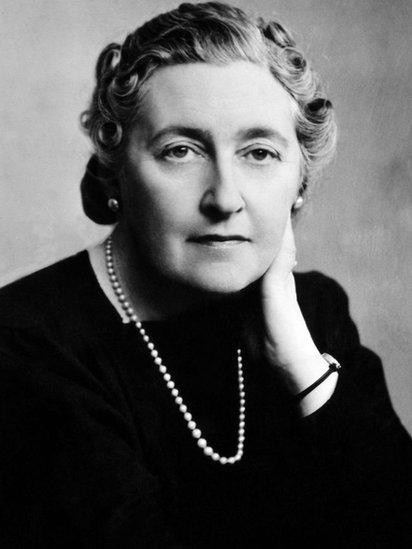
'The Murder of Roger Ackroyd', 100 years old: why was Agatha Christie's novel voted the best whodunit of all time?
The crime writer Agatha ChristieAlamyIn 2013, the British Crime Writers Association (CWA) met to choose, as part of its 60th anniversary celebrations, the best...
 Noticia
27/05/2026
Divers try to bring food to survivors trapped in cave in Laos: 'Getting them out won't be easy'
Watch the moment rescue team finds 5 of the missing in cave in LaosDivers taking part in the rescue of five survivors who were trapped in a flooded cave in Laos...
Noticia
27/05/2026
How to play the classic "Careless Whisper" on the guitar and move anyone in the first chords
Few songs can create such an intense and nostalgic atmosphere as George Michael's "Careless Whisper." From the first few seconds, the famous solo transports any...
Noticia
27/05/2026
Learn to play Chega, the country music that turns pain into a new beginning
Chega, by Zezé Di Camargo & Luciano, is one of those songs that speak directly to those who are tired of suffering for love. The lyrics bring a strong feeling o...
Participe da conversa
Seu comentario ajuda a manter a discussao viva e ainda convida outros leitores a continuar navegando pelo portal.
Seja o primeiro a comentar esta noticia.