


Leia a noticia completa
Understand Ebola in 7 points
The Democratic Republic of Congo recorded, on May 15, a new outbreak of Ebola in the province of Ituri, in the northeast of the country, caused by the Bundibugyo species. Within 48 hours, two confirmed cases, with no apparent link between them, were detected in Kampala, Uganda, in a traveler from the neighboring country.
The speed of spread was sufficient for the World Health Organization to declare the outbreak a public health emergency of international concern on May 17, 2026.
As of May 19, the outbreak had accumulated 536 suspected cases, 105 probable cases, 34 confirmed cases and 134 deaths in Democratic Republic of Congo, in addition to two confirmed cases and one death in Uganda.
What makes the situation more serious, according to the WHO, is the absence of effective medical tools: unlike the Ebola-Zaire strains -combated by approved vaccines-, there is no therapy or specific immunization for the Bundibugyo virus.
g1 heard from Flávia Bravo, director of the Brazilian Society of Immunizations (SBIm), and André Bon, infectious diseases coordinator at Hospital Brasília and head of infectious diseases at Rede Américas, to answer the main questions about the outbreak.
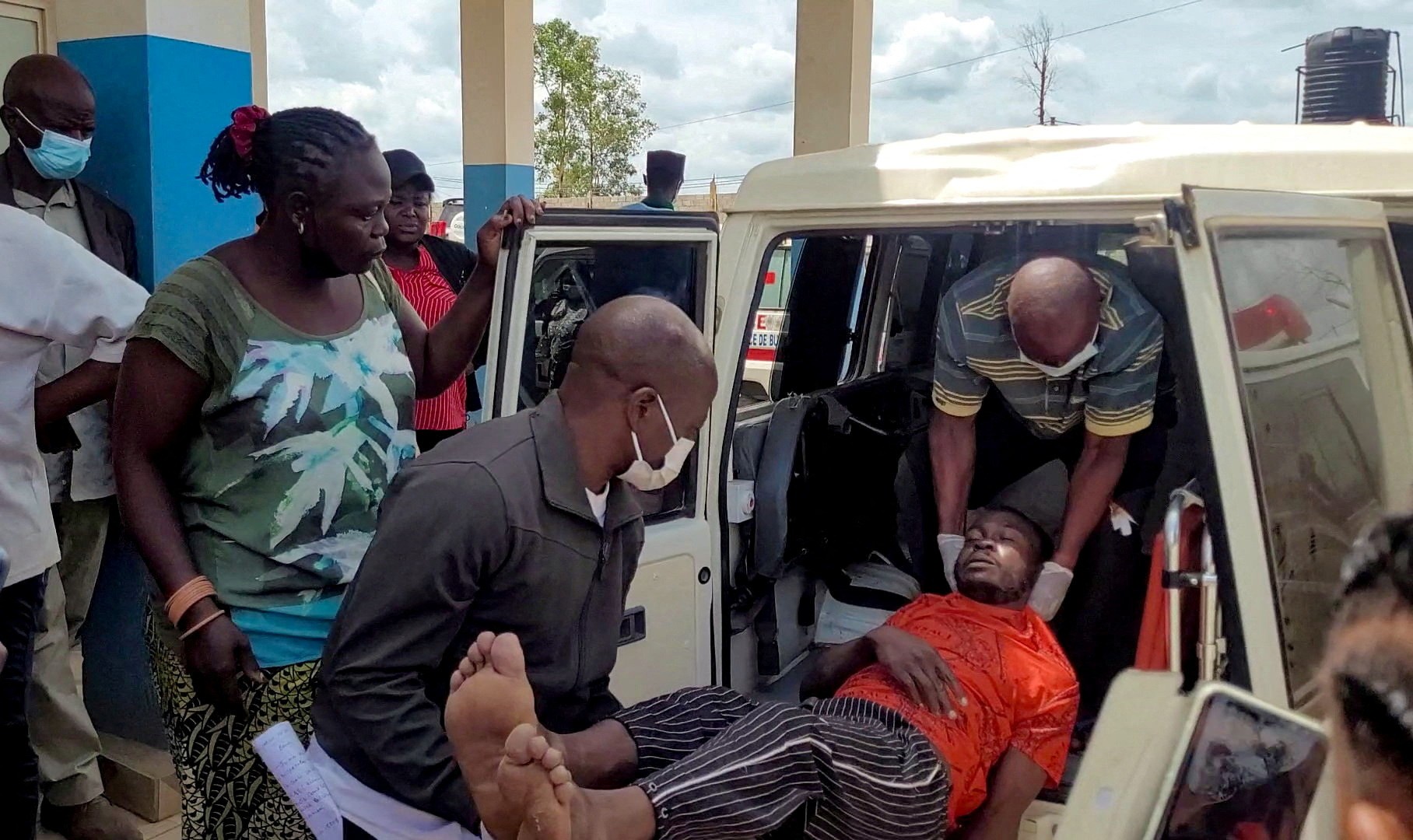
A man is removed from an ambulance upon arrival at Bunia General Reference Hospital, after an outbreak of Ebola involving the Bundibugyo strain was confirmed in Bunia, Ituri province, Democratic Republic of Congo, on May 16, 2026
REUTERS/Victoire Mukenge
Could Ebola reach Brazil?
Flávia Bravo says the risk of the virus reaching Brazil exists, but it is unlikely at the moment. According to her, the risk is worldwide -not exclusively Brazilian- and the WHO itself recognizes that the chances of an epidemic or pandemic are still distant. What motivated the declaration of emergency was precisely the need for countries to reinforce their surveillance mechanisms before the situation worsens.
The expert highlights that the virus remains concentrated in two countries and that the main barrier to contagion is already provided by the biology of Ebola itself: it is not transmitted through the air or through respiratory droplets.
"It is necessary to have more intimate contact with secretions, blood, feces from the infected individual", said Bravo. This differentiates it from diseases such as measles and Covid-19, which spread much more easily.
André Bon reinforces the assessment: the WHO classifies the risk of transmission as low for countries that do not border the affected region. He remembers, however, that Brazil's history with previous outbreaks shows that the health system can identify and isolate imported cases efficiently.
In 2014, during the epidemic that devastated Liberia, Guinea and Sierra Leone - with tens of thousands of confirmed cases and a real risk of infected travelers arriving in other countries -, a suspected case arrived in Brazil, was promptly identified and forwarded to the support structure created at the time. In the end, the case was not confirmed as Ebola.
"The risk of introduction into Brazil is low, but given the high risk of the disease, it is important to remain vigilant," said Bon.
What makes this outbreak different from previous ones?
The strain responsible for this outbreak is the Bundibugyo virus - first identified in 2007, in the Ugandan district of Bundibugyo. In that first outbreak, 131 cases and 42 deaths were recorded, with a fatality rate of 32%.
This is the third documented outbreak involving this strain, after previous episodes in Uganda (2007-2008) and the Democratic Republic of Congo (2012).
What differentiates Bundibugyo from the best-known strains is precisely the lack of available medical response. Bravo explains that existing vaccines were developed for the Zaire type of Ebola virus and do not offer protection against the variant in circulation now.
The available treatment is only supportive -hydration, hemorrhage control and symptom relief-, with no medication capable of eliminating the virus.
The high mortality of Ebola, says the expert, is not the result of medical failure or precarious health systems.
It is inherent to the virus: without specific treatment, the organism faces the infection without pharmacological assistance.
Health professionals take a girl suspected of having Ebola, on August 12, 2018, in Beni, northeast of the Democratic Republic of Congo.
JOHN WESSELS / AFP
How is the disease transmitted and what are the symptoms?
Ebola is transmitted through direct contact with bodily fluids from an infected person - blood, secretions, feces or vomit - and also through contact with animals killed by the disease. There is no distance transmission: direct and significant exposure to the secretions of someone who is sick is necessary, which differentiates the virus from respiratory diseases such as measles and Covid-19.
The first symptoms are a high fever of sudden onset, accompanied by intense muscle pain and gastrointestinal manifestations. In severe cases, the condition progresses to hemorrhagic signs - drop in platelets, hypotension, shock and bleeding of mucous membranes and the gastrointestinal tract - with similarities to the severe condition of dengue. The incubation period varies from 2 to 21 days, with an average of between 5 and 10 days after infection. During this interval, there is no transmission.
Bon advises that patients arriving from the Democratic Republic of Congo with a fever should raise an immediate alert for suspected Ebola in health units. Bravo adds that anyone who has traveled through areas with active cases or has had close contact with someone infected needs to isolate themselves as soon as symptoms appear. "It's an individual responsibility", he says.
Is Brazil prepared to deal with a suspected case?
The country has had a protocol for Ebola since previous outbreaks, coordinated by the Ministry of Health and incorporated into the Public Health Emergency Response Plan. Bravo states that the plan includes surveillance of travelers at ports and airports, definition of criteria to classify suspected cases and referral for laboratory confirmation.
Regarding the training of health professionals, Bravo assesses that Brazil has a history of hemorrhagic diseases, such as severe dengue and yellow fever, which guarantees clinical knowledge to deal with this type of condition.
Although the country has never recorded a case of Ebola, the management of hemorrhagic manifestations is part of medical training and nursing.
Woman takes a dose of vaccine against Ebola in a WHO campaign in the Democratic Republic of Congo in 2019
Baz Ratner/ Reuters
Is the world more prepared than in previous outbreaks?
Bravo believes so. Accumulated experience -especially with the Covid-19 pandemic- has made health systems more familiar with large-scale emergency responses. At the same time, the expert points to a factor that increasingly complicates the control of infectious outbreaks: climate change, which alters the circulation patterns of vectors and virus reservoirs and expands the conditions for diseases like Ebola to spread more frequently.
Bon assesses that, if there were imported cases, Brazil would be able to mount an adequate response. The key lies in the basic principles of containment: isolation, beds with adequate precautions, and personal protective equipment for healthcare workers. The country is familiar with hemorrhagic diseases -severe dengue and yellow fever- which guarantees a clinical basis for dealing with the condition, even without prior experience with Ebola.
Source: G1
/i.s3.glbimg.com/v1/AUTH_59edd422c0c84a879bd37670ae4f538a/internal_photos/bs/2021/p/U/NQo77ZQaOKcQ5j2QFVeQ/img-facebook.jpg)
Income Tax 2026: deadline ends this week and live program answers questions
Income Tax 2026: deadline ends this week and live program answers questions By next Friday, the Federal Revenue expect...
New York and New Jersey open investigation against FIFA over sale of World Cup tickets at exorbitant prices
Worker installs new pitch at MetLife Stadium, in New Jersey, stadium that will host 2026 World Cup games, including th...
Wall Street trades mixed amid uncertainty over US-Iran deal
Wall Street's main stock indices operate without a single direction this Wednesday (27). The White House recently refu...
Toque agora.



Historias das musicas em destaque
 Historia da musica
Learn how to play Total Eclipse Of The Heart, Bonnie Tyler's classic that chills the guitar
26/05/2026
Total Eclipse Of The Heart is one of those songs that seems to be born ready to move people. In Bonnie Tyler's striking voice, the song...
 Historia da musica
Learn to play Memonça Boa on the guitar and feel the strength of this passionate fashion
26/05/2026
Membrança Boa, by Traia Véia, is one of those songs that seem simple, but reach straight to the heart. The song talks about the end of...
 Historia da musica
Learn to play Bete Balanço: the Frejat classic that has energy, attitude and an unforgettable chorus
25/05/2026
Bete Balanço is one of those songs that carries movement from the first chord. With lyrics full of image, dreams, risk and youth, the s...
 Historia da musica
Learn to play Star, by Simply Red, the chord that transforms feelings into guitar
24/05/2026
Star, by Simply Red, is one of those songs that mix romanticism, regret and a striking melody, perfect for those who like to play somet...
 Historia da musica
Learn to play Die With a Smile: the emotional ballad by Lady Gaga and Bruno Mars that conquered the world on guitar
24/05/2026
"Die With a Smile" is one of those songs that already looks like a classic. In the meeting of two giant voices of pop music, Lady Gaga...
 Historia da musica
Learn to play Rasgando a Madrugada, Eduardo Costa's perfect song for guitar
24/05/2026
Rasgando a Madrugada, by Eduardo Costa, is one of those songs that seem to be born in the silence of the night. The song carries the we...
 Historia da musica
Learn to play Autor Da Vida, the Oficina G3 classic that speaks straight to the heart
23/05/2026
Learn to play Autor Da Vida, the Oficina G3 classic that speaks straight to the heart Autor Da Vida, by Oficina G3, is one of those son...
 Historia da musica
Learn to play Te Esperando: the exciting country music by Luan Santana that made Brazil sing on the guitar
23/05/2026
Te Esperando, by Luan Santana, is one of those country songs that sticks in your memory because it mixes romanticism, longing and the p...
 Historia da musica
Learn to play Hey Joe: the Jimi Hendrix classic that every guitarist dreams of mastering
23/05/2026
Few songs carry as much attitude and history as Hey Joe, immortalized in the voice and guitar of Jimi Hendrix. With an unmistakable int...
 Historia da musica
Learn to play Adoração, by Anjos de Resgate: the perfect song to transform prayer into guitar
23/05/2026
Adoração, by Anjos de Resgate, is one of those songs that carries simplicity, faith and emotion in every chord. The lyrics talk about s...
Mais noticias para voce
 Noticia
27/05/2026
End of 6×1: Report predicts shorter journey and transition; see point by point
If the National Congress approves the PEC to end the 6×1 scale, workers could have their weekly working hours reduced as early as 2026. The proposal establishes...
 Noticia
27/05/2026
STF bets on ending privileges to contain crisis in the Judiciary
This Tuesday (26), the First Panel of the STF (Supreme Federal Court) decided to end compulsory paid retirement as the maximum penalty applicable to judges and...
 Noticia
27/05/2026
Pix crashed? Customers complain about tool instability
Customers from different banks have reported problems with Pix on social media this Wednesday (27). According to the Downdetector platform, which monitors servi...
 Noticia
27/05/2026
Robbery at the Louvre Museum in Paris will become a film and documentary series
Thieves invade the Louvre and take jewels from the French monarchyThe spectacular robbery at the Louvre Museum, in Paris, in October 2025, will be the subject o...
Noticia
26/05/2026
Learn how to play Total Eclipse Of The Heart, Bonnie Tyler's classic that chills the guitar
Total Eclipse Of The Heart is one of those songs that seems to be born ready to move people. In Bonnie Tyler's striking voice, the song mixes drama, intensity a...
Noticia
26/05/2026
Learn to play Memonça Boa on the guitar and feel the strength of this passionate fashion
Membrança Boa, by Traia Véia, is one of those songs that seem simple, but reach straight to the heart. The song talks about the end of a relationship, longing a...
Participe da conversa
Seu comentario ajuda a manter a discussao viva e ainda convida outros leitores a continuar navegando pelo portal.
Seja o primeiro a comentar esta noticia.