



Leia a noticia completa
A survey published in the scientific journal ACS Sensors presented a new chip developed by Brazilian scientists from the National Center for Research in Energy and Materials (CNPEM) and the São Carlos Institute of Physics at USP (IFSC-USP), in partnership with the University of Colorado (USA).
According to researcher Renato Lima, the main advance lies in the ability to integrate many sensors into a single system without increasing operational complexity.
"The technology solves an old problem in the area of electrochemical sensors: the difficulty of concentrating many sensors on a single chip without increasing the complexity of the system's operation", he explained.

Zelensky's letter to Trump exposes crisis in Ukraine's air defense and asks for military reinforcement from the US
Donald Trump and Volodymyr Zelensky meeting in Florida REUTERS/Jonathan ErnstPresident Volodymyr Zelensky sent a lette...
Copasa shares fall 7% after changing privatization offer conditions
Copasa shares operate in the negative this Wednesday (27), leading the falls of the Ibovespa, after the company change...
Do Zé Felipe and Virginia have a chance? Remember couples who got back together and worked out
Fans of Virginia Fonseca, 27, and Zé Felipe, 27, are rooting for the former couple to return. The celebrities, who are...
The device measures 75×35 millimeters and brings together more than 100 microscopic sensors that work in an integrated manner.
For USP researcher and professor Osvaldo Novais de Oliveira Junior, the difference lies in the mode of operation: "The device brings together on a chip more than 100 microscopic sensors that work in an integrated manner. The innovation lies in the way these sensors operate: they alternate their functions during tests", he stated.
This alternation reduces the need for electrical connections, which simplifies the design and reduces production costs. "This simplification makes the chip more compact and easier to produce, in addition to reducing the cost of each sensor", explained Osvaldo.
Toque agora.



In laboratory tests, the chip was able to monitor the proliferation of cancer cells, identify a biomarker for the Mpox virus and analyze samples that simulated human urine. For scientists, this demonstrates versatility in different biomedical applications.
"In other words, the chip can have multiple functionalities, as long as the active sensing layer is adapted to the substances to be detected or monitored", highlighted the professor.
The team also demonstrated that the system can be coupled to portable equipment for rapid analysis of electrochemical properties. In the future, researchers are evaluating the use of complementary techniques, such as image analysis supported by machine learning for more advanced diagnoses.
Despite the results, the authors emphasize that the progress is still in the laboratory phase. "For them to be produced on a large scale, a large investment in device engineering is necessary to develop procedures that allow the manufacturing of hundreds or thousands of chips, with reproducible results", explained the professor.
Meta begins testing first internal AI training chip
Source: CNN

Historias das musicas em destaque
 Historia da musica
Learn how to play Total Eclipse Of The Heart, Bonnie Tyler's classic that chills the guitar
26/05/2026
Total Eclipse Of The Heart is one of those songs that seems to be born ready to move people. In Bonnie Tyler's striking voice, the song...
 Historia da musica
Learn to play Memonça Boa on the guitar and feel the strength of this passionate fashion
26/05/2026
Membrança Boa, by Traia Véia, is one of those songs that seem simple, but reach straight to the heart. The song talks about the end of...
 Historia da musica
Learn to play Bete Balanço: the Frejat classic that has energy, attitude and an unforgettable chorus
25/05/2026
Bete Balanço is one of those songs that carries movement from the first chord. With lyrics full of image, dreams, risk and youth, the s...
 Historia da musica
Learn to play Star, by Simply Red, the chord that transforms feelings into guitar
24/05/2026
Star, by Simply Red, is one of those songs that mix romanticism, regret and a striking melody, perfect for those who like to play somet...
 Historia da musica
Learn to play Die With a Smile: the emotional ballad by Lady Gaga and Bruno Mars that conquered the world on guitar
24/05/2026
"Die With a Smile" is one of those songs that already looks like a classic. In the meeting of two giant voices of pop music, Lady Gaga...
 Historia da musica
Learn to play Rasgando a Madrugada, Eduardo Costa's perfect song for guitar
24/05/2026
Rasgando a Madrugada, by Eduardo Costa, is one of those songs that seem to be born in the silence of the night. The song carries the we...
 Historia da musica
Learn to play Autor Da Vida, the Oficina G3 classic that speaks straight to the heart
23/05/2026
Learn to play Autor Da Vida, the Oficina G3 classic that speaks straight to the heart Autor Da Vida, by Oficina G3, is one of those son...
 Historia da musica
Learn to play Te Esperando: the exciting country music by Luan Santana that made Brazil sing on the guitar
23/05/2026
Te Esperando, by Luan Santana, is one of those country songs that sticks in your memory because it mixes romanticism, longing and the p...
 Historia da musica
Learn to play Hey Joe: the Jimi Hendrix classic that every guitarist dreams of mastering
23/05/2026
Few songs carry as much attitude and history as Hey Joe, immortalized in the voice and guitar of Jimi Hendrix. With an unmistakable int...
 Historia da musica
Learn to play Adoração, by Anjos de Resgate: the perfect song to transform prayer into guitar
23/05/2026
Adoração, by Anjos de Resgate, is one of those songs that carries simplicity, faith and emotion in every chord. The lyrics talk about s...
Mais noticias para voce
 Noticia
27/05/2026
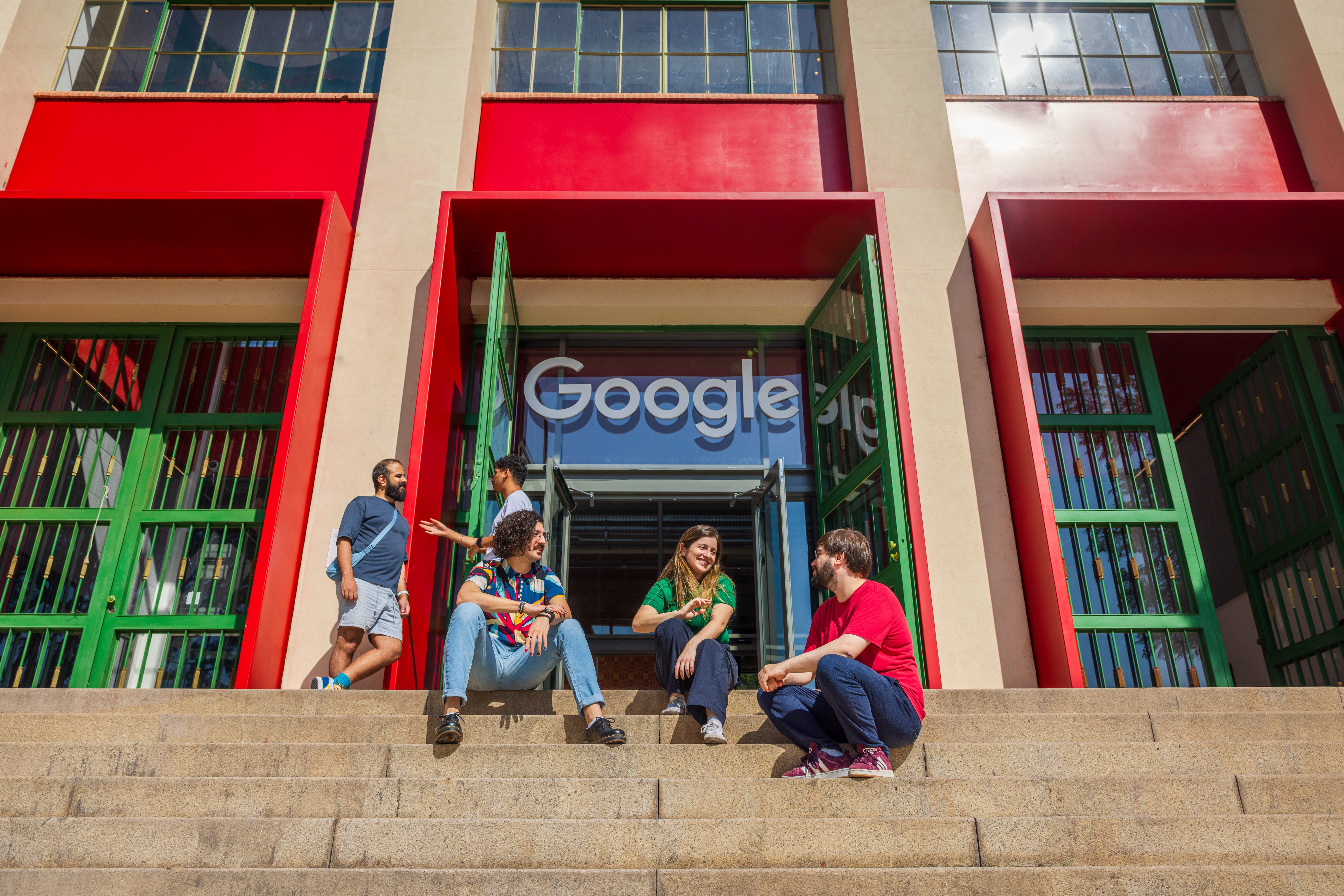
Google opens research center in São Paulo; look
Google inaugurated this Wednesday (27) the second building dedicated to research. At an event for the press and guests, the news was announced and the building...
 Noticia
27/05/2026
Google opens AI engineering center within USP; g1 met space
Google opens engineering center at USP; get to know the spaceDisclosure/GoogleGoogle opened this Wednesday (27) its second AI engineering center in Brazil. The...
Noticia
27/05/2026
Zelensky's letter to Trump exposes crisis in Ukraine's air defense
Donald Trump and Volodymyr Zelensky in a meeting in Florida this Sunday (28).REUTERS/Jonathan ErnstPresident Volodymyr Zelenskyy sent a letter to the President...
 Noticia
27/05/2026
"I didn't want to go back", says Christina Rocha after leaving SBT
Presenter Christina Rocha, 68, stated that she did not want to have returned to SBT for the third time, in her last stint, which lasted a year. The journalist s...
Noticia
26/05/2026
Learn how to play Total Eclipse Of The Heart, Bonnie Tyler's classic that chills the guitar
Total Eclipse Of The Heart is one of those songs that seems to be born ready to move people. In Bonnie Tyler's striking voice, the song mixes drama, intensity a...
Noticia
26/05/2026
Learn to play Memonça Boa on the guitar and feel the strength of this passionate fashion
Membrança Boa, by Traia Véia, is one of those songs that seem simple, but reach straight to the heart. The song talks about the end of a relationship, longing a...
Participe da conversa
Seu comentario ajuda a manter a discussao viva e ainda convida outros leitores a continuar navegando pelo portal.
Seja o primeiro a comentar esta noticia.