


Leia a noticia completa
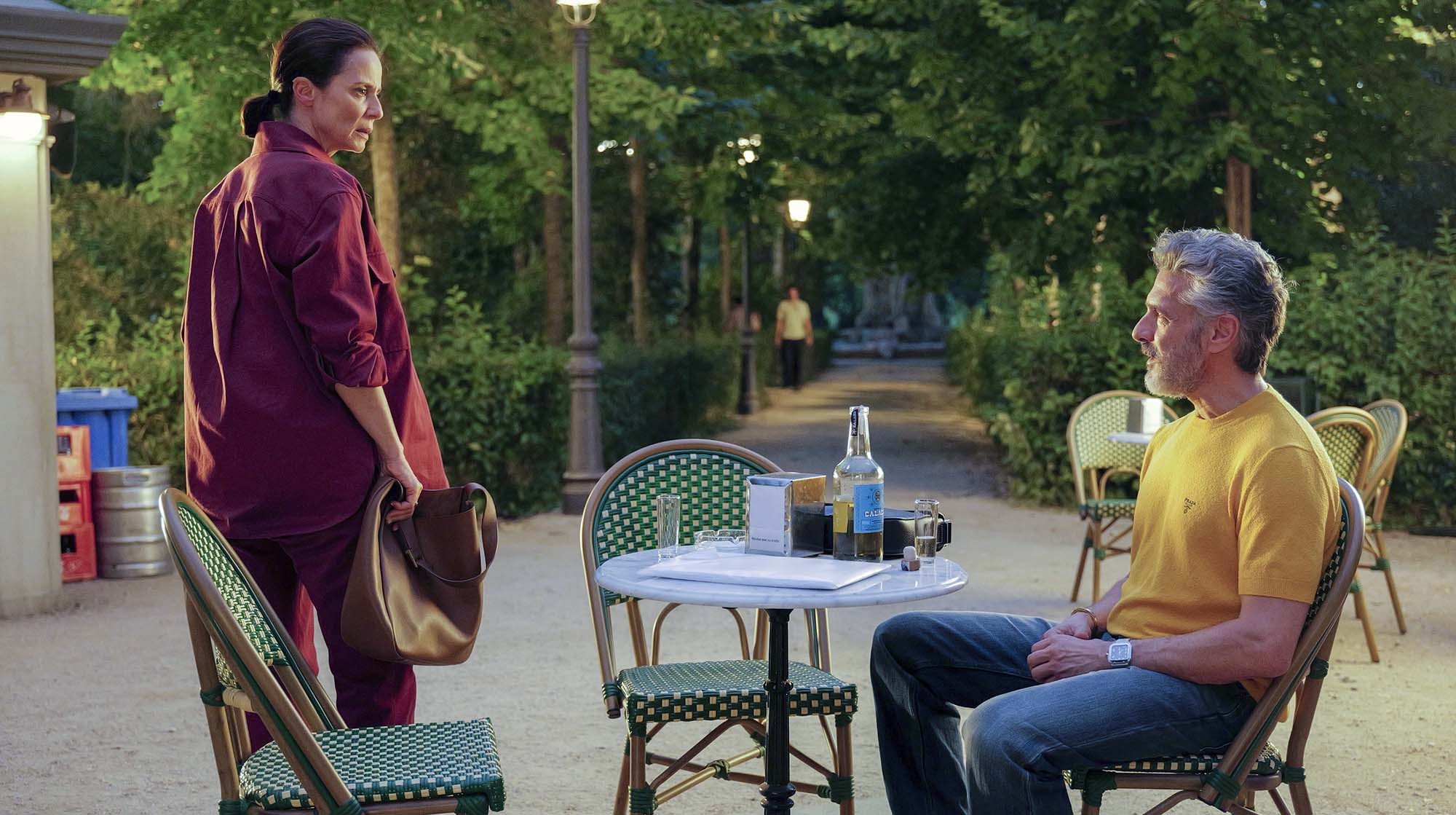
Scene from "Bitter Christmas", a new film by Spanish filmmaker Pedro Almodóvar, which reflects on artistic work and the limits of creation.
Disclosure.
Almodóvar turns the camera on himself, again.
In his 24th feature film, "Bitter Christmas", the 76-year-old Spanish director makes his return to Spanish after two years of the release of "The Room Next Door", a film spoken in English with Julianne Moore and Tilda Swinton.
"Bitter Christmas" made its international debut in the official selection of the 79th Cannes Film Festival, last Tuesday (19). The film hits Brazilian cinemas on May 28.
By returning to his native language and Spain - the setting for his entire filmography -, the filmmaker puts his memories and his own career on the couch, in a kind of autobiographical inflection.
The promise and premise surrounding the project were great: this would be the film in which he would be most cruel to himself, according to interviews. A work in which the director was willing to go to court against himself. That was the idea, the result...not much.
Film within the film
The film follows the story of two filmmakers obsessed with work: Elsa (played by Bárbara Lennie) and Raúl (played by Leonardo Sbaraglia), who can be "read" as an alter ego of Almodóvar.
Elsa is a director who, after not having achieved success on screen, ended up moving into the advertising market. He lost his mother about a year ago and is trying to work through his grief amid migraine attacks, anxiety attacks, a fight with a friend (Victoria Luengo) and a relationship with a firefighter-stripper (Bonifácio, played by Patrick Criado).
Raúl, on the other hand, is a prestigious director who finds himself in a creative limbo. He tries to bring to life a new script "inspired" by the stories and loves of his assistant, Mônica (Aitana Sánchez-Gijón), while leaving his personal life completely aside.
This metalanguage about artistic creation is nothing new in his filmography. Almodóvar has explored it before in works such as "The Law of Desire" (1987), "Bad Education" (2004) and "Pain and Glory" (2019), which also featured filmmakers as the great protagonists of their own pain.
The big joke this time is that we are facing the creator and the creature, all at once. Elsa's journey is fiction itself being shaped by Raúl's mind, in a dynamic that leaves us watching a film within another.
And that's where things get tough: the two narratives run in parallel, jumping between 2004 and 2026, transforming one character into another, sometimes even one character into two. All in a very "truncated" way.
The spectator needs to make an effort not to get lost and to be able to understand, in this great game of mirrors, who is who. Who or which characters are inspiring who. And more: how much of Almodóvar himself is there.
"Bitter Christmas", a new film by Spanish filmmaker Pedro Almodóvar, hits Brazilian cinemas on May 28.
Disclosure
Ironic and beautiful to watch
The film delivers exactly what one expects from an "almodrama" (a term used by Cuban writer Guillermo Cabrera Infante to describe an Almodovar melodrama) in terms of aesthetics: beautiful framing, exquisite art direction.
As a spectator, you are always eager to see the next scenario. Mesmerized by the blue bottles, the yellow armchairs, the red coats. Everything is in place. Nothing is left.
The director also showed that he didn't lose his hand in dosing the drama with hints of humor here and there. Like when the assistant and faithful squire Mônica teases Raúl (or was it Almodóvar himself?): "Get out of the house for a while! You've already made your best films, you can live off your prestige now."
And he also gives other winks to the viewer, later on: "Why don't you give in and make a film for streaming? Netflix has been crazy about you for years." Raúl doesn't give in and denies it.
Courageous in trying to be better than he already was
Throughout the entire plot, Almodóvar puts into the mouths of his characters reflections that he himself has come across throughout his career: the fear of decadence, the lack of creativity, the difficulty of finding new stories, the challenge of being better than he once was.
The film also raises another, very interesting question: to what extent does an artist have the right to use other people's lives to create his own? works?
In the official synopsis of the plot, the protagonist is described as someone "capable of selling his soul to the devil as long as he continues to see the vertical line, the blinking cursor of the computer, alive, which will lead him to write a story that not even he himself knows and for which he is willing to do anything".
In the face of all these clashes, real life always seems to dismantle the filmmaker's control.
And it must be recognized: Almodóvar is bold in proposing this type of reflection on what he made of himself throughout his life, shedding light on the type of art he produced and, mainly, what the human cost of this creation was.
Poster in Portuguese of "Bitter Christmas", Almodóvar's new film.
Disclosure
Honest, but no mucho
He slips, however, by not going all the way to the ultimate consequences. The feeling that remains is that the Spanish director, nevertheless, hand-picked the best cuts and questions for which he would already have comfortable answers to give.
This is not about demanding that the filmmaker do a public therapy session or self-flagellate himself in front of the screen, but see: the expectation was created by himself.
The filmmakers (Raúl, Elsa and the Spanish director himself) admit, in fact, that they are struggling to find a new story that will give them back the excitement and pleasure of filming.
But the three are placed in the plot as people who are writing not because they know what they want to say, but because they need to find out.
By avoiding the deep dive that he himself proposed, the director delivers an exercise in metalanguage that needs more honesty. There's no way not to notice it.
Critical review card g1
Art/g1
Source: G1

Lotomania today: results of contest 2929 and numbers drawn
Lotomania Resultg1See below the draw numbers for Lotomania contest 2929 held this Wednesday (27):14 - 15 - 16 - 19 - 2...
Dupla Sena today: results of contest 2962 and numbers drawn
Dupla Sena resultg1See below the draw numbers for Dupla Sena contest 2962 held this Wednesday (27):1st draw: 17 - 24 -...
Super Sete today: results of contest 852 and numbers drawn
Super Sete steering wheelsG1See below the numbers drawn from the columns in contest 852 of Super Sete held this Wednes...
Toque agora.





Historias das musicas em destaque
 Historia da musica
Learn how to play "I Love You" and discover why Billie Eilish moves millions with just a few chords
27/05/2026
There are songs that seem simple at first, but carry an emotional intensity that is difficult to explain. "I Love You", by Billie Eilis...
 Historia da musica
How to play the classic "Careless Whisper" on the guitar and move anyone in the first chords
27/05/2026
Few songs can create such an intense and nostalgic atmosphere as George Michael's "Careless Whisper." From the first few seconds, the f...
 Historia da musica
Learn to play Chega, the country music that turns pain into a new beginning
27/05/2026
Chega, by Zezé Di Camargo & Luciano, is one of those songs that speak directly to those who are tired of suffering for love. The lyrics...
 Historia da musica
Learn how to play Total Eclipse Of The Heart, Bonnie Tyler's classic that chills the guitar
26/05/2026
Total Eclipse Of The Heart is one of those songs that seems to be born ready to move people. In Bonnie Tyler's striking voice, the song...
 Historia da musica
Learn to play Memonça Boa on the guitar and feel the strength of this passionate fashion
26/05/2026
Membrança Boa, by Traia Véia, is one of those songs that seem simple, but reach straight to the heart. The song talks about the end of...
 Historia da musica
Learn to play Bete Balanço: the Frejat classic that has energy, attitude and an unforgettable chorus
25/05/2026
Bete Balanço is one of those songs that carries movement from the first chord. With lyrics full of image, dreams, risk and youth, the s...
 Historia da musica
Learn to play Star, by Simply Red, the chord that transforms feelings into guitar
24/05/2026
Star, by Simply Red, is one of those songs that mix romanticism, regret and a striking melody, perfect for those who like to play somet...
 Historia da musica
Learn to play Die With a Smile: the emotional ballad by Lady Gaga and Bruno Mars that conquered the world on guitar
24/05/2026
"Die With a Smile" is one of those songs that already looks like a classic. In the meeting of two giant voices of pop music, Lady Gaga...
 Historia da musica
Learn to play Rasgando a Madrugada, Eduardo Costa's perfect song for guitar
24/05/2026
Rasgando a Madrugada, by Eduardo Costa, is one of those songs that seem to be born in the silence of the night. The song carries the we...
 Historia da musica
Learn to play Autor Da Vida, the Oficina G3 classic that speaks straight to the heart
23/05/2026
Learn to play Autor Da Vida, the Oficina G3 classic that speaks straight to the heart Autor Da Vida, by Oficina G3, is one of those son...
Mais noticias para voce
 Noticia
28/05/2026
At 43, João Vicente de Castro says he is ready for fatherhood
Actor João Vicente de Castro, 43, made another statement about his desire to be a father. In the podcast "No Importance", which he presents alongside his collea...
 Noticia
28/05/2026
Melody, Pepita and Diego Martins give up LGBT+ Parade fee
The 30th edition of the São Paulo LGBT+ Pride Parade arrives on Avenida Paulista on June 7th. The event marks one of the biggest celebrations of the LGBT+ commu...
 Noticia
28/05/2026
Waack: Electoral interest halts serious debate on work
The reasons for discussing reduction in working hours and changes in work schedule are worthy. This is, without a doubt, a matter of enormous, profound and long...
 Noticia
28/05/2026
Film created and starring Anitta begins recording in June
Singer Anitta, 33, will star in a new romance film produced by Estúdios Globo. The production - which was created by the artist herself - marks the first time t...
Noticia
27/05/2026
Learn how to play "I Love You" and discover why Billie Eilish moves millions with just a few chords
There are songs that seem simple at first, but carry an emotional intensity that is difficult to explain. "I Love You", by Billie Eilish, is exactly like that....
Noticia
27/05/2026
How to play the classic "Careless Whisper" on the guitar and move anyone in the first chords
Few songs can create such an intense and nostalgic atmosphere as George Michael's "Careless Whisper." From the first few seconds, the famous solo transports any...
Participe da conversa
Seu comentario ajuda a manter a discussao viva e ainda convida outros leitores a continuar navegando pelo portal.
Seja o primeiro a comentar esta noticia.