




Leia a noticia completa
Christian Hartmann/Reuters
A recent survey by Spotify showed that, in 2025, more than a third of the artists who generated US$10,000 (around R$50,100) or more in royalties from Spotify were independent or started their careers that way.
The research data comes almost two years after a study by Midia Research, which showed that, in 2023, independent music already represented 46.7% of the market.
Independent artists are those outside of major record labels, such as Sony, Warner and Universal. And they release their music on their own through independent distributors.
In the era of digital platforms, this independent release has become a gateway for artists at the beginning of their careers. After all, to attract the attention of record companies, today, in addition to talent, "numbers" are very important. But many artists who have been in the market for years are also choosing to end their contracts with record companies and follow the independent model.
"I stayed with a record company for many years. And from the moment I saw that, for me, it wasn't being nice, I just made a deal with them, left and decided to pursue my independent career", said Diogo Nogueira during his participation in the g1 Ouviu podcast.
But what do these Spotify data and the growth of independent music mean? Will record companies disappear? Is it worth being out of them? What are the pros and cons of being an independent artist? g1 spoke to some experts to understand these and other points.
Making money outside the mainstream
Studio at Spotify's headquarters in Stockholm
Disclosure/Spotify
First, it is important to understand the size of the artist that enters this Spotify account. According to Gustavo Deppe, a lawyer specializing in music copyright, an artist who receives at least US$10,000 in royalties is already a midstream artist (that is, an "average" artist).
It's not exactly big (like the mainstream), but "it already has a strong, solid fan base. It already has hundreds of thousands of plays, sometimes even millions of plays on Spotify monthly, or monthly listeners", explains the lawyer.
"The market today is very niche, but, categorically, I can say that he is an artist who, if he manages to do this constantly, has a solid fan base."
Deppe also states that although, nowadays, it is easier to produce and distribute music, it is important for this independent artist, as soon as possible, to assemble a team for the other guidelines of the project.
"Nowadays, the music creation part is much more fluid. You can, in your room, make a very satisfactory song for Spotify that can reach the top 50, top 10. Or top 1, who knows, go viral. But this artist who wants to be independent needs to have some structure to put together a team, which is extremely costly."
"It's a business activity, so you have to have the mind of a businessman. Which is very difficult because you have to make economic decisions all the time. Is it possible? Perfectly. In the past, it was almost impossible for you to achieve it. Because there was a huge distribution barrier, because distribution was physical."
Total independence! Could it be?
Some artists who left major record labels tend to point out "creative freedom" and "independence" as positive points when taking on their careers. But this independence and freedom comes with challenges.
In 2022, in a conversation with g1, Luedji Luna said it was "tiring for you to always be your only investor". "Sometimes you want to have an engine there pushing your little boat, you want to have someone there to row with you", said the artist, dreaming of an investor (which doesn't necessarily mean a record company).
"Estou nos festivais, tenho público, tenho seguidores, mas que não chega a um milhão, meus shows dão sold out, minha carreira é respeitada pela crítica. Isso não é o suficiente para eu ter esse motor?", questionou.
Outro ponto é a necessidade de ir muito além da música quando você não tem esse "motor" citado por Luedji.
"Você precisa dominar várias disciplinas. Cada vez mais você tem que entender da parte burocrática, ter o especialista ou se tornar especialista de marketing digital, entender de negociação de royalties, de mídia e tráfego, de redes sociais. Você não é só independente. No final, você é uma empresa", afirma André Izidro, 46 anos, CEO e cofundador da Atabaque e da Rumpi.
Criada com foco no artista independente, a plataforma Rumpi propõe centralizar processos como gestão de royalties, contratos, catálogo, direitos conexos e dados de performance em um único ambiente.
Nando Reis
Felipe Maior
Essa parte burocrática costuma ser absorvida pelas gravadoras. Mas ao se tornar independente, o artista precisa ter domínio destes e outros tópicos para não perder dinheiro e espaço no mercado. E para ser visto.
"Making an analogy with other companies, the owner starts doing everything, getting his hands dirty, creating the bakery, being a baker. It's more or less the same place there. The artist needs to understand and hire good people. But if he understands his business, all the stages, it's much easier to bring in the right people, to connect, to charge, to be together", adds André.
Em 2021, nove anos após se tornar independente por decisão da gravadora ("A Universal não quis renovar meu contrato"), Nando Reis fez um vídeo para contar sua trajetória no novo formato de carreira. Ele falou sobre os desafios da independência e a necessidade de se cercar de "pessoas com habilidades técnicas para" cada setor.
"Quando estava em gravadoras, realimentei um lado meu que era relapso. Um pouco de credulidade, um pouco de preguiça, é chato pra *. Números, reuniões, vigilância, direitos, enfim... eu tive que passar nesse momento, revisar os meus contratos antigos com gravadoras nas novas bases e essa é uma luta onde há interesses distintos", afirmou o artista, que hoje, tem seu selo independente.
Nando ainda falou sobre o amadurecimento fora das gravadoras.
"Eu vivi durante anos achando que subir ao palco era festa, ser doidão. Uma das coisas que me ajudou a tomar nessa decisão de parar de usar qualquer coisa que altere minha consciência foi ser um artista independente. Não dá, não existe, não tem ninguém tomando conta."
Então é o fim das gravadoras?
Billie Eilish e Finneas posam com o prêmio de canção do ano e o prêmio de melhor canção escrita para mídia visual no Grammy 2024
David Swanson/Reuters
Há tempos já se fala sobre um possível fim das gravadoras. Ao fazer suas análises, especialistas que conversaram com o g1 não acreditam no fim, mas apontam a mudança no papel delas.
"Por que que começou a falar muito do fim das gravadoras? Porque antes estúdio só existia dentro de gravadoras. Aí vem a Billie Eilish, 'rapa' o Grammy, fazendo um disco de dentro do quarto e que o produtor era o irmão com um computadorzinho de mão. Então, será o fim das gravadoras? Acho que isso é mais clickbait do que realidade", defende Odilon Borges, de 47 anos, sócio e cofundador da Atabaque e do Rumpi.
"Não é o the end of the record companies, because the brands still have a lot of support there. I think there is space for everyone. The record company won't worry so much about the midstream artist, it wants to focus on Caetano Veloso. So the machine is already oiled, nothing changes from one moment to the next.
André concorda com o sócio e aponta que, mesmo com todos os números citados sobre música independente, metade da receita global está ligada à gravadora.
"Eles ainda continuam no topo da pirâmide. Eu acho que o que esse modelo de distribuição independente fez foi capilaridade.
When you facilitate the entry of several titles at once, you really open up space for independents to be there", analyzes André.
"I have been saying that record labels have become more and more banks, because they are increasingly linked to data. And their difference is to advance money over time, buy a catalogue. They have less eyes and less appetite when we talk about career development", he concludes.
André also points out that, in some markets, being part of producers makes more sense for artists than being on record labels. "They are less concerned about where their music is distributed, and more concerned about performing with these producers who are very strong."
Now on g1
Source: G1
/i.s3.glbimg.com/v1/AUTH_59edd422c0c84a879bd37670ae4f538a/internal_photos/bs/2021/p/U/NQo77ZQaOKcQ5j2QFVeQ/img-facebook.jpg)
Income Tax 2026: deadline ends this week and live program answered questions
Income Tax 2026: deadline ends this week and live program answered questions By next Friday, the Federal Revenue expec...
River Plate x Blooming: time and where to watch the South American game
River Plate and Blooming face each other this Wednesday (27), at 9:30 pm (Brasília time), in a game valid for the sixt...
Group urges US diplomats to leave countries amid Ebola outbreak
AFSA (American Foreign Service Association), which represents US diplomats, asked this Wednesday (27) that American fo...
Toque agora.


Historias das musicas em destaque
 Historia da musica
Learn to play Chega, the country music that turns pain into a new beginning
27/05/2026
Chega, by Zezé Di Camargo & Luciano, is one of those songs that speak directly to those who are tired of suffering for love. The lyrics...
 Historia da musica
Learn how to play Total Eclipse Of The Heart, Bonnie Tyler's classic that chills the guitar
26/05/2026
Total Eclipse Of The Heart is one of those songs that seems to be born ready to move people. In Bonnie Tyler's striking voice, the song...
 Historia da musica
Learn to play Memonça Boa on the guitar and feel the strength of this passionate fashion
26/05/2026
Membrança Boa, by Traia Véia, is one of those songs that seem simple, but reach straight to the heart. The song talks about the end of...
 Historia da musica
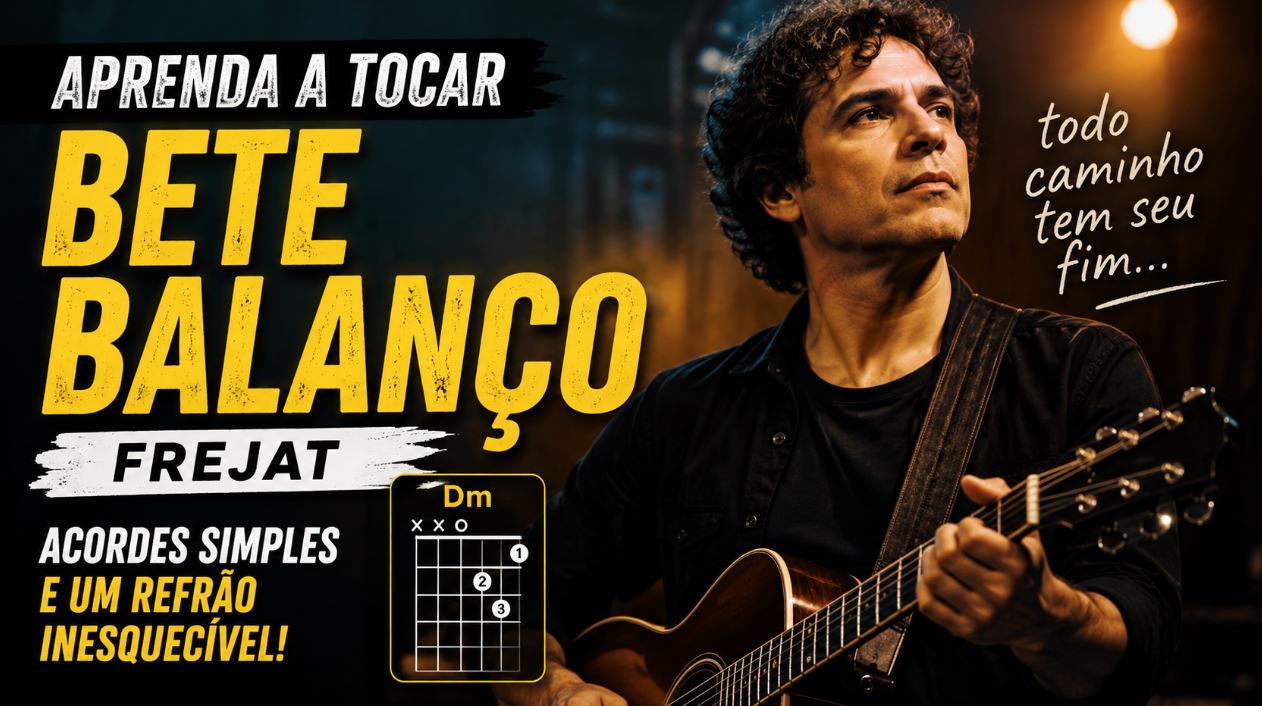
Learn to play Bete Balanço: the Frejat classic that has energy, attitude and an unforgettable chorus
25/05/2026
Bete Balanço is one of those songs that carries movement from the first chord. With lyrics full of image, dreams, risk and youth, the s...
 Historia da musica
Learn to play Star, by Simply Red, the chord that transforms feelings into guitar
24/05/2026
Star, by Simply Red, is one of those songs that mix romanticism, regret and a striking melody, perfect for those who like to play somet...
 Historia da musica
Learn to play Die With a Smile: the emotional ballad by Lady Gaga and Bruno Mars that conquered the world on guitar
24/05/2026
"Die With a Smile" is one of those songs that already looks like a classic. In the meeting of two giant voices of pop music, Lady Gaga...
 Historia da musica
Learn to play Rasgando a Madrugada, Eduardo Costa's perfect song for guitar
24/05/2026
Rasgando a Madrugada, by Eduardo Costa, is one of those songs that seem to be born in the silence of the night. The song carries the we...
 Historia da musica
Learn to play Autor Da Vida, the Oficina G3 classic that speaks straight to the heart
23/05/2026
Learn to play Autor Da Vida, the Oficina G3 classic that speaks straight to the heart Autor Da Vida, by Oficina G3, is one of those son...
 Historia da musica
Learn to play Te Esperando: the exciting country music by Luan Santana that made Brazil sing on the guitar
23/05/2026
Te Esperando, by Luan Santana, is one of those country songs that sticks in your memory because it mixes romanticism, longing and the p...
 Historia da musica
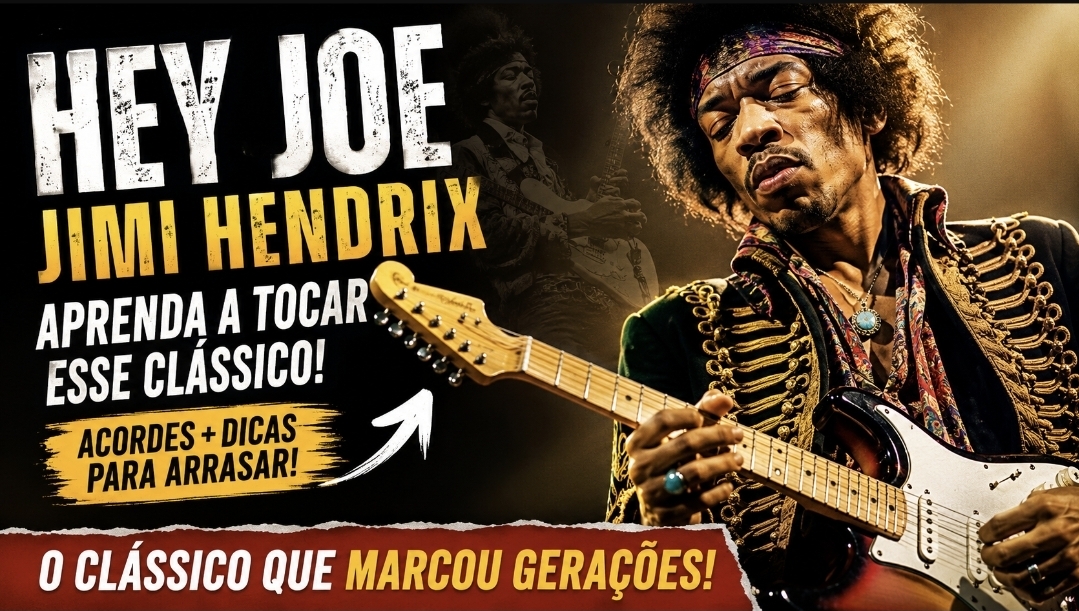
Learn to play Hey Joe: the Jimi Hendrix classic that every guitarist dreams of mastering
23/05/2026
Few songs carry as much attitude and history as Hey Joe, immortalized in the voice and guitar of Jimi Hendrix. With an unmistakable int...
Mais noticias para voce
 Noticia
27/05/2026
Government celebrates approval of 6×1 in the commission and aims for 450 votes in the plenary
The government celebrated the approval of the report by deputy Leo Prates (Republicanos-BA) on the end of the 6×1 scale. In a press conference after the vote in...
 Noticia
27/05/2026
Revenue seizes 120,000 fake football shirts in the Port of Santos
The Federal Revenue Service seized around 120,000 fake football shirts in the Port of Santos, on the coast of São Paulo. The shirts found inside a container bel...
 Noticia
27/05/2026
Wagner Moura appears with new look for film with Kristen Stewart
Actor Wagner Moura, 49, appeared this Wednesday (27) with a new look during the recording of "Flesh Of The Gods", a thriller starring the Brazilian and Kristen...
 Noticia
27/05/2026
Agricultural machinery sales drop more than 22% in revenue
The agricultural machinery and equipment industry continues to shrink, according to Abimaq (Brazilian Association of Machinery and Equipment Industry), with the...
Noticia
27/05/2026
Learn to play Chega, the country music that turns pain into a new beginning
Chega, by Zezé Di Camargo & Luciano, is one of those songs that speak directly to those who are tired of suffering for love. The lyrics bring a strong feeling o...
Noticia
26/05/2026
Learn how to play Total Eclipse Of The Heart, Bonnie Tyler's classic that chills the guitar
Total Eclipse Of The Heart is one of those songs that seems to be born ready to move people. In Bonnie Tyler's striking voice, the song mixes drama, intensity a...
Participe da conversa
Seu comentario ajuda a manter a discussao viva e ainda convida outros leitores a continuar navegando pelo portal.
Seja o primeiro a comentar esta noticia.