



Leia a noticia completa
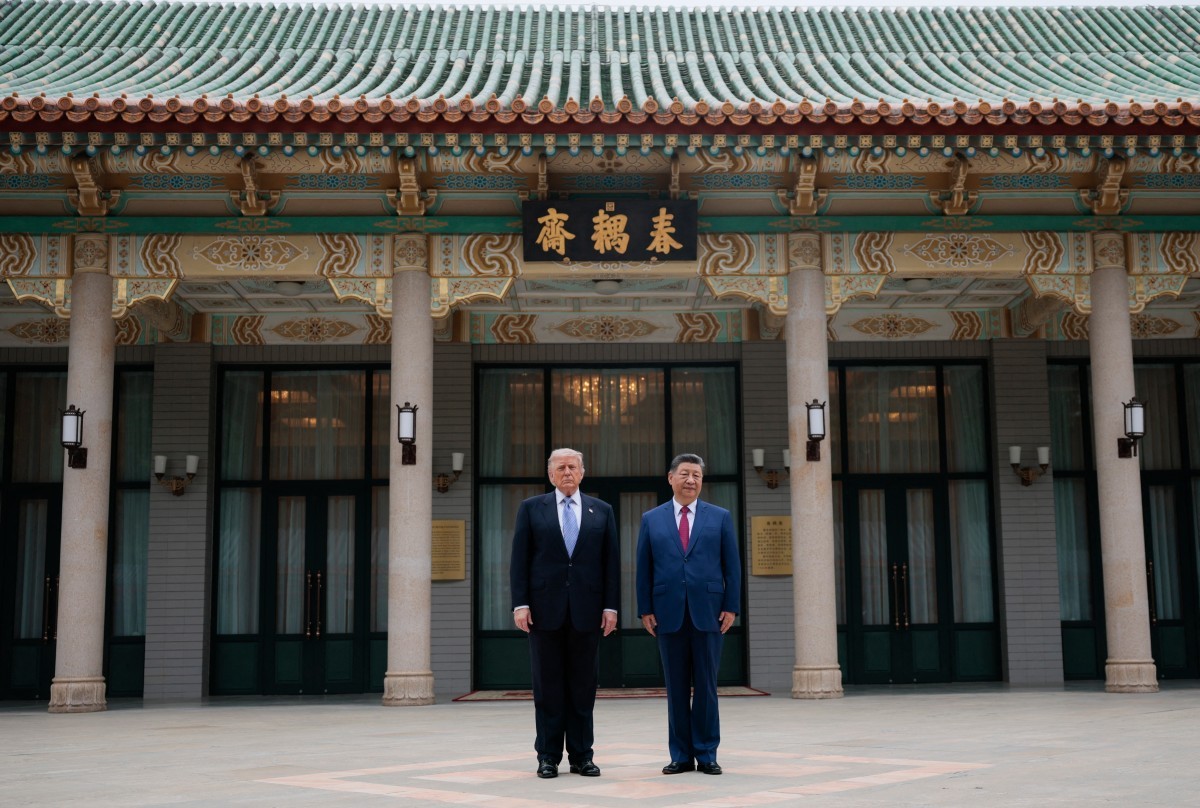
US President Donald Trump (left) poses for photos with Chinese President Xi Jinping during a visit to the Zhongnanhai Garden in Beijing, May 15, 2026.
Evan Vucci / Pool / AFP
China has committed to buying at least US$17 billion (R$86.1 billion) a year in US agricultural products, in addition to soybeans, for three years, the White House said in the last Sunday (17), after a summit between the leaders of the two countries in Beijing last week.
The world's largest importer of agricultural products, China drastically reduced purchases from the US following last year's trade war between the two largest global economies.
However, the two countries agreed to expand agricultural trade and eliminate non-tariff barriers for beef and poultry, the Chinese Ministry of Commerce said.
Entrepreneur's guide: Extra income vs main business
Following are the main details of agricultural trade between the countries and how these purchases may evolve:
What does the agreement mean?
The promise of US$17 billion (R$86.1 billion), in addition to existing soybean commitments, would take total imports China's agricultural production in the US to close to US$28 billion to US$30 billion (from R$141.8 billion to R$152 billion) per year, according to traders and analysts. 121.6 billion) in 2024.
To achieve this goal, Beijing will have to significantly increase purchases of wheat, feed grains, meat and non-food agricultural products, such as cotton and wood, according to traders and analysts.
Beijing fulfilled its commitment to purchase 12 million tons of soybeans, in addition to acquiring some volume of wheat and a large amount of sorghum, following an agreement signed last October between the President of the United States, Donald Trump, and the Chinese leader, Xi Jinping.
As part of this agreement, the White House stated that China would purchase at least 25 million tons of soybeans per year.
Redirecting Imports
Increased purchases of agricultural products from the United States are expected to come at the expense of exports from rival suppliers...
"Achieving $17 billion annually by excluding soybeans would likely require China to intentionally redirect purchases from existing suppliers to the United States for political and strategic reasons, rather than purely trades," Cheang Kang Wei, vice-president of StoneX in Singapore, told Reuters.
Brazil, China's main soybean supplier with a 73.6% market share in 2025, has also become its main corn supplier. Last year, China approved imports of Brazilian distillers' dried grains (DDGS), a high-protein animal feed ingredient obtained during the ethanol manufacturing process.
Australia, which was China's top supplier of wheat in 2023 and sorghum in 2025, could face falling demand if US wheat and sorghum gain ground. Barley imports could also come under pressure, while increased US beef purchases could reduce demand for Australia's premium beef in China.
Other major suppliers, such as Canada and France for wheat, and Argentina for sorghum, could also see lower demand. compared to Brazilians, according to market operators.
"The purchase of 25 million tons of US soybeans should not be a problem, as US prices are quite attractive now," an expert who trades oilseeds told Reuters.
"They can buy for crushing and also for storage."
State-owned companies Cofco and Sinograin are expected to lead U.S. soybean purchases as long as China maintains an additional 10% tariff, traders say.
China has drastically reduced its dependence on U.S. soybeans since Donald Trump's first term. In 2024, the American product represented about a fifth of Chinese imports, compared to 41% in 2016.
Corn and wheat
It is likely that Chinese state traders will remain the main buyers of corn and wheat from the United States, as they receive import quotas with reduced tariffs.
China has import quotas of 9.64 million tons for wheat and 7.2 million for corn, with a tariff of 1%. Purchases in excess of these quotas are subject to tariffs of up to 65%.
In 2025, China purchased just US$5 million (R$25.3 million) in corn from the United States, well below the US$561.5 million (R$2.8 billion) recorded the previous year. Shipments were halted after June, according to Chinese customs data.
Wheat imports fell to almost zero in 2025, after totaling 1.9 million tonnes, equivalent to around US$600 million (around R$3 billion), in 2024.
Sorghum and DDGS
China is expected to increase purchases of feed grains, including sorghum, after heavy rains hamper production in the north of the country in 2025.
Unlike wheat and corn, sorghum is not subject to import quotas.
Since November, Beijing has purchased at least 2.5 million tons of sorghum from the United States to compensate for corn shortages on the domestic market. More relevant purchases of DDGS would depend on the suspension of anti-dumping and anti-subsidy tariffs in force since 2017.
Meat
China is an important market for products such as chicken feet, pork ears and offal from the United States - items with little demand in the American market.
Imports of beef and poultry from the United States are expected to increase after Beijing indicated that the two countries will work to resolve trade disputes.
On Friday, the China has granted five-year registration extensions to 425 U.S. beef-producing units, which had been largely suspended after licenses expired last year. In addition, it approved new five-year registrations for another 77 units.
Beijing introduced, last December, a quota system for beef imports, with a 55% tariff for volumes above the established limit. The measure affects key suppliers, including the United States, and aims to protect local industry.
Non-food agricultural products
Chinese imports may also include non-food products such as cotton and wood. In the case of cotton, purchases fell from US$1.85 billion (R$9.4 billion) in 2024 to US$225.7 million (R$1.1 billion) last year.
Download GloboPop to watch short vertical videos from Globo
Source: G1

Israel and Hezbollah clash in southern Lebanon as negotiations to end the war continue
Israel and Hezbollah clash in southern Lebanon as negotiations to end the war continue According to Iranian state TV,...
Are you going to sell on faith alone? Controversial Ferrari Luce is presented to the Pope
Following the tradition of the great Italian brands, Ferrari went to "ask for blessing" for its latest product, the Lu...
Corinthians: Andrés Sánchez's defense speaks out after expulsion
The law firm that represents Andrés Sánchez, former president of Corinthians, published a note this Wednesday morning...
Toque agora.





Historias das musicas em destaque
 Historia da musica
Learn how to play Total Eclipse Of The Heart, Bonnie Tyler's classic that chills the guitar
26/05/2026
Total Eclipse Of The Heart is one of those songs that seems to be born ready to move people. In Bonnie Tyler's striking voice, the song...
 Historia da musica
Learn to play Memonça Boa on the guitar and feel the strength of this passionate fashion
26/05/2026
Membrança Boa, by Traia Véia, is one of those songs that seem simple, but reach straight to the heart. The song talks about the end of...
 Historia da musica
Learn to play Bete Balanço: the Frejat classic that has energy, attitude and an unforgettable chorus
25/05/2026
Bete Balanço is one of those songs that carries movement from the first chord. With lyrics full of image, dreams, risk and youth, the s...
 Historia da musica
Learn to play Star, by Simply Red, the chord that transforms feelings into guitar
24/05/2026
Star, by Simply Red, is one of those songs that mix romanticism, regret and a striking melody, perfect for those who like to play somet...
 Historia da musica
Learn to play Die With a Smile: the emotional ballad by Lady Gaga and Bruno Mars that conquered the world on guitar
24/05/2026
"Die With a Smile" is one of those songs that already looks like a classic. In the meeting of two giant voices of pop music, Lady Gaga...
 Historia da musica
Learn to play Rasgando a Madrugada, Eduardo Costa's perfect song for guitar
24/05/2026
Rasgando a Madrugada, by Eduardo Costa, is one of those songs that seem to be born in the silence of the night. The song carries the we...
 Historia da musica
Learn to play Autor Da Vida, the Oficina G3 classic that speaks straight to the heart
23/05/2026
Learn to play Autor Da Vida, the Oficina G3 classic that speaks straight to the heart Autor Da Vida, by Oficina G3, is one of those son...
 Historia da musica
Learn to play Te Esperando: the exciting country music by Luan Santana that made Brazil sing on the guitar
23/05/2026
Te Esperando, by Luan Santana, is one of those country songs that sticks in your memory because it mixes romanticism, longing and the p...
 Historia da musica
Learn to play Hey Joe: the Jimi Hendrix classic that every guitarist dreams of mastering
23/05/2026
Few songs carry as much attitude and history as Hey Joe, immortalized in the voice and guitar of Jimi Hendrix. With an unmistakable int...
 Historia da musica
Learn to play Adoração, by Anjos de Resgate: the perfect song to transform prayer into guitar
23/05/2026
Adoração, by Anjos de Resgate, is one of those songs that carries simplicity, faith and emotion in every chord. The lyrics talk about s...
Mais noticias para voce
 Noticia
27/05/2026
Faustão's team updates the status of the presenter, who remains hospitalized
Faustão's press office, 76, updated the presenter's health status this Wednesday (27). "The protocol for removing the gastric tube was successfully completed. F...
 Noticia
27/05/2026
Zelensky's letter to Trump exposes crisis in Ukraine's air defense and asks for military reinforcement from the US
Donald Trump and Volodymyr Zelensky meeting in Florida REUTERS/Jonathan ErnstPresident Volodymyr Zelensky sent a letter to United States President Donald Trump...
 Noticia
27/05/2026
Copasa shares fall 7% after changing privatization offer conditions
Copasa shares operate in the negative this Wednesday (27), leading the falls of the Ibovespa, after the company changed offer conditions linked to privatization...
 Noticia
27/05/2026
Do Zé Felipe and Virginia have a chance? Remember couples who got back together and worked out
Fans of Virginia Fonseca, 27, and Zé Felipe, 27, are rooting for the former couple to return. The celebrities, who are single, appeared together on their daught...
Noticia
26/05/2026
Learn how to play Total Eclipse Of The Heart, Bonnie Tyler's classic that chills the guitar
Total Eclipse Of The Heart is one of those songs that seems to be born ready to move people. In Bonnie Tyler's striking voice, the song mixes drama, intensity a...
Noticia
26/05/2026
Learn to play Memonça Boa on the guitar and feel the strength of this passionate fashion
Membrança Boa, by Traia Véia, is one of those songs that seem simple, but reach straight to the heart. The song talks about the end of a relationship, longing a...
Participe da conversa
Seu comentario ajuda a manter a discussao viva e ainda convida outros leitores a continuar navegando pelo portal.
Seja o primeiro a comentar esta noticia.